
That growl gets louder every week you ignore it.
A hum that rises with road speed. A grinding that changes pitch when you swing into a bend. Wheel bearings announce themselves early, and the window between noisy and dangerous is shorter than most drivers expect.
- Open 24 hours, seven days
- No hourly minimum
- A real number before we roll
- Cars, vans, pickups, trailers
Reading the noise before anybody buys a part
Wheel bearing complaints almost always arrive as a sound, and the sound carries most of the diagnosis if you know how to listen to it. The classic is a low growl or hum that tracks road speed rather than engine speed. Put the car in neutral at forty and coast: if the pitch stays tied to how fast the wheels are turning and ignores what the engine is doing, you are listening to something that rotates with the road.
The steering test is the one that narrows it down. Find an empty stretch, get to a steady speed and gently weave left, then right. Swinging left shifts load onto the right side of the vehicle, and swinging right loads the left. A bearing usually gets louder under load, so a growl that swells when you steer left points at the right side, and the reverse points at the left. It is a crude test and it is right far more often than it is wrong.
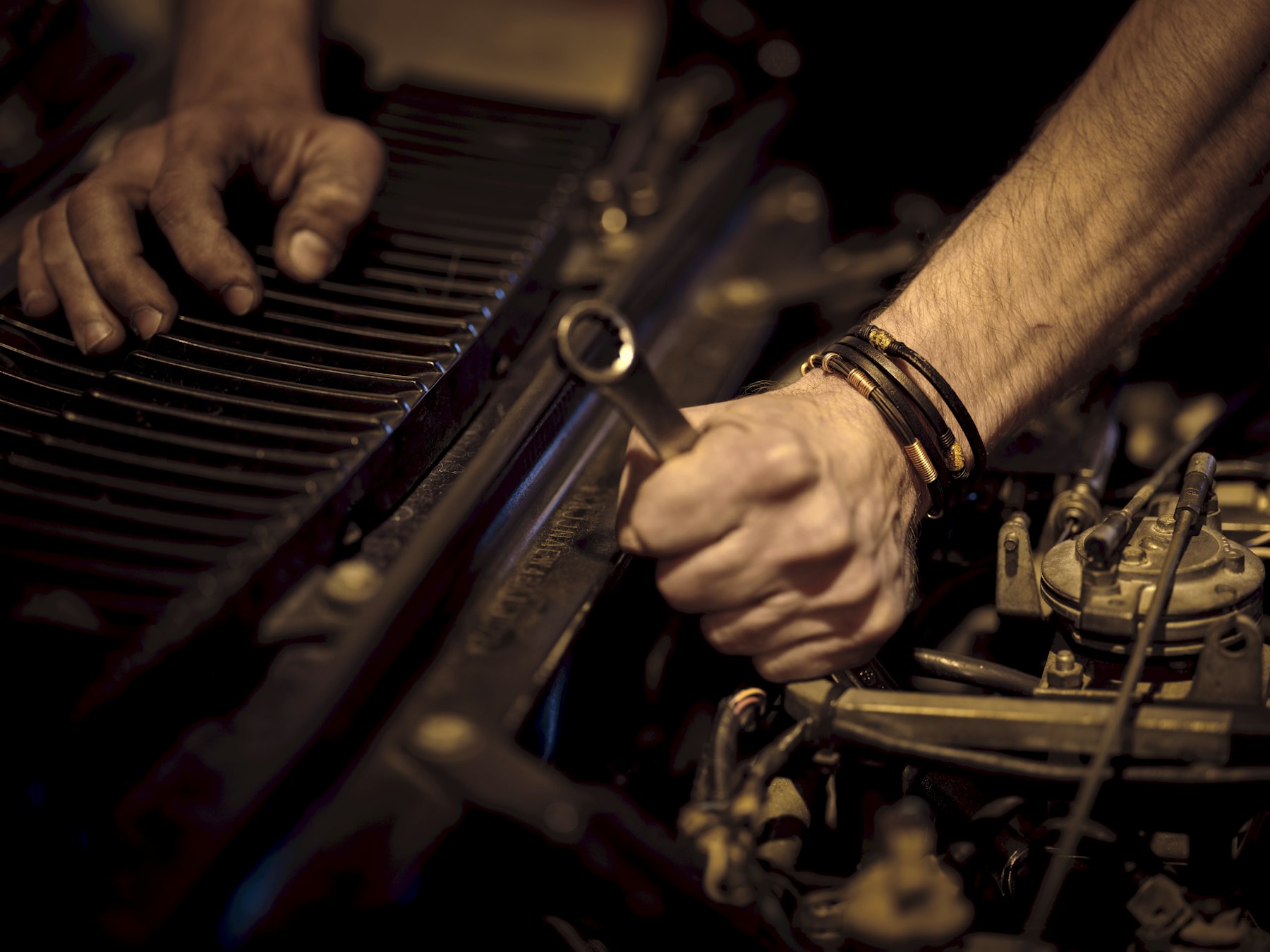
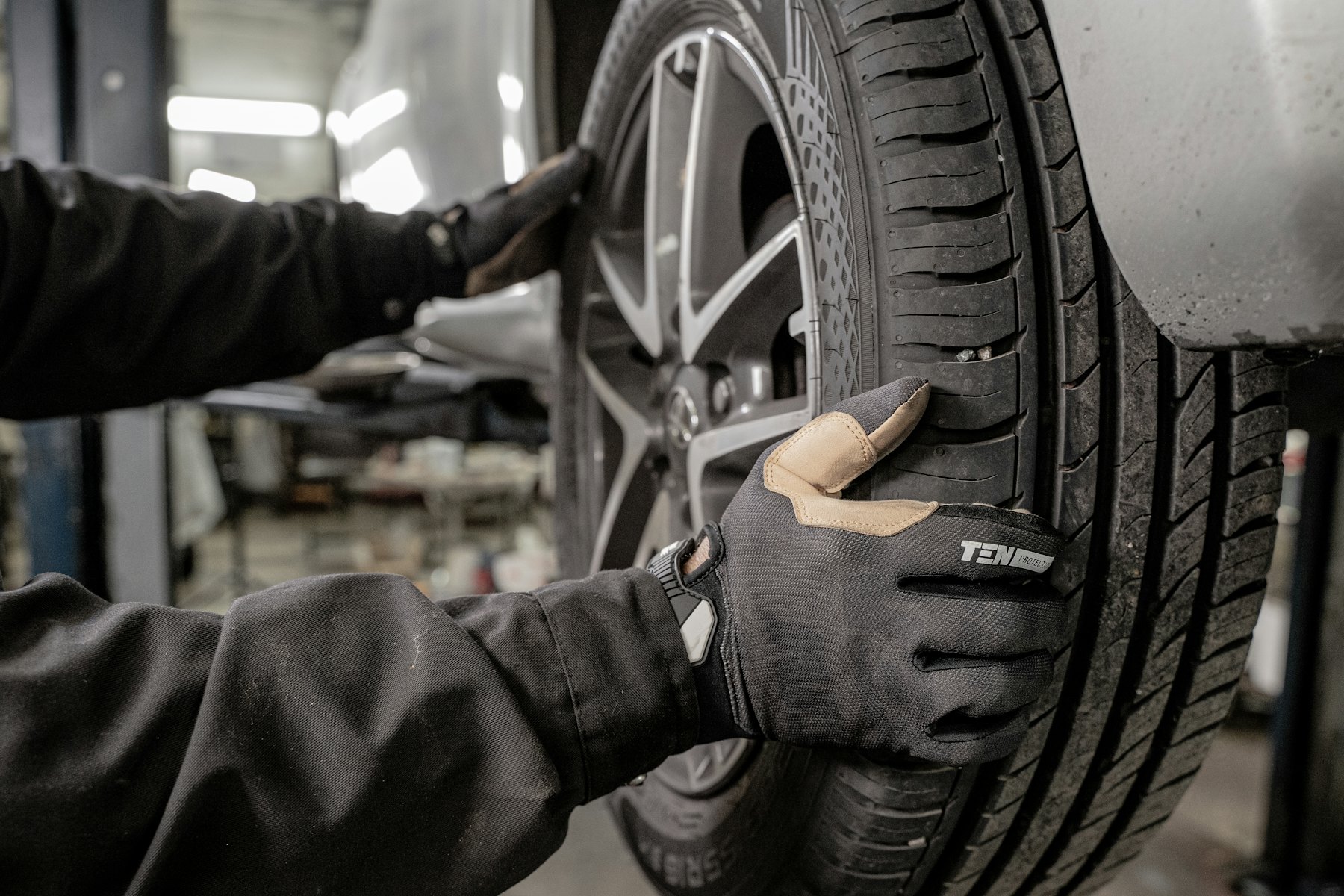
Then there is the hands-on check, which is why we do this at your curb rather than over the phone. Wheel off the ground, hands at the twelve and six positions on the tire, rock it. Play there means something in the hub or the suspension has slack. Hands at nine and three with movement instead points more toward tie rods, so the two positions separate two different repairs. We spin the hub by hand too, feeling for the rumble a dry bearing makes under a palm.
What we listen forA hum rising with speed, a growl that swells when you steer one way, a rhythmic droning that sounds like tires but does not change when you swap them, or a grinding that appears cold and never fully goes away.
The figureQuoted before the wheel comes off, with no hourly minimum sitting underneath it. Diagnosis is part of the visit, not a separate charge invented later.
CoverageNapa and Solano counties, the I-80 and Highway 29 corridors, and out toward Sonoma, Marin, Contra Costa and Alameda. See the full map.
Why a noisy bearing turns into a dangerous one
People treat bearing noise as a comfort problem because that is how it starts. It is worth understanding what is physically happening instead. A wheel bearing is a set of hardened rollers or balls running on polished races, sealed with grease. The noise begins when a seal lets water or grit past, the grease stops doing its job, and the rollers start scoring the races they ride on. Every mile after that is metal grinding metal, and the damage accelerates rather than holding steady.
What follows is slack. As the rollers and races wear, the hub can tilt slightly on its axis. Now the brake rotor is no longer running true, so the pads knock back and your pedal travel grows. The wheel speed sensor sits right there in most modern hubs, and a hub wobbling a fraction of a millimeter feeds the ABS module a signal that does not match reality. That is how a bearing complaint turns into an ABS light and a traction control light on the same drive.
At the end of that road the hub seizes. That outcome is rare because most people fix the noise first, but a bearing left growling for two months has usually taken a hub and sometimes a sensor with it.
Which ones we finish at your curb, and which we do not
Not every bearing is roadside work, and the deciding factor is how it is held in the vehicle. Worth saying before you book.
- Bolt-on hub assembliesMost front wheel drive cars, crossovers, and modern pickups use a sealed hub that bolts to the knuckle. Axle nut off, three or four bolts out, new unit in, torqued to spec. This is straightforward work on stands and we finish it on site.
- Pressed bearingsOlder and some rear applications use a bearing pressed into the knuckle or hub. That takes a hydraulic press and real tonnage. We can sometimes pull the knuckle, press it elsewhere and refit, but we will not pretend a press job is a driveway job.
- Rear axle bearings on solid axlesTrucks and vans with a live rear axle need the axle shaft pulled, and sometimes a puller for a retainer ring. Doable in a yard on the right vehicle, and honestly quoted for time when it is not.
- Seized on the vehicleCorrosion decides more of this than the part number does. A hub rusted into a knuckle can double the job, so we name that risk on the call rather than discovering it in front of you.
You hear which of those four your vehicle is before anybody commits.
The CV axle that fails right next door
While a wheel is off for a bearing, the CV axle is sitting exposed, and it is worth two minutes of looking. A constant velocity joint is packed with heavy grease and sealed behind a ribbed rubber boot. When that boot splits, and they split from age and road salt long before the joint itself is tired, centrifugal force flings the grease across the inside of the wheel well in a spray you cannot miss once you know the pattern.
Catching a torn boot early is one of the genuinely cheap repairs in this trade, because the joint underneath is usually still good. Ignore it and grit gets in, the joint wears, and you get the signature clicking on tight turns that means the axle needs replacing rather than resealing.
A growling bearing and a slinging boot on the same corner is common, and doing both in one visit beats paying for the same teardown twice.
You will hear which side, why we think so, and what it takes to fix it, before a single part is ordered.
Freeman Roadside Repair
Related work on the same corner of the vehicle
Hub noise, steering slack and brake complaints share symptoms often enough that we check the neighbors before we blame the bearing.
Tie rod replacement
Play at the nine and three positions instead of twelve and six, plus wandering at freeway speed.
Control arm replacement
Worn bushings and ball joints make their own clunks. Easy to blame a bearing for these.
Shock replacement
Cupped tires from tired dampers produce a droning noise that fools people into buying bearings.
ABS diagnostics
A wobbling hub upsets the wheel speed sensor sitting inside it. Scanned before anything is replaced.
Brake inspection
Growing pedal travel can come from a tilting hub rather than from the brakes themselves.
Steering system diagnostics
When three parts could explain one symptom, we find the right one before buying any of them.
What drivers ask about bearing noise
Not here? Call.
How can I tell a bad bearing from a bad tire?
Tire noise usually changes on different road surfaces and often shifts when the tires are rotated. Bearing noise tracks road speed and typically gets louder when you steer gently one way, because that loads the opposite side of the vehicle. If a growl swells when you swing left, suspect the right side. We confirm it by hand with the wheel off the ground rather than guessing from the driver’s seat.
Is it safe to drive on a noisy wheel bearing?
For a short distance at moderate speed, usually. As a plan for the next few months, no. A worn bearing keeps wearing and it takes the hub with it, then the play upsets the brake rotor and the wheel speed sensor mounted in the hub. Grinding that you can hear with the windows up, or noise paired with a wobble you can feel through the wheel, means stop driving it and call.
Can you replace a wheel bearing at my house?
If your vehicle uses a bolt-on hub assembly, which covers most modern cars, crossovers and pickups, yes, on stands at your home or yard. If it uses a bearing pressed into the knuckle, that needs a hydraulic press and is not driveway work. We identify which one your vehicle has when you call, so nobody is surprised in the driveway.
Do bearings have to be done in pairs like brakes?
No. Bearings fail individually, and replacing a healthy one gains you nothing. Brakes and shocks are paired because they affect the vehicle’s balance side to side. A bearing simply spins or it does not. If the other side is also noisy we will tell you, but we are not going to sell you two when one is bad.
What is that grease sprayed inside my wheel?
A split CV axle boot. The joint is packed with grease behind a rubber boot, and when the boot tears the grease gets flung around the wheel arch. Caught early the boot can often be replaced while the joint is still good. Left alone, grit gets in, the joint wears, and you get clicking on tight turns, which means a new axle instead.
Why did my ABS light come on with the noise?
On most vehicles the wheel speed sensor lives inside the hub assembly. When the bearing wears, the hub tilts a fraction and the sensor reads a signal that does not match the other wheels, so the module sets a fault. Replacing the hub usually clears it. We scan the codes first, because an ABS light can also be a sensor or wiring fault with nothing wrong at the bearing.
Describe the noise and we will name the corner.
Speed it starts at, whether it changes when you steer, whether you feel anything through the wheel. That is usually enough to know what we are dealing with before we arrive. One number reaches the mechanic directly, any hour of the night.
HoursMonday to Sunday, 24 hours
Based inAmerican Canyon, CA
Worth a lookEvery service we run · Job photos · Reach us