
Two machines, one registration. Both halves break.
A dump truck is a road truck carrying a hydraulic machine on its frame, and the two fail in completely different ways. Freeman Roadside Repair covers both ends: hoist, PTO, bed and tailgate, plus the brakes, air system and tires that keep it legal.
- Open 24 hours, seven days
- No hourly minimum
- A price before work starts
- Single axle through transfer and end dump
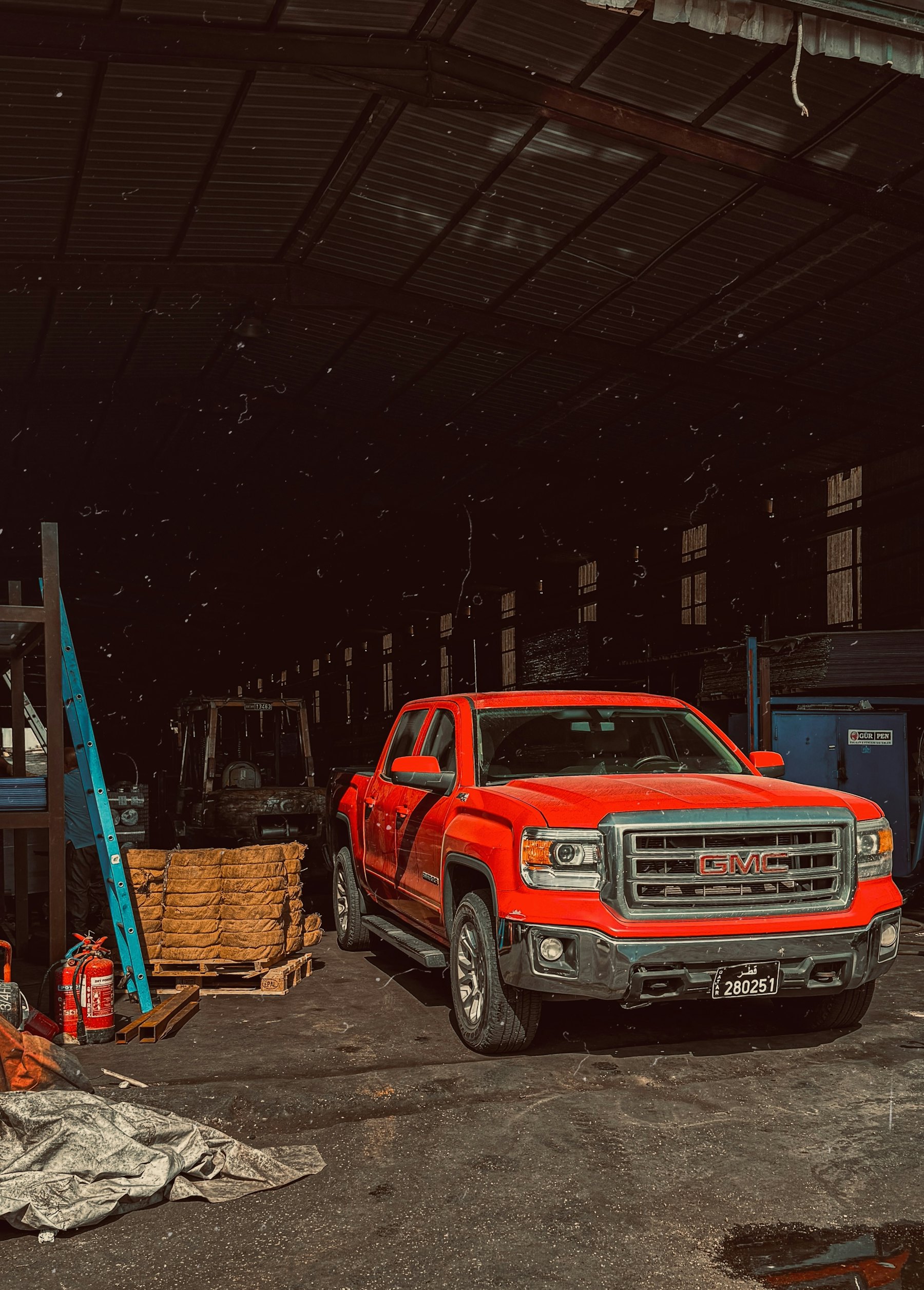
The truck half and the hydraulic half fail differently
Owners often call about a dump truck the way they would call about any other truck, and then the conversation splits almost immediately. Half of what stops these vehicles is ordinary commercial truck trouble: air pressure that will not build, a slack adjuster out of range, a wheel seal weeping onto a brake drum, a charging fault, a tire. The other half has nothing to do with driving at all.
That second half starts at the transmission. A PTO takes power off the gearbox and drives a pump, the pump feeds a hoist cylinder, and the cylinder lifts a loaded bed. Add the body itself, the hinge pins it pivots on, the tailgate and the latch mechanism that holds several tons of material back until you want it gone. None of that exists on a normal truck, and none of it gets diagnosed with a scan tool.
Will not raiseStart at the PTO. If it is not engaging, the pump never turns and the best cylinder in the world will sit still.
Will not stay downA bed creeping up, or a body that will not seat flat, is usually valve or linkage rather than cylinder.
A real number before we rollOne figure covering the drive out and the repair, quoted before anybody commits. Short jobs carry no hourly minimum. Send the truck and the symptom.
A bed that will not go up, and a bed that will not stay down
These sound like opposite problems and they mostly are, but people describe both as the hoist being broken. A bed that will not raise almost always has a supply fault ahead of the cylinder. The PTO is not engaging, the air or cable shift is not making it engage, the pump is not producing flow, the fluid is low, or the control valve is not sending oil where it belongs. The cylinder is the last thing on that list, not the first.
A bed that will not stay down, or drifts up a few inches on its own, is a different story. That is usually a valve that is not returning fully, a linkage out of adjustment, or air trapped in the circuit from a repair that was never properly bled. It is also genuinely dangerous, since a body that creeps while somebody is under the frame or near the hinge is exactly the situation that hurts people.
Nobody should be standing near a raised body they do not trust. If it creeps, stop using it and call. That one is not worth finishing the day over.
Patrick Freeman, owner

Loaded or empty decides what happens next
The first question on a dump truck call is almost always whether there is material in the bed, because the answer changes the whole plan. An empty body can be raised and blocked safely with proper stands, which opens up the hoist, the cylinder, the hinge area and the frame rails underneath. A loaded body cannot be trusted that way, and no amount of being in a hurry changes it.
When a truck quits with a load on, the honest sequence is usually to get the material out first, even if that means a different truck, a loader, or dumping in a spot nobody planned on. That is not us avoiding work. It is that the repair itself becomes shorter and safer once the weight is gone, and the alternative is somebody working under a body held up by a system that has already proven it is not reliable.
Dump truck work handled in the field
Both halves of the truck, at your yard, the plant or the shoulder. What we cannot do on site is internal engine and transmission work.
Hoist, PTO and pump
Engagement faults, slow and weak lifts and no-lift complaints traced from the PTO forward, with flow and pressure read under real load.
Hoist cylinder service
Cylinders that drift, bypass or leak at the gland. Seal work in the field where the job allows, bench work when it does not.
Body, tailgate and latches
Worn latch mechanisms, bent or seized pins, hinge wear and cracked body mounts repaired with the welding gear on the truck.
Air brakes and air system
Pressure that will not build, dragging brakes, adjusters out of range, dryers, governors and the leaks that empty a system overnight.
Hoses, lines and fittings
Burst hoist lines and chafed runs along the frame matched and made up on site, routed clear, then bled and cycled before we leave.
Chassis service and repairs
Oil, filters, wheel seals, lights, charging and starting faults on the road truck half, done at your yard between loads.
What a DOT officer looks at, and what stops your week
Most dump truck downtime is preventable, and the same checks that keep a truck working keep it from being put out of service at the scale.
- Chase air leaks when they are smallA system that bleeds down overnight is telling you where a roadside failure is coming from. Small leaks are cheap. An out-of-service sticker is not.
- Keep brake adjustment in rangePushrod travel outside spec is one of the most common violations written, and it is one of the fastest things to correct before it becomes a citation.
- Watch hoist oil level and conditionLow or dirty fluid kills pumps and valves quietly. Topping a system that keeps dropping is treating a symptom and ignoring a leak.
- Grease hinge and cylinder pinsDry pivots wallow out, the body goes out of square, and the tailgate stops sealing. All of that starts with a grease gun nobody picked up.
- Look at the tailgate latch weeklyWorn latches and bent pins let material dribble on the road, which is both a hazard and something an officer will notice immediately.
- Deal with tires before the shoulder deals with themSteer and drive condition on a loaded truck is not somewhere to run things thin. A blowout under weight is an ugly way to find out.
If your paperwork side needs attention as well, BIT and FMCSA inspections are handled at your yard, and fleet inspections cover the rest of the trucks in the same visit.
Dump truck questions we hear most
Truck down with a load on it? Call first. That situation changes fast and a phone call sorts it quicker than reading.
My bed will not go up at all. Where does that start?
At the PTO, not the cylinder. If the PTO is not engaging, the pump never turns and nothing downstream can work no matter what condition it is in. We check the shift mechanism, whether it is air or cable, the switch and the PTO itself, then fluid level and pump output before anybody looks at the hoist. Working in that order is what keeps you from paying for a cylinder that was fine the whole time.
The body creeps up on its own. Is that dangerous?
Yes, and it is worth taking out of service until it is fixed. A body that drifts is telling you the valve is not holding or the linkage is out of adjustment, and either one means the position of that bed is not under your control. The risk is not the truck, it is whoever walks under a raised body or stands near the hinge. Park it, keep people clear of it, and call.
Can you work on it with a load in the bed?
Usually the load needs to come out first, and that is a safety call rather than a preference. An empty body can be raised and blocked on proper stands so there is safe access to the hoist, pins and frame. A loaded one cannot be trusted that way. Getting the material off, even into a spot nobody planned on, almost always makes the repair shorter as well as safer.
Do you handle the brake and air side too, or only the hydraulics?
Both, and most owners want both from one visit. Air pressure that will not build, dragging brakes, adjusters out of range, dryers, governors, wheel seals and the overnight leaks that drain a system are all normal work for us, same as the hoist and body side. It saves you scheduling two vendors around one truck that is already down.
My tailgate is dribbling material down the road. What causes that?
Almost always latch and pin wear, sometimes a body that has racked out of square from worn hinge pins. The latch stops pulling the gate in tight, the seal no longer meets evenly, and material finds the gap. It is worth dealing with quickly: besides the hazard on the road behind you, it is the kind of thing that gets a truck looked at closely by somebody in a uniform.
Will you come to a quarry or plant yard?
Regularly, and those are some of our better calls because there is room to work and solid ground under the truck. Napa and Solano are short runs. Contra Costa, Alameda and Sonoma take longer, and you will get a real arrival window rather than an optimistic one. Sign-in rules and site safety requirements are no problem, just tell us what the gate expects.
Which half is giving you trouble?
Make, configuration and whether the truck drives are enough to start. Hoist, body, brakes or air, each one sends a different set of parts out on the truck.
HoursMonday to Sunday, 24 hours
Based inAmerican Canyon, CA
Also on siteHydraulic work · Inspections · Gallery