
Vallejo’s brake guy works in the driveway.
A squeal that has turned into a grind, a wheel shaking under the pedal, a car pulling to one side coming down off Glen Cove. Brake work needs the wheel off and level ground, not a lift, so most of it finishes where the vehicle already is.
- Open 24 hours, seven days
- No hourly minimum
- What the job runs, before we roll
- Cars, trucks, trailers and fleet
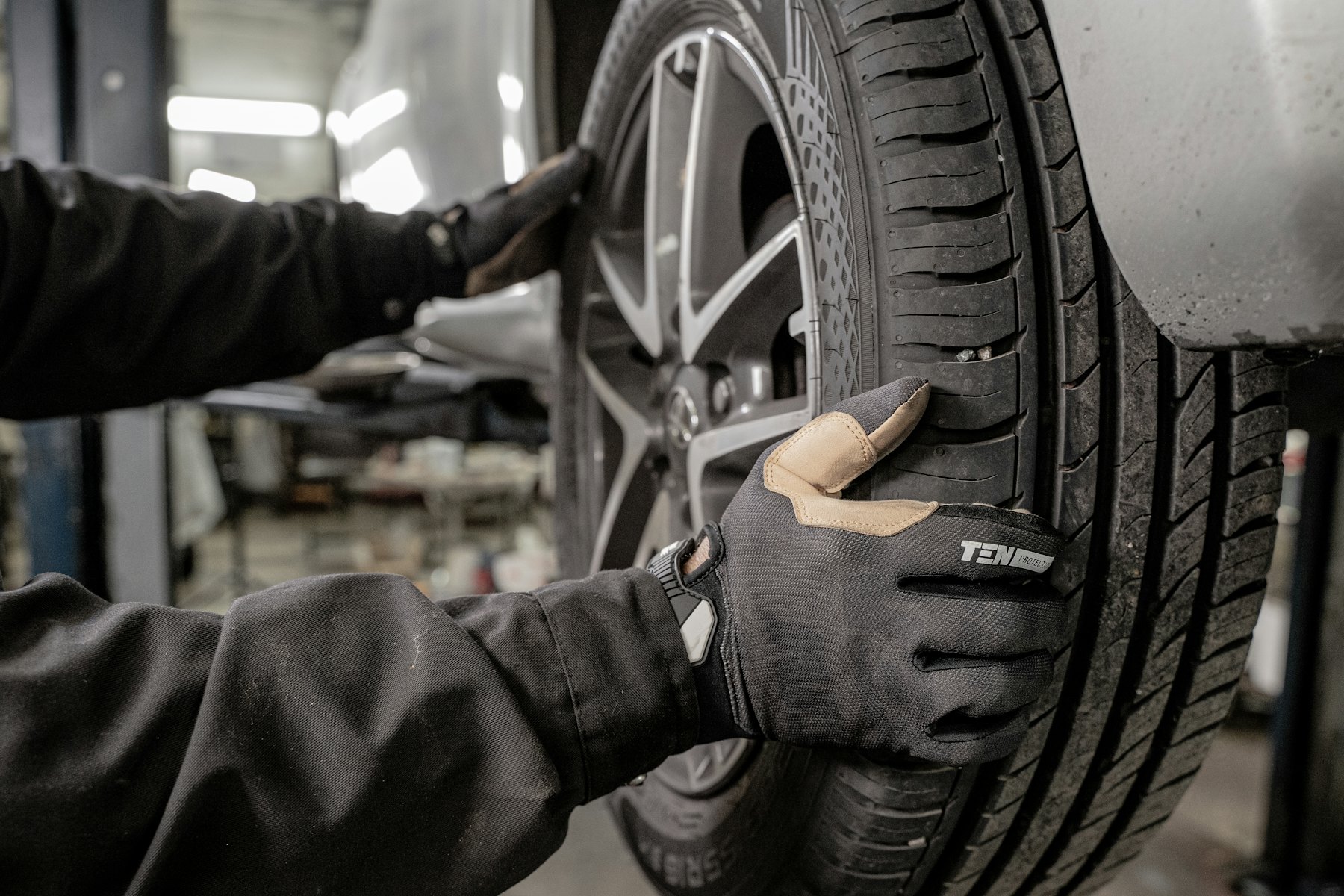
Why pads go faster on this side of the county
Brake wear is a function of how often you stop and how hard, and Vallejo asks for both. Sonoma Boulevard and the Highway 29 corridor are stop-and-go for their whole length, with lights close enough together that a commute becomes a few hundred brake applications rather than a few dozen. Tennessee Street does the same thing across town toward the freeway ramps.
Then there is the terrain. Glen Cove and Hiddenbrooke both sit above the rest of the city, so a daily drive includes a descent, and a descent on the brakes rather than in a lower gear is where pad material actually disappears. Add a loaded work truck or a trailer behind the vehicle and the same hill takes twice as much out of the pads.
The practical result is that a set of pads here does not last what the manufacturer’s schedule suggests, and the schedule is not what most people go by anyway. They go by noise. The trouble with noise is that by the time it has changed from a squeal to a grind, the cheap repair has already turned into the expensive one.
Worth a call todayA squeal that has become a grind, a pedal sinking while you hold it at a light, the wheel shaking under braking, a burning smell after a hill, or a parking brake that will not release.
What it costsWhat it’ll cost before the truck leaves, and no hourly minimum on the inspection.
The wider pictureThe rest of what gets called in here is on the Vallejo page.
What the sound is actually telling you
- A squeal at low speedThe wear indicator doing its job. A small metal tab touching the disc on purpose, to say the pads are near the end. This is the cheap stage, and it lasts weeks rather than months.
- A grind that you feel in the pedalThe friction material is gone and the backing plate is on the disc. Every mile from here scores the rotor deeper, which turns a pad job into pads plus rotors.
- A shake through the steering under brakingRunout in the front discs, usually from heat. Feeling it in the seat instead of the wheel points at the rear.
- A single squeak that comes and goesOften a stone or rust film after a damp night near the water, gone within a mile. Worth watching rather than worrying about.
- A car pulling to one side as you slowA caliper not releasing. That side gets hot, smells, and eats its pad and rotor while the other side stays fine. Worth stopping for.
Measured before anything gets sold
Pad thickness and rotor thickness are both numbers, and the manufacturer publishes a minimum for each. The inspection is reading those numbers, not forming an opinion.
Pads only
When the disc is above its minimum thickness, running true, and not scored. The cheapest outcome, and the common one when somebody calls at the squeal rather than the grind.
Pads and rotors
When the disc is under minimum, deeply scored, or distorted enough to shake the wheel. New pads on a bad disc will judder and wear unevenly, so this is not an upsell.
Calipers
A piston that will not retract drags the pad and cooks the rotor. Replaced and bled where the vehicle sits, usually alongside the pad and disc it ruined.
Hardware and slide pins
Clips, shims and pins cleaned and greased on every job. Reusing cooked hardware is why a new set of pads starts squealing within a month.
Fluid
Old fluid holds water, which boils on a long descent and rusts the system from inside. Flushed and bled at your location when the reading calls for it.
The bed-in drive
A short run with controlled stops so pad material transfers evenly to the disc. Skipping it is why cheap brake jobs judder a month later.
A pad at three millimeters is a scheduling decision. The same pad ignored for two months is a rotor, a caliper and a tow.
Why the measurement matters
Work vehicles off Mare Island and the waterfront blocks
The industrial blocks near the waterfront and the yards on Mare Island run vehicles that brake for a living. Delivery vans doing a hundred stops a shift, contractor trucks loaded heavy, and trailers heading down to the launch ramps. All of them wear brakes faster than the commuter car in the next lane, and all of them are worth more standing still than a car is.
Trailers get their own mention because a trailer rarely gets towed anywhere on its own. Electric trailer brakes, the wiring behind them, and bearings that have run hot are all roadside work. On a boat trailer coming back from a ramp, a hot hub is the thing to stop for rather than push on with.
Where a brake job stops being a driveway job
Most of it is straightforward with the wheel off and the vehicle level. A few things are not, and saying which is which on the phone is cheaper for everyone than finding out in your driveway.
- Pads, rotors, calipers and flexible hosesAll accessible on jack stands, which is how brake work was done long before every shop had a lift. This covers the large majority of what gets called in.
- Rotted hard line along the frameWants a lift and a proper flare tool, and on a vehicle that has spent years in the salt air down here it is worth checking before assuming the leak is at the caliper.
- Master cylinders and vacuum boostersBuried behind other components on most vehicles, and a job that needs the car immobile for a long stretch. This one goes to a shop.
- Electronic parking brakesDoable on site, but the caliper has to be retracted with a scan tool before the pads come out. Putting it back without one destroys the caliper, which is why the tool is on the truck.
- A pedal that has gone to the floorDo not drive it to find out. A leak at a hose or caliper is repairable where it sits; a line that has let go along the frame is not, and the vehicle should not move under its own power.
Where the brake calls come from
The whole city, the hills at Glen Cove and Hiddenbrooke, the Sonoma Boulevard corridor and the yards on Mare Island. The full list of what this covers is on the mobile brake repair page.
If the disc is fine, you pay for pads. Nobody has ever been sold a rotor here because it was easier to replace than to measure.
How the inspection works
What callers ask about brakes
Short answers. The rest take about a minute to settle by phone.
Can you really do brakes without a lift?
Yes, on jack stands, which is how brake work was done long before every shop had a lift. Pads, rotors, calipers and flexible hoses are all reachable with the wheel off. What needs a lift is rotted hard line along the frame or a master cylinder buried behind other components, and we say so on the phone rather than after starting.
How do I know if I need rotors or just pads?
By measuring. Every disc has a published minimum thickness, and the reading either clears it or does not. If the disc is above minimum, running true and not scored, you pay for pads. New pads on a warped or undersized disc will judder and wear unevenly, so that case is not an upsell.
My car shakes when I brake coming down the hill. What is that?
Almost always heat distortion in the front discs, which is exactly what a repeated descent produces. If you feel it in the steering wheel it is the front, and if you feel it in the seat it is the rear. Either way it is a measurement job, and it does not fix itself.
How long does a brake job take at my house?
An axle of pads and rotors on a typical car or pickup runs about an hour and a half once we are parked. Add time for seized hardware, a caliper that has to come off, or a fluid flush. You get a realistic window when you call rather than a number designed to get us into the driveway.
My pedal goes to the floor. Should I drive it to you?
No. A pedal that sinks means fluid is escaping or the master cylinder is failing, and the vehicle should not be driven to find out which. A leak at a flexible hose or caliper is repairable where it sits. Call before you move it, and we will come to wherever it is parked.
Can you do brakes on a work truck or a trailer?
Yes. Air brake chamber and slack adjuster work on commercial trucks and trailers is part of what we do, along with electric trailer brakes and the wiring behind them. We come to the yard or wherever the unit is parked, which beats paying to tow something that cannot roll safely.
Brakes are the one worth calling about today.
A grinding pad is metal on metal, and every mile makes the repair bigger. One number reaches the mechanic directly at any hour. Describe the noise and name the vehicle, and you will have a price and an arrival window before the call ends. If it is not urgent, send the details instead and we will find a time.