
When the pump quits in July, you are on a clock.
Most breakdowns cost time. An irrigation failure during a heat run costs a crop, and the countdown starts the moment the water stops. Freeman Roadside Repair works on pumps, motors, pivot drives and pressure problems at the wellhead and in the field, at whatever hour the call comes in.
- Open 24 hours, seven days
- No hourly minimum
- Pumps, drives, gearboxes, controls
- Napa, Solano and the Delta edge
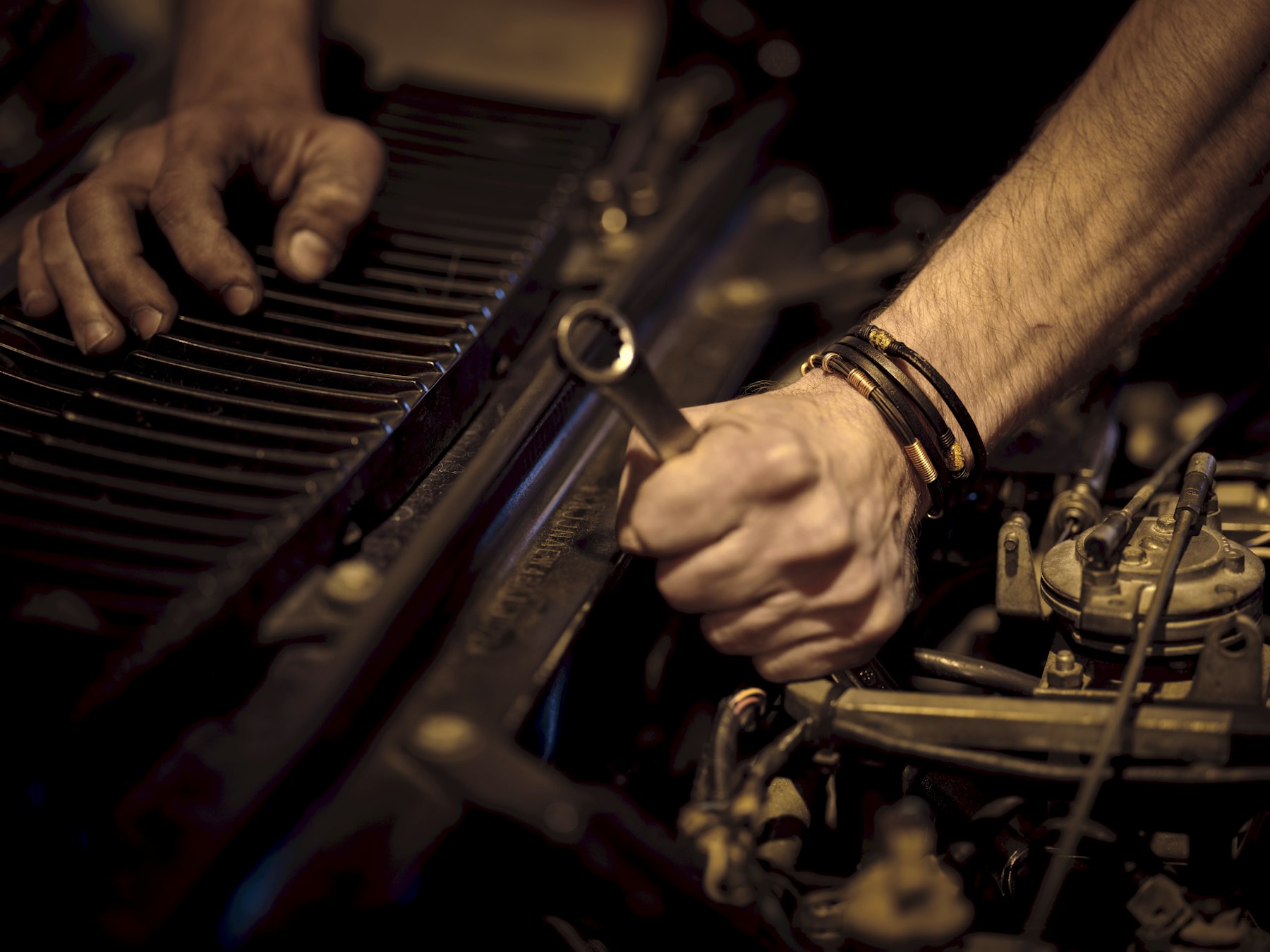
A failure here is a countdown, not an inconvenience
Irrigation is the one system on a farm where the consequence of downtime compounds by the hour. Everything else can usually absorb a day. Water cannot, because the plant does not pause while you wait for a part. In a Central Valley-edge summer, with temperatures in the high nineties and a young crop or a vineyard block already under stress, a failure at noon on Friday that does not get fixed until Monday is not a repair bill, it is a yield conversation.
That is why irrigation work gets treated as emergency work by default here. When somebody calls and says the pump will not start or the pivot has stalled in the middle of a circle, the question is not whether it can wait until a slot opens. The question is how fast the truck can be there and what needs to be on it when it arrives.
The work covers the equipment: pumps and the engines or motors turning them, pivot and lateral drive trains, gearboxes, valves, controls and the leaks and pressure problems that show up along a long run. Well drilling, water rights, design and system layout belong to other trades, and if a problem lands over that line you will be told rather than billed for someone finding out.
What people call aboutA pump that will not prime or loses prime, a motor that hums without turning, pressure that has dropped across the system, a pivot that stalls or crabs, a stuck tower and a gearbox leaking oil down its own housing.
The cost questionBefore anything starts you get one figure covering the visit and the repair, and there is no separate charge for the miles between here and your wellhead.
ReachNapa and Solano ground is the core, with Yolo, Sonoma and the eastern Contra Costa farming edge covered too. See the coverage map.
Where the water actually stops
Pressure and flow problems are a diagnosis in themselves, because the symptom looks identical whether the cause is at the pump, in the line or out at the last span. Working it in order beats guessing, and guessing at an irrigation problem is expensive.
- Supply and suctionDropping water level, an air leak on the suction side, a plugged screen or foot valve. This is where most “the pump is broken” calls actually end, and none of it requires a new pump.
- The pump itselfWorn impellers and wear rings, packing or seals leaking, a bowl assembly that has lost efficiency on a turbine. Output falls off gradually and the drop can go unnoticed for a season.
- The power turning itElectric motors that hum and will not start, overloads tripping under load, failed starters and capacitors, or a diesel power unit with a fuel, cooling or starting fault.
- The distribution sideLeaks, failed valves, stuck regulators, a blown gasket at a coupling, and sprinkler or emitter plugging that quietly raises pressure while cutting delivery.
- The mechanical driveOn pivots and laterals: motors, gearboxes, driveshafts, alignment and the safety circuits that stop a machine when a tower falls behind.
From the wellhead to the last span
Irrigation borrows from three trades at once: pumps, drives and electrical. Most calls turn out to sit on the seam between two of them, which is why they get worked together in one visit.
Pumps and power units
Centrifugal, turbine and booster pumps, with the electric motors or diesel units driving them. Priming faults, seal leaks, worn impellers and lost output.
Pivot and lateral drives
Drive motors, center drive and wheel gearboxes, driveshafts and couplers, alignment and the alignment switches that shut a machine down.
Control panels and safeties
Start and stop circuits, pressure switches, contactors, overloads, and the intermittent faults that only appear when a panel heats up in the afternoon.
Valves and pressure control
Check and control valves, regulators, relief devices, and the water hammer that damages a system every time a pump shuts down hard.
Leaks and line failures
Couplings, gaskets, risers and mainline damage, including the leaks that never surface but show up as pressure that will not hold.
Drip and micro systems
Filtration, flush cycles, plugged emitters and the pressure imbalance that develops across a long block as filters load up.
Pumps outside agriculture
Process, transfer and dewatering pumps on industrial and construction sites are handled separately and have their own page.
Farm hydraulics
Cylinders, pumps and hoses on the tractors and implements around the irrigation system get covered there rather than here.
Nobody calls about a pump because it is convenient. They call because the field is drying and they have run out of people to ask.
Patrick Freeman, owner

Systems that sat all winter fail in the first week of use
There is a reliable spike of irrigation calls in the first warm stretch of the year, and almost all of it traces to the same cause: months of sitting. Seals dry out and weep. Rodents chew wiring and build nests inside panels. Bearings that were fine in October have corroded. Gearbox oil has leaked away past a tired seal. None of it announces itself until the system is asked to run.
The useful move is to make that first run happen on your schedule instead of on the first ninety degree day. Starting the pump, walking the system under pressure, checking gearbox oil levels, cycling the safeties and looking inside every panel turns a probable July emergency into a March morning.
Mid-season is about noticing trends instead of waiting for failures. Pressure drifting down over weeks, a pivot taking longer per circle, fresh oil on the outside of a gearbox: all warnings with lead time in them. The same logic runs through the seasonal maintenance work on the rest of an operation’s equipment.
Questions that come up at the wellhead
If none of these match what is in front of you, stop reading and dial. Somebody with a wrench in his hand takes the call, whatever time it is.
My pump will not prime. Is it worn out?
Usually not. Loss of prime is far more often an air leak on the suction side, a failed foot valve, a plugged screen or a water level that has dropped below where the pump can reach it. All of those are cheap compared to a pump. The check is straightforward at the site, and it is worth doing before anyone starts talking about pulling a pump, because a pump that is pulled unnecessarily is an expensive way to find out the suction line had a crack in it.
Pressure is down across the whole system. Where should I look first?
Start by working out whether flow dropped with it. If pressure fell and flow stayed the same, you are usually looking at a leak or an open outlet somewhere. If both dropped together, the problem is more likely at the pump or its supply: worn impellers, a partially plugged screen, or a water level that has fallen. Knowing which of those two it is on the phone changes what comes on the truck and can save an entire trip.
A pivot tower has stopped and the machine shut down. What causes that?
An alignment safety has done its job. One tower fell behind the others and the circuit cut power rather than let the machine twist itself apart. Behind it is normally a drive motor, a gearbox, a driveshaft or coupler, a wheel that has bogged in soft ground, or the safety switch itself failing. It is diagnosable at the tower, and it is worth resisting the urge to bypass a safety to get the machine moving again.
Can you work on the electrical panel as well as the pump?
Yes, and irrigation is one of the places where that matters most. A pump that will not start is as likely to be a contactor, an overload, a pressure switch or chewed wiring as it is to be anything mechanical. Being able to test the circuit and the pump in the same visit means the diagnosis finishes properly. Where work genuinely crosses into licensed electrical territory, that is said clearly rather than quietly worked around.
How fast can somebody come out when it is already hot?
This is the exact situation the business was built around. Somebody answers the phone at three in the morning as readily as at three in the afternoon, and irrigation during a heat run goes near the top of the list. What you will not get is a comfortable time that quietly becomes tomorrow. If there is a machine half apart somewhere else, you hear about it, because knowing you have four hours to find another option is worth more than a reassuring answer.
Should a system be checked before the season starts?
It is the best money in this trade. A startup visit means running the pump, walking the system under pressure, checking gearbox oil, cycling safeties and opening every panel. It catches dried seals, chewed wiring, corroded bearings and low gearbox oil while the calendar still has slack in it. A morning in spring is worth several times what the same fault costs on the hottest week of summer.
Say what stopped and where the water is.
The number goes straight to the person who will be doing the repair. Describe the pump, the pivot or the line, what it was doing before it quit, and how long the field has already been dry. The cost and the drive time get settled in that same conversation.
HoursMonday to Sunday, 24 hours
Based inAmerican Canyon, CA
Close byField equipment repair · Ag diesel · Gallery · Contact