
The sealed unit that dies quietly
A final drive gives you plenty of warning. The trouble is that all of it is quiet: a faint whine, a slow weep of oil down the sprocket, a level that reads low every time somebody checks it. Ignored long enough, the warning stops and the machine simply will not travel.
- Open 24 hours, seven days
- No hourly minimum
- What it’ll cost before the truck leaves
- Reseal before replace where it is possible

What a final drive is, in words that are useful
On a tracked machine, the final drive is the sealed gearbox at each end of the track that turns the sprocket. A hydraulic motor spins fast with modest force, and the gearbox trades that speed for the force it takes to move a twenty ton machine. Inside is a planetary set: a small central gear driving several larger ones around it, all running in a bath of gear oil behind a set of seals.
Everything about its life comes down to that oil and those seals. The gears are hard and they are built to last thousands of hours if they stay clean and lubricated. The seals are the weak point, and they live in the worst possible place, right at the sprocket where mud, rock, wire and abrasive fill are packed against them every hour the machine runs.
When a seal starts to pass, two things happen at once. Oil leaves, and dirt arrives. Neither is dramatic on day one. Both compound. The whole economics of final drive work sits in that gap between the first symptom and the failure, which on most machines is measured in months.
What this coversFinal drives and travel motors, plus the axle, differential and transmission work on wheeled machines: loaders, backhoes, telehandlers and articulated equipment.
Before anything is openedYou get a real number before we roll, and the diagnosis is separated from the repair so you are never paying to find out whether you have a problem you already suspected.
How far we travelOut of American Canyon across Napa and Solano daily, and further into Sonoma, Contra Costa and Alameda when the machine warrants the run. Look at the coverage.
The oil check almost nobody performs
Final drive oil has a level plug and a drain plug, and checking it takes a few minutes per side once the sprocket is rotated so the plugs sit right. Most machines in this valley go their entire working life without anyone doing it. The service interval exists, it is in the book, and it is quietly skipped because the drive is not leaking visibly and the machine is traveling fine.
What that check buys you is the earliest possible warning. Oil that is low means a seal is passing. Oil that is milky means water is getting in. Oil that comes out thick, dark and gritty, or with fine metal glitter suspended in it, means the gears and bearings inside have already started consuming themselves and the clock is running.
That last one is the important reading. Fine metal in the oil is not yet a failure. It is the window where a drive can come apart on the bench, get new bearings and seals, and go back to work. Run past that window and the same unit turns into a case full of broken teeth, a scored housing, and a bill for a complete replacement drive.
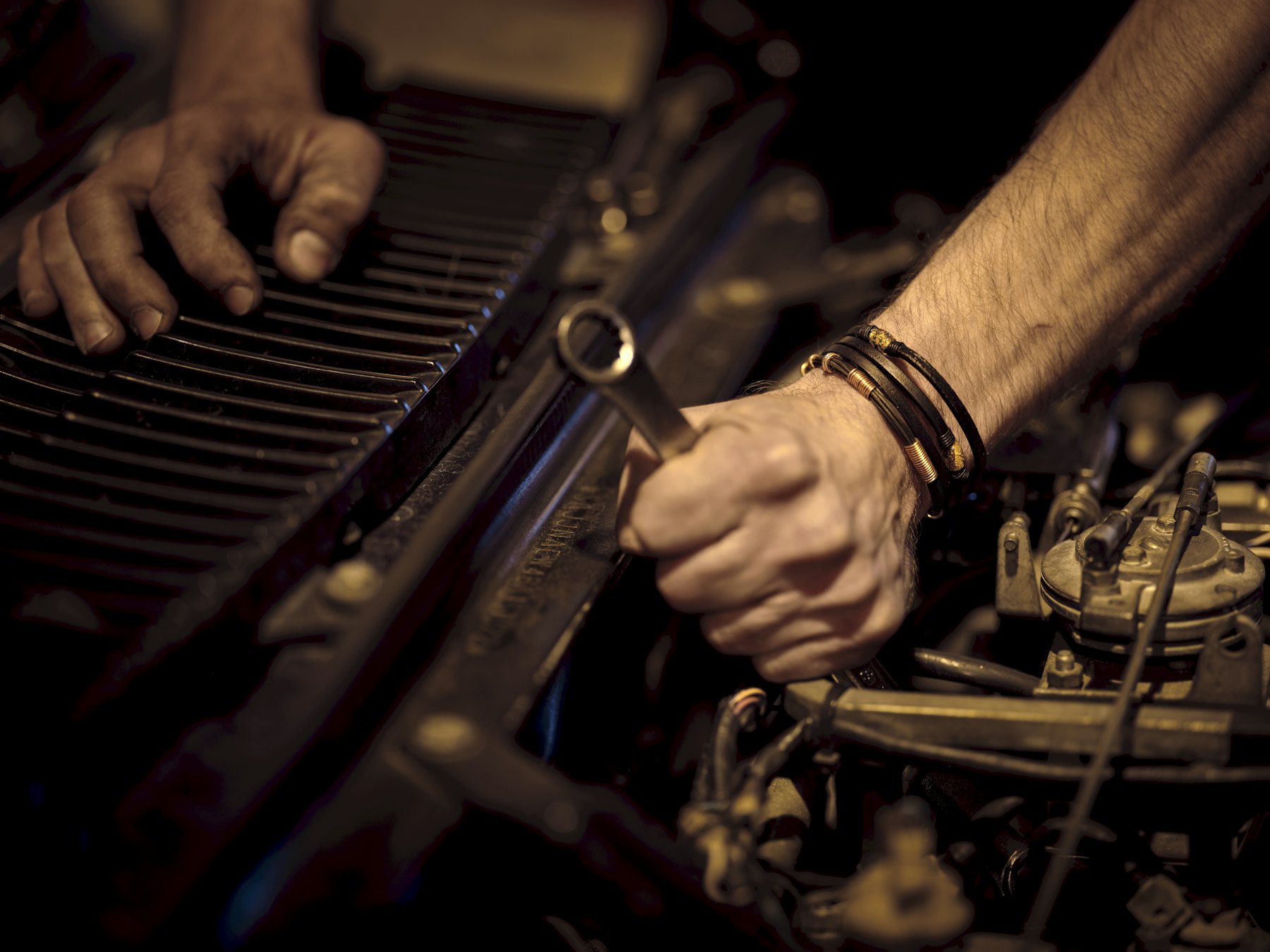
The difference between a reseal and a new drive is usually about six months of somebody deciding to keep an eye on it.
On catching it early
Driveline work on tracked and wheeled machines
The same principle runs through all of it. Sealed housings full of gear oil fail slowly and give warnings. What decides the size of the bill is how long those warnings ran before anyone looked.
Final drive reseal
New seals, bearings and gear oil on a unit whose internals are still sound. The repair that saves a drive instead of replacing it.
Final drive replacement
When the planetary set or the housing is beyond saving, the unit comes off and a replacement goes on, with the sprocket condition checked at the same time.
Axle and differential repair
Leaking axle seals, worn bearings, noisy or damaged differentials on loaders, backhoes and telehandlers, diagnosed by sound, oil and play.
Transmission diagnosis and repair
Slipping, harsh shifts, no drive in a range or overheating traced through pressures and fluid condition before anything gets opened.
Travel motor and pump faults
Weak travel is often hydraulic rather than mechanical. Flow and pressure get tested first so a healthy drive does not get replaced by mistake.
Undercarriage inspection
The sprocket comes off during drive work anyway, so chain, sprocket and roller wear get measured while access is open.

From a whine to a stoppage, and where to intervene
The sound comes first. A final drive that has lost oil or started to wear its bearings develops a whine or a growl that rises with travel speed and is usually louder on one side. Operators notice it and often stop mentioning it, because the machine still works and the noise becomes normal. That is the cheapest moment in the entire sequence to act.
Next comes heat and leakage. A drive running short of oil gets hot enough to notice by hand near the housing, and a passing seal leaves a dark, grease-mixed film down the face of the sprocket that people mistake for ordinary grime. At this point a reseal with new bearings is usually still on the table.
Then the behavior changes. The machine tracks crooked because one side is dragging, or it gets slow on a slope, or it hesitates when you spin it. The gears are already damaging each other. A rebuild may still be possible, but the parts list is growing every hour the machine keeps working.
Last is the stoppage, and it does not schedule itself politely. It happens under load, on a grade, in a trench line, at the point in the day when the machine is working hardest. Now you have a recovery problem on top of a repair problem, and the drive is a replacement. Every stage before that one was cheaper than the one after it.
What owners ask about drive failures
If a machine is making a noise you have not heard before, call rather than wait. Someone answers at any hour.
Can a final drive be repaired, or does it always get replaced?
It depends entirely on what the oil shows and how long it ran that way. A unit caught while the gears are still in good shape can be resealed with new bearings and go back to work. A unit run until teeth are chipped and the housing is scored is a replacement. This is why the oil check matters so much, because it decides which of those two jobs you are buying.
What does metal in the final drive oil mean?
Fine glitter suspended in the oil means the bearings and gears have begun wearing into each other, and it is the clearest early warning you will get. Chips or fragments you can pick up mean real internal damage and the machine should stop traveling. Either way the oil is telling you the truth about the inside of a housing nobody can see into.
How often should final drive oil be changed?
Follow the interval in the machine’s manual, which for most equipment falls somewhere around a thousand hours, and check the level far more often than that. The check is the valuable part. Machines working in water, mud or abrasive fill are harder on seals and deserve a look more frequently than the book assumes.
Why is my machine pulling to one side when traveling straight?
Most often a weak or failing final drive on the slow side, though it can also be a hydraulic issue in the travel circuit or a dragging brake. Those are worth separating before anything is bought, because a healthy drive replaced for a pump problem is an expensive mistake. Flow and pressure testing sorts it out quickly.
Can this work be done on site or does it have to go to a shop?
Removal, reseals and replacements are field work on plenty of machines when there is firm ground, room to work and a safe way to support the weight. A full internal rebuild of a planetary set wants a bench and clean conditions, so that part comes off site. We tell you which one you are looking at before anything is started.
How do you price a job like this?
You hear what the job runs before anything is loaded onto the truck, with the visit and the labor in one figure and no hourly minimum. Parts are quoted once the model is known and the diagnosis is done. Nothing gets added at the end, because the whole reason this business exists is that Patrick spent years watching that happen to other people.
Hearing a whine? Do not wait it out.
Tell us the machine, which side the noise is on, and what the oil looked like if anyone has checked it. That is usually enough to say over the phone whether you are looking at a reseal or something larger, and what it will take to find out for certain.
HoursMonday to Sunday, 24 hours
Based inAmerican Canyon, CA
Nearby jobsExcavator repair · Skid steer repair · Equipment diagnostics · Gallery