
When the boom will not stay where you put it
Drift is the complaint we hear most. A bucket that creeps down while the operator is off the controls, oil running down a polished rod, a load that will not hold. We find out whether it is worth resealing the cylinder you have or fitting a different one, and we tell you which before the work starts.
- Open 24 hours, seven days
- No hourly minimum
- What it will cost before the truck leaves
- Reseal or replace, explained

Drift, and what it is actually telling you
A cylinder that drifts is a cylinder that no longer holds oil on one side of its piston. Park a loader with the bucket up, walk away, come back in twenty minutes and find it lower than you left it. That is the classic version. It is also the one people ignore longest, because the machine still works, so it feels like a nuisance rather than a fault.
It matters for two reasons. The obvious one is safety: anything held up by a leaking cylinder is a load that is coming down at some point on its own schedule, which is why nobody should be under a raised implement that drifts. The second is that the leak is a symptom of wear that keeps getting worse. Oil passing the piston seal carries heat and debris with it, and the surfaces it passes over do not repair themselves.
Drift is not always the cylinder, though, and that is worth testing before anybody takes one apart. A control valve leaking internally lets the load down exactly the same way, from the operator’s seat the two are indistinguishable. Isolating the cylinder settles it: block the circuit and see whether the load still moves. If the drift stops, the valve is the problem and the cylinder was never guilty. That wider circuit testing is covered under hydraulic system repair.
Worth knowing firstHow fast the load drops, whether oil is visible on the rod, and whether the machine is still in service. Those three answers shape the visit.
PricingYou hear what the job runs before anybody drives out, covering the trip and the work, with no minimum charge padding a small repair.
Prepare the machineRest the implement on the ground or on solid blocking before we get there. Ask us what that should look like.
The rod decides everything
People assume a leaking cylinder needs seals. Often it does. But the seal kit is the cheap part of this job, and fitting one into a cylinder with a damaged rod is how a customer ends up paying twice in the same season.
A cylinder rod is steel with a thin, hard chrome plating over it. That plating is what the rod seal rides on, and it works because it is smooth and stays smooth. Job sites attack it constantly. A rock kicked up into the exposed rod leaves a dent or a chip. Grit dragged in past the wiper scores a line down the length of it. Salt, standing water and long idle periods pit the surface, and pitting is worse than scoring because the edges of each pit are sharp.
Any of those damages act like a file on new seals. A pitted or deeply scored rod will chew through a fresh seal kit in weeks and start weeping again, and the customer reasonably concludes the repair was done badly. So the rod gets inspected and felt by hand before we quote anything. Light marks polish out. Deep scoring, chips or pitting across the seal path means the rod needs replacing or the cylinder does.
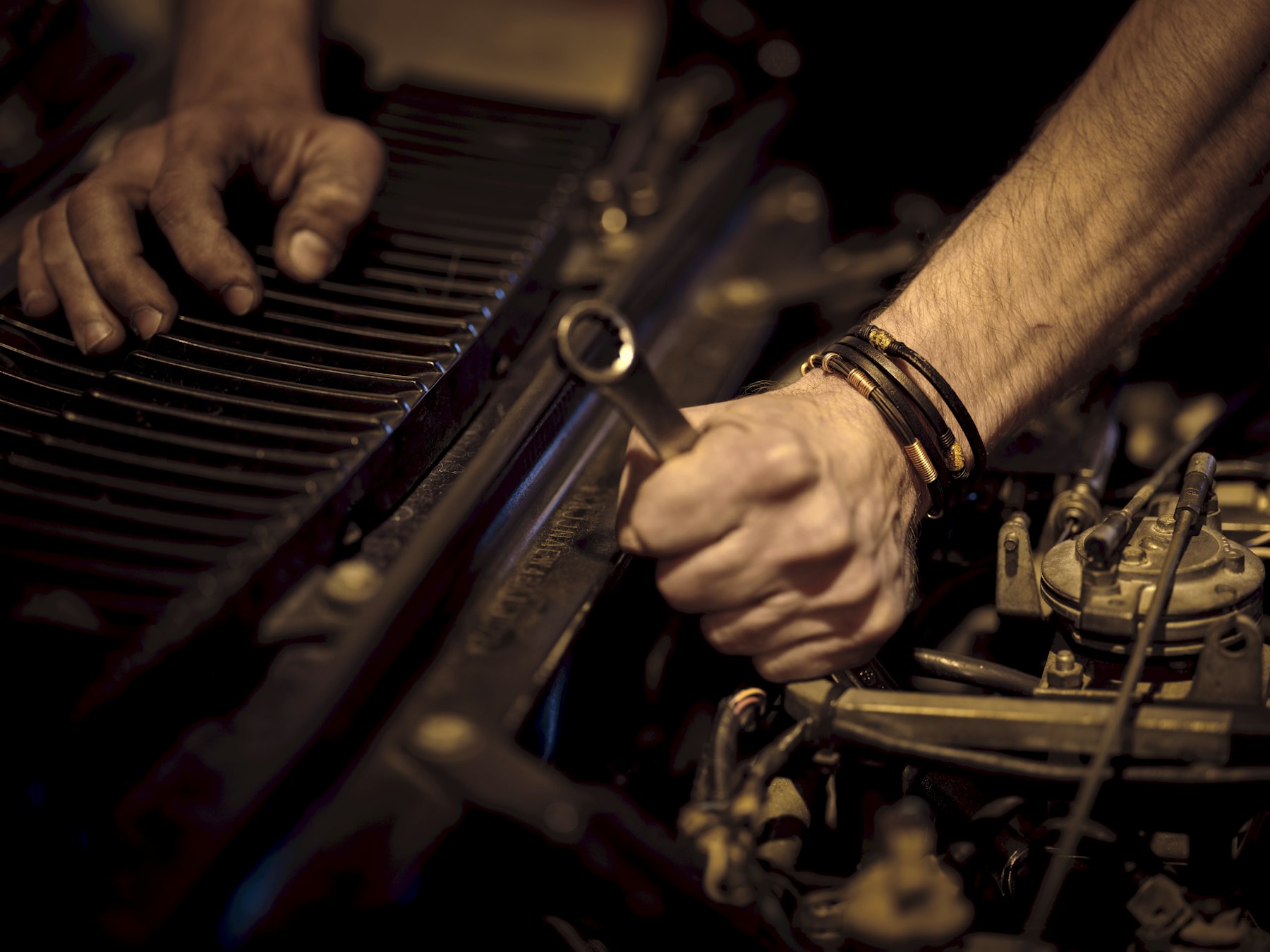
Seals are cheap and the rod is not. We check the rod first so you are not paying for the same repair twice before winter.
Freeman Roadside Repair

Reseal it or swap it
This is the real decision on most cylinder calls, and the answer depends on what the inspection finds rather than on what is quickest to sell.
Resealing makes sense when the rod is straight and its chrome is sound, the bore is not scored, the gland threads are in good order and the cylinder is worth keeping. That describes most leaking cylinders on reasonably maintained machines. It is the economical repair, it uses the cylinder that is already fitted and correct for the machine, and on smaller cylinders it can often be done at your site.
A replacement makes more sense when the rod is bent or pitted, when the barrel is scored or ballooned, when the mounting eyes are worn oval, or when the cylinder is common enough that an exchange unit costs little more than the parts and hours a rebuild would take. Getting your machine back today can outweigh the difference, particularly mid harvest or mid pour.
There is an honest third answer too. A very large or badly damaged cylinder is bench work, not field work, and saying so up front beats starting a teardown in a muddy yard. Where that is the case, we say it on the phone or on the first look, and we put the machine back in a safe state either way.
Cylinders we get called out to
Anything that lifts, tips, curls or steers with fluid runs cylinders, and they wear in the same ways across very different machines.
Boom, stick and bucket cylinders
The hardest working cylinders on any job site, exposed to everything, and the first place drift shows up in a visible way.
Lift and tilt on loaders
Short, heavily cycled cylinders that live in the dirt. Wipers take a beating and attachments add side load they were never meant to see.
Hoist cylinders
Telescopic hoists that leak or refuse to hold a raised body. Safe support comes before any work, always, no exceptions.
Tractor and implement cylinders
Three point circuits, loader rams and remote cylinders on implements, which sit outdoors through the wet months and pit.
Lift and outrigger rams
Cylinders that hold people or stabilize a machine. Drift here is a safety issue first and a productivity issue second.
The lines feeding them
A weeping fitting at the cylinder end gets blamed on the seals often enough that we check it before recommending anything.
Cylinder questions worth asking
If a raised load is sinking, park it down and call. Any hour, any day.
Can a cylinder be resealed at my location?
Smaller and mid sized cylinders often can be, provided there is room to extract the rod safely and somewhere reasonably clean to lay parts out. Large cylinders, seized glands and anything needing a press are bench work. We look at the cylinder, the space and the ground conditions and tell you honestly which category yours falls into before starting a teardown.
Why did my new seals start leaking again so quickly?
Almost always because the rod was damaged and got reused. Chrome that is pitted, chipped or deeply scored acts like a cutting edge against a soft new seal, and it can ruin one in a matter of weeks. Contaminated fluid does the same thing more slowly. Whoever does the work should inspect the rod and the fluid before quoting a seal kit, not after.
Is it safe to keep working a machine with a drifting cylinder?
Working it is one thing. Leaving a load suspended on it is another, and that is the part that hurts people. Never stand or work under an implement held up only by a cylinder that is known to drift, and block it mechanically if it has to stay raised. Beyond safety, a leaking cylinder gets worse steadily, so the repair does not get cheaper by waiting.
What causes a rod to bend?
Side load, nearly every time. Using a bucket or blade to push sideways, catching an extended cylinder on something solid, or a shock load taken at full extension all put force across a rod that is only designed to be pushed and pulled in line. Once bent, the rod binds in the gland, wrecks the seals repeatedly and can score the bore, so it does not get straightened and reused.
How do I know whether the cylinder or the valve is leaking?
By isolating the circuit and watching what the load does. If a raised load holds still once the cylinder is shut off from the valve, then oil was escaping back through the valve and the cylinder is fine. If it still sinks, the leak is past the piston inside the cylinder. It takes a few minutes to determine and it decides which part gets opened.
Will you tell me if replacing is the better call?
Yes, including when it earns us less work. If the rod is pitted or bent, the barrel is scored, or an exchange cylinder gets you running today for close to what a rebuild costs, that is what we recommend and why. You get a price before work starts on either route, and the choice stays yours.
Is the load sinking?
Get it down or blocked, then call. Tell us the machine and which cylinder, and you will have a price and an arrival window in the same conversation.
HoursMonday to Sunday, 24 hours
Based inAmerican Canyon, CA
More from usRecent work · Excavator repair · Counties we cover