
Coolant does not evaporate. If the level dropped, it went somewhere.
Topping up a reservoir every week is not maintenance, it is a leak you have agreed to live with. We locate exactly where it is escaping before anybody buys a part, using pressure and dye instead of guesswork.
- Open 24 hours, seven days
- No hourly minimum
- A price before work starts
- Cars, trucks, tractors and fleet
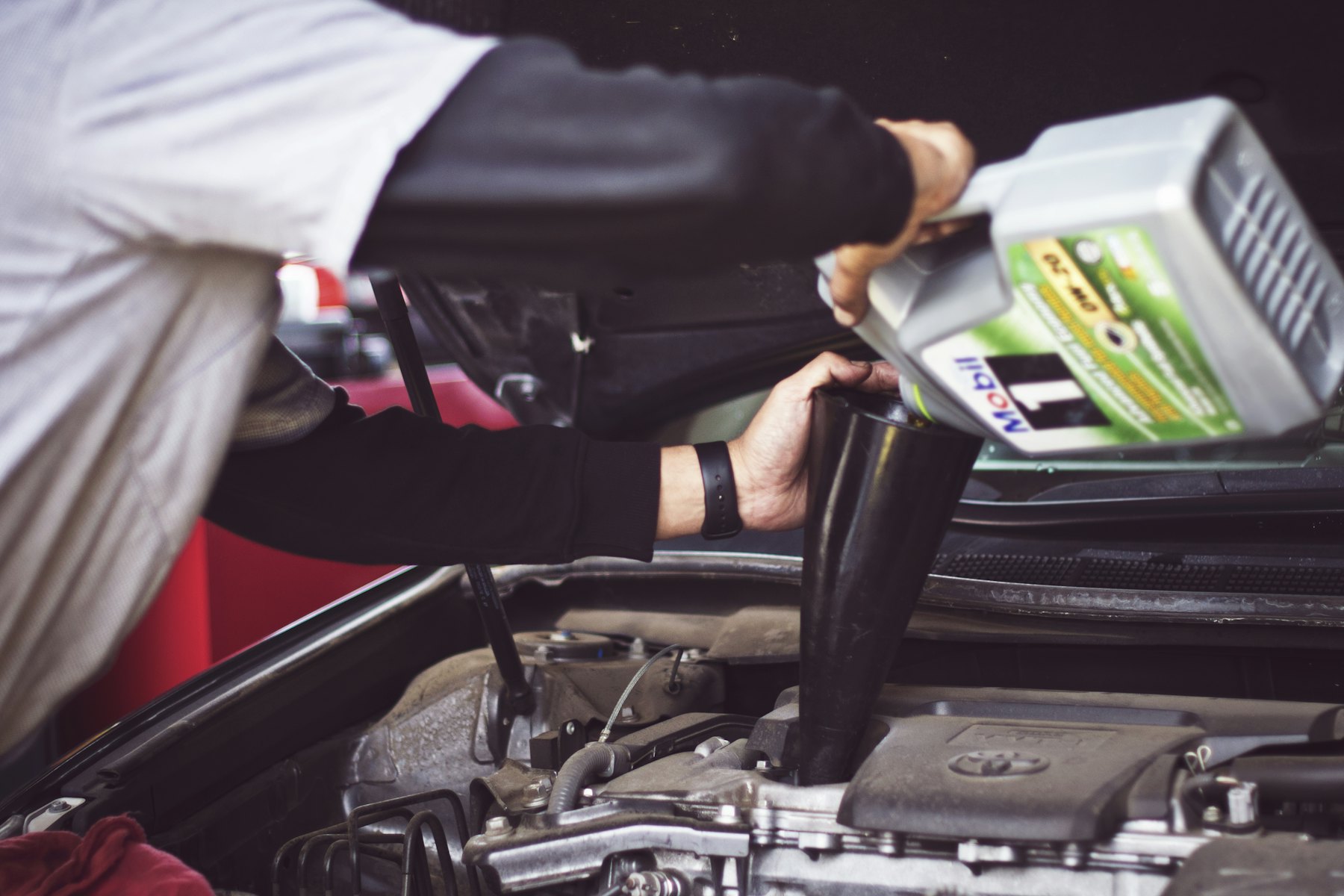
Finding it is the job. Fixing it is usually the easy part.
Most coolant leaks are cheap repairs hiding behind an expensive search. A hose clamp that has relaxed, a heater hose rubbed thin against a bracket, a radiator cap that stopped holding its rated pressure: those are small parts and short jobs. What costs people money is replacing three of them in sequence hoping one was right.
The system makes this harder than it sounds. Everything under the hood runs hot and moves air at speed, so coolant escaping at the front of the engine can blow backward and drip off something a foot away. Find a wet spot and you have found where the fluid landed, which is not the same as where it left.
So the search comes first, and it is not a long one. A pressure test on a cold engine exposes most leaks within minutes, without taking anything apart.
Pressure test, coldA hand pump on the filler neck brings the system up to its working pressure with everything cool enough to touch. Pressure holds, or it falls and shows you where.
UV dye for the slow onesSome leaks only give up a drop an hour. Dye goes in, you drive normally for a day or two, and a black light finds the trail glowing where nothing was visible before.
A price before work startsThe search and the repair are priced where you can see both, with no hourly minimum stretching a twenty minute find into an hour on paper.
Where it is actually coming from
Coolant leaves through a short list of places, and the location tells you most of what you need to know. Hoses and clamps are the everyday answer: rubber hardens, clamps lose tension, and the fix is measured in minutes. Radiator end tanks are next, especially the plastic ones crimped onto an aluminum core, which crack along the seam after enough heat cycles.
A heater core is the one that announces itself differently. It sits inside the dash, so its coolant never reaches the ground. Instead you get a sweet smell through the vents, a greasy film on the inside of the windshield that wipes but comes back, and eventually a wet passenger carpet. People chase that smell for months before connecting it to the cooling system.
Then there is the head gasket, the one nobody wants. That is coolant going into the cylinders or the oil rather than onto the pavement, which is why the level drops with nothing ever appearing underneath. A chemical test for combustion gases in the coolant settles it quickly, and we run that early when the picture fits rather than after you have paid for other parts.

A leak that only shows when hot is still a leak
This is the most common reason a leak gets dismissed. Somebody looks under the vehicle in the morning, sees nothing, and decides it must have been condensation or a spill. Meanwhile the reservoir keeps dropping.
A cooling system is pressurized deliberately, because raising the pressure raises the boiling point of the fluid. Cold and unpressurized, a small crack or a tired seal closes up enough to hold. Warm it to operating temperature and the metal expands, the pressure climbs, and the same gap opens and starts pushing fluid out. Shut it off and it seals again before you get around to looking.
That is exactly why the pressure test exists. It reproduces the hot condition on a cold engine, safely, in a driveway. It also means nobody has to open a hot system, which matters: a cap removed from a pressurized engine releases scalding coolant upward and fast, and that is an emergency room visit rather than a repair.
How we run the search
The order is deliberate. Each step either finds the leak or rules out a whole category, and the cheap conclusive tests come before anything invasive.
- Look while it is coldDried residue, crusted seams and damp spots record where fluid has traveled, even when nothing drips today. That alone often points at the right area.
- Pressurize and holdThe system comes up to its rated pressure with a hand pump. If the gauge falls, there is a leak, and most of the time it appears while we watch. If it holds, the leak is internal and the search changes direction.
- Test the cap separatelyA cap that no longer holds its rating dumps coolant into the overflow every time the engine gets hot. It is the cheapest part in the system and a genuinely common answer.
- Dye the slow onesWhen pressure holds but fluid still disappears, UV dye goes in and you drive normally. A black light a day or two later shows the path, including leaks that only open under road vibration.
- Rule the engine in or outIf nothing external turns up, a combustion gas test says whether coolant is being pushed into the cylinders. Knowing that before spending is worth more than any part on the list.
What the search usually turns into
Once the source is confirmed, most of these get repaired on the same visit. Finding the leak and fixing it happen on the same visit, not on two separate bills.
Radiator replacement
Cracked plastic end tanks and split seams. A common outcome once the dye points at the corner of the core.
Water pump replacement
Coolant at the weep hole means the shaft seal is finished. That one is not a hose clamp and will not wait forever.
Thermostat replacement
Housings warp and their gaskets harden. The valve inside is worth renewing while the system is already open.
Head gasket diagnostics
When the gas test comes back positive, the cooling system was never the problem. Better to know before buying parts.
Coolant flush
After a repair the system gets refilled properly and bled, because trapped air imitates the fault you just fixed.
Overheating diagnostics
If the gauge is climbing as well as the level dropping, the full test sequence sorts cause from symptom.
We would rather spend twenty minutes proving where it leaks than sell you three parts and hope one of them was the answer.
How Freeman Roadside Repair works
Coolant leak questions
Losing fluid fast or watching the gauge move? Skip the reading and call. Somebody answers at any hour.
Is it safe to drive with a small coolant leak?
Short distances, watching the gauge, with the level checked before every trip. What makes it dangerous is that the rate of loss is unpredictable: a seep that took a week to empty the reservoir can become a stream when a hose finally splits. Running an engine low on coolant is how a cheap repair turns into a cylinder head.
Nothing drips on my driveway but the reservoir keeps dropping. Where is it going?
Two possibilities, and they are very different. It may be leaking inside the cabin at the heater core, which shows up as a sweet smell, a filmy windshield and a damp passenger floor. Or it is going into the engine past a head gasket, which a combustion gas test confirms in a few minutes. Either way, topping it up is not the answer.
Will stop-leak fix this?
Occasionally, and usually at a price you pay later. Those products work by circulating particles that clog small openings, and they cannot tell the difference between your leak and the narrow passages inside the radiator and heater core. We would rather find the actual source, which is generally a hose or a clamp anyway.
How do you find a leak that only appears when the engine is hot?
By pressurizing the cold system to the same pressure it reaches when hot. A hand pump on the filler neck reproduces the condition without heat, so a gap that only opens under pressure opens while we are watching it. When even that holds, UV dye and a day of normal driving catches the rest.
Can the repair be done where the vehicle is parked?
For most of what we find, yes. Hoses, clamps, caps, thermostat housings, many radiators and water pumps are all driveway and yard work, and the system gets refilled and bled before we leave. Internal engine repairs are the exception, and if the testing lands there you hear it straight away rather than after a partial job.
What does the diagnosis cost if the repair turns out to be big?
You hear what it’ll cost before the truck leaves, and the search is what tells us which repair is the right one, so it is never wasted money spent twice. There is no hourly minimum. If the answer is a job that belongs in a shop with a lift, we say so plainly instead of starting something we cannot finish properly.
Stop topping it up.
Every refill is money poured into a hole somebody could have found in twenty minutes. Call and describe what you are seeing, when it drips and whether there is a smell, because that conversation usually narrows it before we arrive.
HoursMonday to Sunday, 24 hours
Based inAmerican Canyon, CA
Where leaks leadRadiators · Head gaskets · Gallery