Some machines never leave the building. We work on those.
Equipment anchored to a slab, wired into a panel and plumbed into a plant does not get trailered anywhere. A mobile industrial call puts the tools, the parts and the diagnosis on your floor instead.
- Open 24 hours, seven days
- No hourly minimum
- Price up front
- Napa, Solano and the East Bay
Anchored, wired and plumbed means it stays put
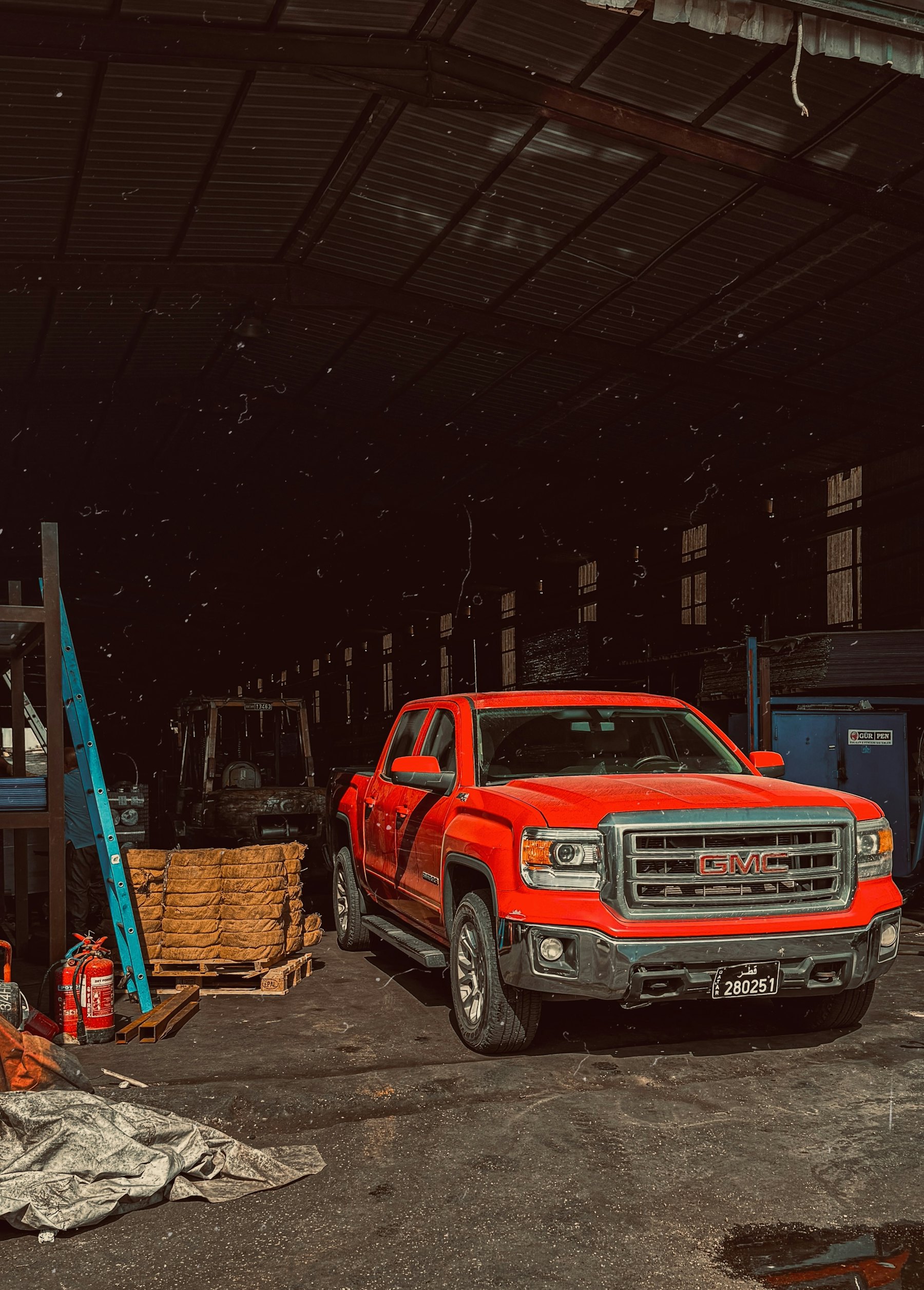
Take a look at what holds a piece of plant machinery in position. Anchor bolts into the slab. A conduit run feeding a disconnect on the wall. Compressed air on one side, maybe a drain or a cooling water line on the other. Guarding tied into an adjacent frame. Product feeding in from an upstream machine and out to a downstream one. Freeing all of that to move the machine is itself a multi-day project, and nobody does it to chase a fault.
So the shop has to travel. That is the entire premise of this work, and it changes what a repair visit has to carry. There is no parts counter down the hall and no second technician to borrow a tool from. Whatever the job needs arrives on the first trip or the machine sits waiting while somebody drives back.
The machines we get called to are the ordinary workhorses of a working building. Compressors in a corner room. Pumps moving product or wastewater. Balers and presses. Blowers, dust collection, hoist frames, packing and bottling equipment through the Napa Valley, mixers and dryers, and the standby power sets that sit untouched until the grid drops. Most of them share the same two problems: they are heavy, and they are in the way.
The first questionIs the machine down, or running badly? Down sets the clock and changes how fast we move. Running badly usually gets scheduled for a window where nothing is at stake.
What the visit costsYou hear what the job runs before anyone picks up a tool, and there is no hourly minimum sitting under it.
Where the truck goesProduction buildings, warehouses, yards, wineries and municipal sites through Napa and Solano, with regular runs into Contra Costa. Every area we cover.
What actually rolls onto your floor
A mobile industrial call is a workshop that parks outside your roll-up door. Diagnostic gear for hydraulic and electrical faults. Hose, fittings and a crimper so a burst line is made up to length on the spot. Hand and power tools, a torque wrench, pullers, a meter that reads more than voltage. Common bearings, seals, belts and fasteners. Fluid from sealed containers rather than whatever is left in an open drum.
What that buys you is a repair that finishes in one visit more often than not. The alternative most plants live with is a technician who arrives, looks, writes a list and comes back in three days with the parts. Some jobs genuinely do need a second trip because the component is specific to your machine and nobody stocks it locally. That is honest and we will say so. But the routine failures, the ones that account for most downtime, are the ones we want to close out before we leave.
The other thing that travels is availability. Plant machinery does not have the courtesy to fail during business hours, and a compressor that quits at eleven at night stops the first shift too. The phone is answered at any hour, every day, because that is when a lot of this work happens.

Know what is broken? Go straight to it
This page is the general on-site call. If you already know which machine or which system has failed, these go deeper into that specific work than a general page can.
Diagnostics
When the symptom is vague and the cause could be hydraulic, electrical or mechanical. Start here rather than buying parts on a theory.
Hydraulics
Circuits on presses, balers and lifts. Pressure faults, cylinders, hoses and the contamination that caused them.
Electrical
Control faults, motor circuits, sensors and the wiring between them.
Pumps
Process, transfer and wastewater pumps. Seals, couplings and the alignment that decides how long the next one lasts.
Air compressors
Rotary screw and reciprocating units. Pressure loss, overheating, moisture carryover and drive failures.
Conveyors
Belts, rollers, drives and tracking on the systems that move product between everything else.
Generators
Standby and prime power sets, from a unit that will not crank to one that runs but will not take load.
Blowers
Dust collection, aeration and process blowers, where bearings and imbalance do most of the damage.
Production equipment
Machines on a line, where the repair has to fit around a shift schedule and a safety procedure.
Material handling
Hoists, dock equipment and the moving hardware that carries everything from receiving to shipping.
Industrial diesel
Engines driving pumps, compressors and power units in fixed installations.
Plant fleet work
Scheduled service across several machines at one site, on one visit and one plan.
Your maintenance guy has lived with that machine for years. I would rather spend ten minutes listening to him than an hour guessing.
Patrick Freeman, owner
A visiting technician walks in knowing machinery in general. The person who has run the plant for a decade knows that machine in particular: which noise is normal, what it did last winter, which bolt was replaced with the wrong one four years ago and by whom. That history is worth more than any diagnostic tool, and the jobs that go fastest are the ones where somebody on staff walks over and tells us what changed. We work with your maintenance people, not around them, and if they want to watch the repair and learn the fix so they can handle it next time, that suits everyone.
Questions from maintenance and operations
Nothing here matching your machine? Describe it on the phone and you will get a straight answer about whether it is our work.
What kinds of machines do you actually take on?
Fixed industrial plant, broadly. Compressors, pumps, blowers, conveyors, hoists, presses, balers, mixers, generators and production machinery, plus the hydraulic, electrical and mechanical systems that drive them. Where we stop is specialist proprietary control software and machines needing a factory-certified rebuild. If yours falls outside what we do well, you will hear that on the phone rather than after a wasted visit.
Do we need to shut down the whole plant for you to work?
Almost never. The machine being worked on has to be isolated and de-energized, which is not negotiable, but that is usually one machine and its immediate feed. Whether the rest of the building keeps running is your call based on how the process is laid out. Tell us what depends on that machine when you call and we can plan the visit around the smallest possible stoppage.
Can you come out at night or on a weekend?
Yes, and a good share of industrial work happens then by design. Some of it is an emergency at two in the morning. Plenty of it is deliberate, booked into a Sunday or a holiday shutdown so the repair does not compete with production. Neither one carries a surcharge dressed up as an after-hours rate.
How do you price a job when nobody knows what is wrong yet?
In two parts. You get a number for the diagnostic visit before anyone comes out, so that piece is never open ended. Once the fault is identified you get a second number for the repair, and you decide whether to go ahead. Nothing gets billed that you did not agree to, and there is no hourly minimum lurking underneath either figure.
Will you have the part, or is this a two-trip job?
Depends entirely on the part. Bearings, seals, belts, fittings, hose and fasteners are common enough that they travel with us. A drive component specific to one manufacturer’s machine usually does not exist locally and has to be ordered. When we can tell from your description that a part is involved, we source it before the visit rather than discovering it on your floor.
Is this the same crew that does roadside truck work?
Same business, same owner, same truck. Patrick has more than twenty-five years on the tools across trucks, heavy equipment and industrial machinery, and the diagnostic habits carry over directly. A bearing failing in a plant blower and a bearing failing in a wheel hub tell you the same things. What changes is the setting and the safety procedure, not the mechanics.
What machine, and what is it doing wrong?
Make, what it drives, and the symptom in plain words. Stopped, tripping, leaking, running hot or making a noise it never made before. That is enough for us to load the right parts before heading out. Send the details or call and talk it through.
HoursMonday to Sunday, 24 hours
Based inAmerican Canyon, CA
Have a look aroundPhotos of the work and the full service list.