
A stuck caliper takes the rotor and the fluid down with it.
The car pulls to one side. One wheel comes back hot enough to smell. A pad on that corner is half the thickness of its partner. That is a piston or a slide pin that has stopped moving, and every mile after it starts makes the repair list longer.
- Open 24 hours, seven days
- No hourly minimum
- Bled properly before we leave
- Cars, pickups, vans, trailers
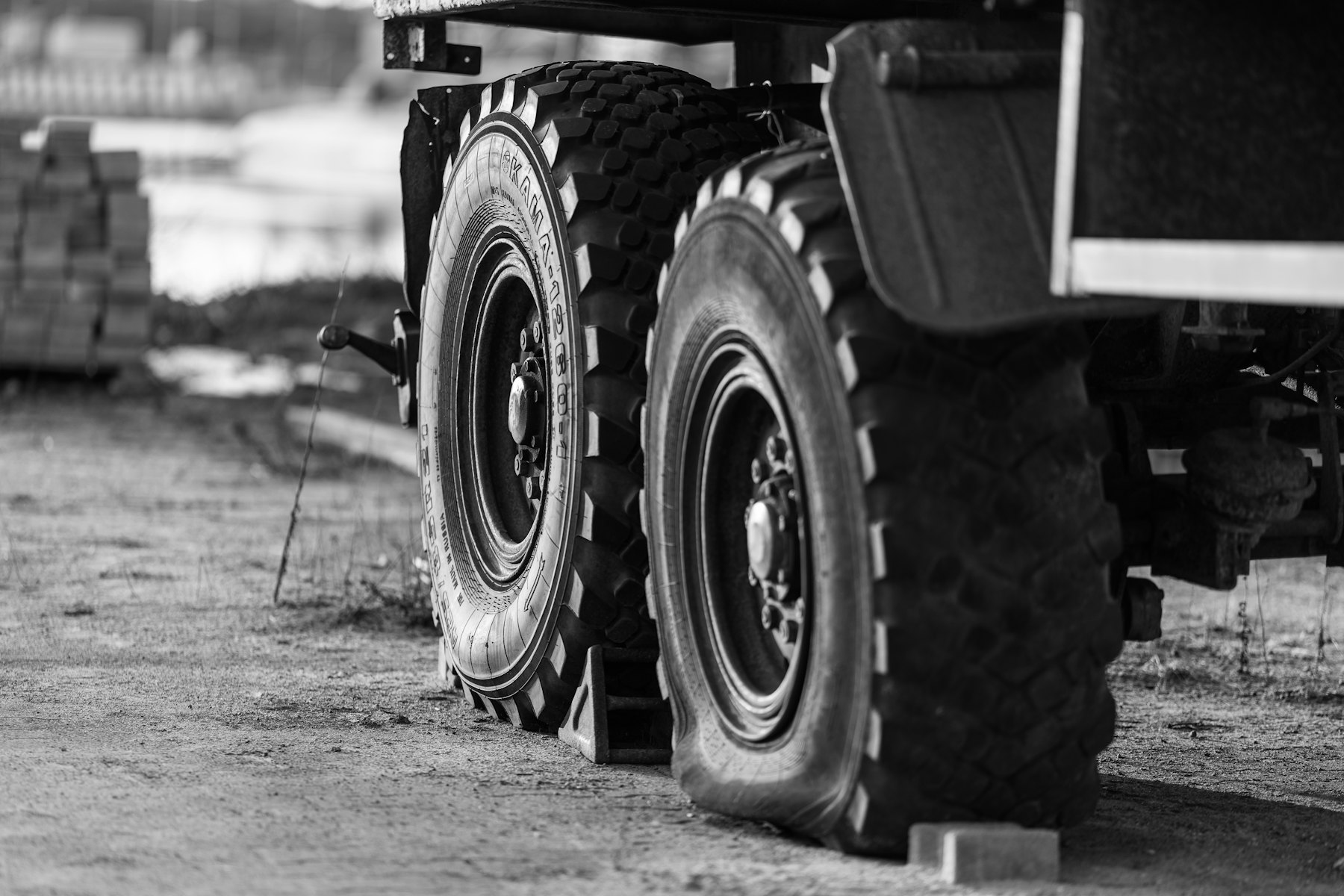
How one seized piston becomes four problems
A caliper is a clamp with a hydraulic piston in it. Press the pedal and fluid pushes the piston out against the pad. Release the pedal and a square-section rubber seal, deformed slightly under pressure, pulls the piston back a fraction of a millimeter. That tiny retraction is the whole reason your brakes are not on all the time.
When corrosion builds behind the piston or the seal hardens with age, the piston stops coming back. The pad never fully leaves the disc, so it drags. Dragging generates heat continuously rather than in the short bursts brakes are designed for, and the temperature at that corner climbs and stays up.
From there it spreads. The pad on that side burns through fast and unevenly. The disc runs hot enough to discolor and can end up heat-checked or cracked. The fluid sitting in the caliper cooks, which drops its boiling point and sometimes leaves the pedal soft. And because one wheel is braking while the other is not, the vehicle pulls under braking and sometimes when you are just driving along.
That chain is why we treat a hot wheel as something to look at today rather than next week. One caliper is a job. One caliper plus a ruined disc, a burnt set of pads and boiled fluid is four.
Signs to call aboutA pull to one side under braking, a burning smell after a short drive, one wheel far hotter than the others, a parking brake that will not release, or a pedal that has gone spongy.
What you payPatrick tells you what the job runs before anything is unbolted, with nothing added for showing up. If the caliper turns out to be fine, that is what the call becomes.
Where the truck goesNapa and Solano, out along I-80, and into Sonoma, Marin, Contra Costa and Alameda when it makes sense. The full map.
Slide pins and pistons fail differently
Most calipers on cars and light trucks float. The piston is on the inboard side only, and the whole caliper slides on two greased pins so that when the piston pushes, the body pulls the outboard pad in from the other side. Two moving systems, two different failures, and they leave different evidence on the pads.
If the pins have seized, the caliper cannot center itself. The inner pad does most of the work and wears down while the outer one stays fat. That version is frequently repairable: the pins come out, the bores get cleaned, new boots and proper high-temperature grease go in, and the caliper carries on for years.
If the piston has seized, both pads on that wheel are cooked and the disc has usually taken heat. Rebuilding a piston bore that has pitted with corrosion is not something worth doing at the roadside, and often not worth doing at all next to a remanufactured unit. That is the case where we replace rather than repair, and we will tell you which one you are looking at once the wheel is off.
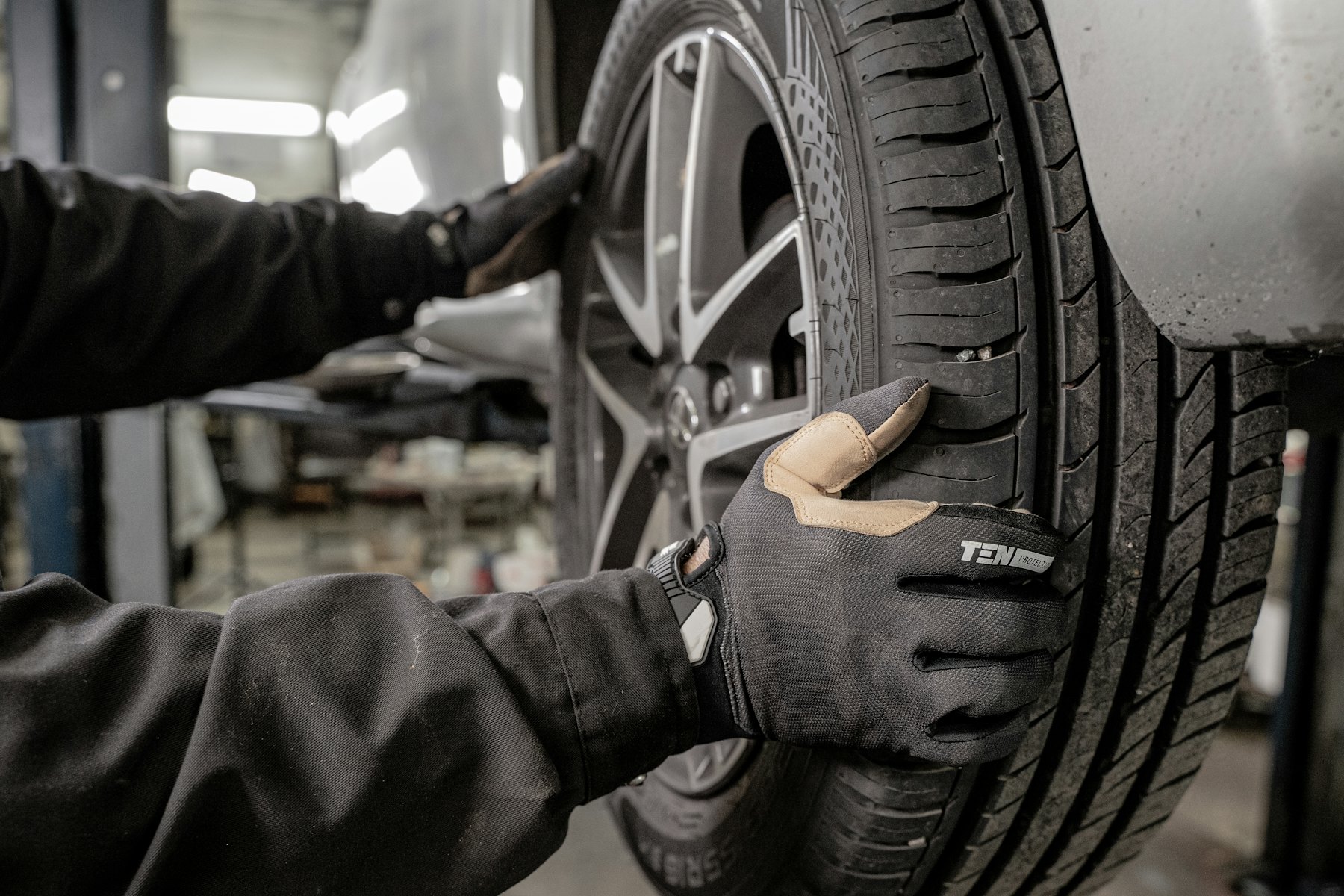
Found during another job, more often than not
Very few people call about a caliper. They call about a noise, or a shake, or because the pads are due, and the caliper turns up during the measurement. That is the ordinary way this part gets diagnosed, and it is a good argument for having someone actually look rather than guessing from the driver’s seat.
- Uneven pad thickness across one wheelThe clearest single sign. Two pads out of the same caliper should wear at roughly the same rate, and when they do not, the caliper is why.
- A disc worn on one face onlyMeasured on both sides, a disc that has lost material on the inboard face alone points straight back at a piston that is not releasing.
- Pins that will not move by handPulled out and checked during any pad job here. A dry or scored pin gets cleaned and regreased before it turns into a seized one.
- A boot that has splitTorn rubber around the piston or the pins lets water in. Once that has happened the clock is running, whether or not anything feels wrong yet.
None of that adds time to a pad job, because the wheel is off and the caliper is in our hands regardless. What it adds is a decision made now, while the vehicle is already apart, instead of a second visit in two months when the disc has been cooked as well.
Was in and out of the weigh station in 20 minutes.
Silent Boy, Google review
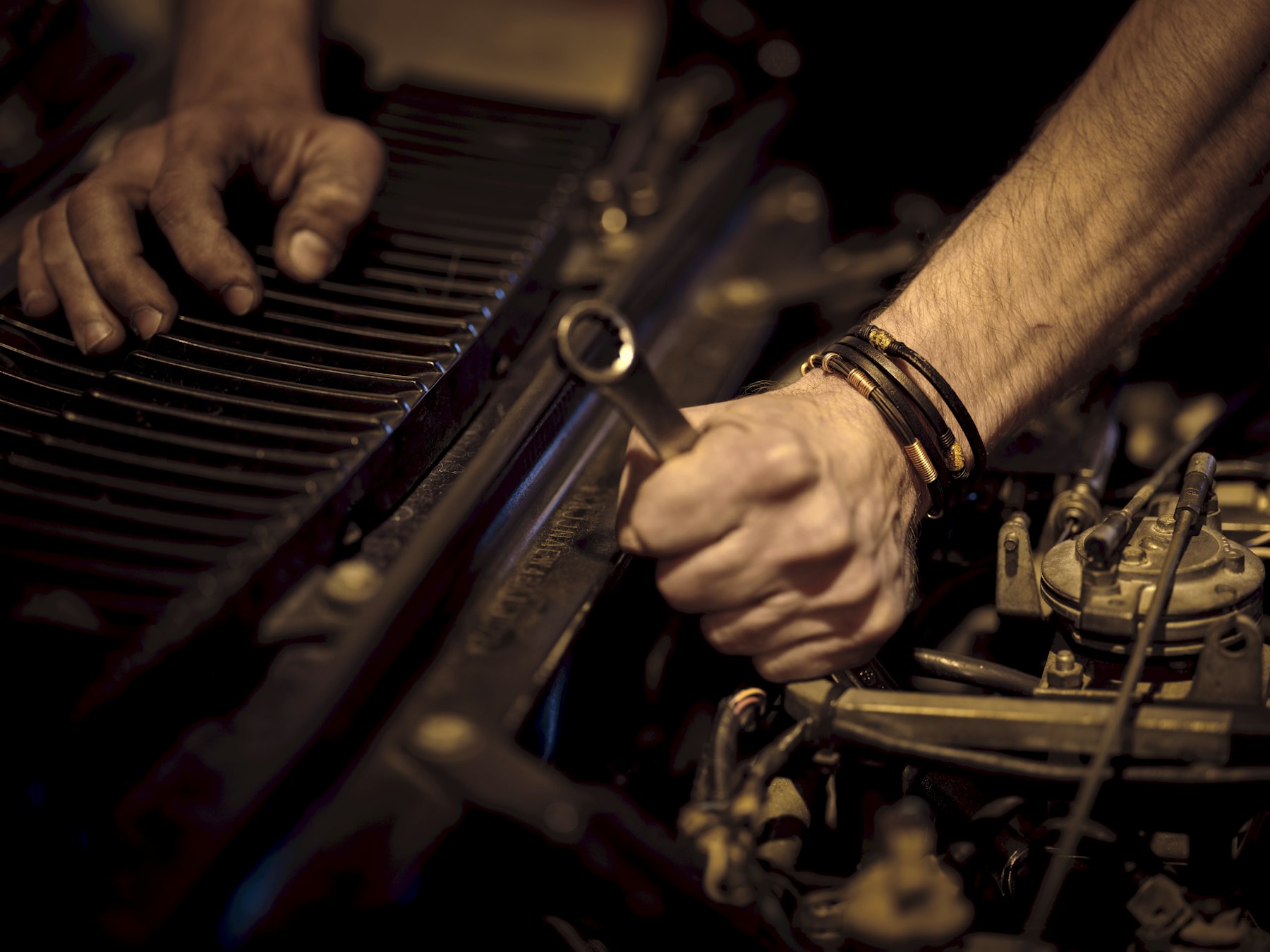
The bleed is not the optional part
The moment a caliper comes off, the hydraulic system is open and air is in the line. Air compresses and brake fluid does not, which is the entire reason hydraulic brakes work. Leave a bubble in there and the first part of the pedal travel goes into squashing it rather than clamping the disc. That is a soft pedal, and on a heavy vehicle or a downhill it is worse than that.
We bleed with a pressure bleeder rather than pumping the pedal, starting at the corner furthest from the master cylinder and working in, catching the old fluid in a bottle rather than on your driveway. On anything with ABS, the scan tool cycles the pump so air trapped in the modulator comes out too, which a manual bleed will not reach.
Then the pedal gets checked properly before we hand the keys back: firm, high, and holding without sinking while pressure is applied. If it does not feel right we do not leave. This is not a step that can be finished later, and it is one of the reasons a caliper job is worth a mobile mechanic who carries the right kit rather than someone working out of a toolbox.
What usually goes on at the same time
A caliper rarely leaves the rest of its corner untouched. These are the parts that typically need attention in the same visit.
Brake pad replacement
Pads from a dragging caliper are finished. New ones go on with fresh hardware and greased pins.
Brake rotor replacement
Measured on both faces, because a piston that stuck has usually taken material off one side only.
Brake fluid flush
Fluid that has been cooked at one corner has lost its boiling point everywhere. Flushed at your location.
Mobile brake repair
Everything else we carry for a brake call, from hoses and hydraulics through to commercial air systems.
What people ask about calipers
Not covered here? The phone gets you an answer quicker. Someone picks up whatever the hour.
How do I know if a caliper is sticking?
The three common signs are a pull to one side when you brake, one wheel noticeably hotter than the others after a short drive, and a burning smell from that corner. Off the vehicle, the giveaway is pad thickness: two pads out of the same caliper that differ a lot in thickness mean it is not releasing evenly.
Can a caliper be repaired instead of replaced?
Sometimes, and it depends which part failed. Seized slide pins are usually a clean, regrease and new boots, which is a genuine repair and holds up well. A piston bore that has corroded and pitted is a different matter, and on most vehicles a remanufactured unit is both more reliable and less expensive than trying to save it.
Do I need to replace both calipers on the axle?
Not as a rule, unlike discs. Calipers are replaced where they have failed. That said, if one has seized because of age and corrosion and its partner is the same age in the same conditions, it is worth inspecting the other one closely while the vehicle is apart, and we will tell you honestly what it looks like.
Is a caliper job something you can really do at my house?
Yes. The caliper unbolts with the wheel off, the flexible hose disconnects at the fitting, and the bleed happens on the driveway with a pressure bleeder and a catch bottle. What gives us trouble is a hose fitting rusted solid into a hard line, which occasionally turns into line work, and we will say so before starting rather than after.
My parking brake will not release. Is that the caliper?
Often yes, particularly on a rear caliper with an integrated parking brake mechanism, where the cable or the internal actuator corrodes and holds the pad on. It can also be a seized cable further up. Either way the wheel is dragging, so it is worth sorting quickly rather than driving on it and cooking the disc.
Will I get a firm pedal back the same day?
That is the whole point of doing the bleed properly on site. We pressure bleed the system, cycle the ABS pump with the scan tool where the vehicle needs it, and check the pedal is high and holding before we pack up. Nobody gets handed back a vehicle with a soft pedal and told to come back later.
A dragging brake gets worse every mile.
The heat does not stop while you wait for a convenient day. Pads, disc and fluid all degrade on that corner until it is dealt with. Say which wheel is hot and which way it pulls, and you will have what it’ll cost before the truck leaves, along with a window.