
You do not run eleven trucks. You run however many started this morning.
Uptime work is about the number of units that answer roll call, and about shortening the gap between a unit going down and that unit going back to work. Freeman Roadside Repair does both sides across Napa, Solano and the East Bay.
- Open 24 hours, seven days
- No hourly minimum
- A price before work starts
- We come to the unit

The number that actually runs your week
Most owners can tell you what they spent on repairs last year. Far fewer can tell you how many mornings they were short a unit, which is the figure that decided what work they could take. A fleet is not a maintenance budget. It is a supply of working vehicles, and that supply goes up and down every day whether anyone is tracking it or not.
Once you count in available units, the priorities move around. A dramatic engine failure is one truck for a long stretch, and it hurts, but it happens rarely and you can see it coming in the noise and the oil. The damage in most fleets comes from the boring failures that land often: a battery that gives up in a cold week, a serpentine belt, a dead starter, a slow coolant leak that finally boils on a grade. Each one takes a unit out for part of a day. Multiply a few of those across a year and they add up to more lost mornings than the big one did.
So uptime work has two halves and they are not the same job. The first half is making the frequent small failures happen less often, which is scheduling and measurement. The second half is cutting the hours between a breakdown and a working truck, which is who you call and how fast they reach you. A fleet that only does one half still loses days, it just loses them in a different column.
Who runs this wayOwners who dispatch every morning and feel it immediately when a unit is missing: hauling outfits, service contractors, delivery routes, anyone whose week is planned around a count of trucks.
The numberYou hear a price before work starts, and short jobs bill as short jobs because there is no hourly minimum standing under them.
Where we areAmerican Canyon, working across the North Bay and over the bridge into the East Bay. Give us your yard location and we will tell you what a realistic response looks like.
Spares, or speed, or some of both
Every fleet solves downtime one of two ways. You keep more units than you need and swap when something quits, or you keep exactly what you need and make the repair fast. Spares cost money sitting still: registration, insurance, tires aging, a yard space. Speed costs nothing until you need it, but it depends entirely on being able to reach somebody.
Which one fits you is mostly a question of size. Under about six units, a spare is usually too expensive to justify and the answer is response time. Above a dozen, a designated swap unit stops being a luxury because something is always down somewhere. In between, most owners end up with a half measure: one older truck kept alive and insured as the bench, plus a number to call.
What we can change is the speed side. We work out of a mobile truck, around the clock, so the repair starts where the unit stopped instead of after a tow and a queue. For a lot of failures that is the whole difference between losing a morning and losing three days waiting for a shop slot.
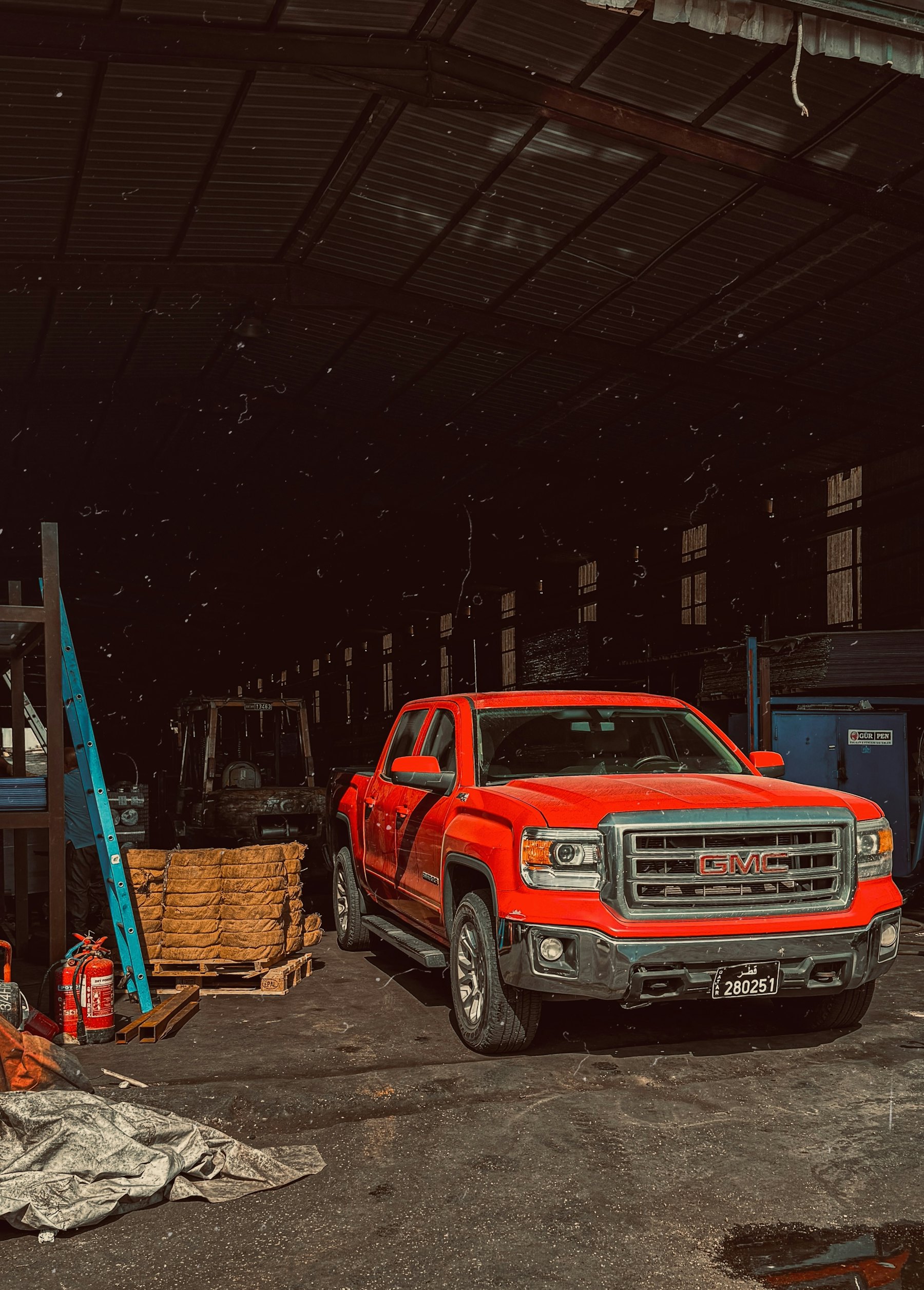
Where the lost days usually come from
These are the failures that take units out most often in working fleets around here. Each has its own page because each has its own fix, and none of them are exotic.
Battery testing
The single most common reason a truck does not leave the yard. A load test at every visit catches the ones that are weeks from quitting.
Alternator replacement
A charging fault takes the unit out mid route rather than in the yard, which makes it expensive twice over.
Serpentine belt replacement
Cheap part, total shutdown. A cracked belt spotted during service is a ten minute job instead of a recovery.
Overheating diagnostics
Coolant problems announce themselves on a grade under load, which is the worst possible place to find out.
Flat tire service
Common enough that response time matters more than anything clever. We come to the shoulder or the yard.
No start diagnostics
When a unit will not crank, the fastest fix is knowing within minutes whether it is battery, starter or wiring.

Never let the whole fleet come due at once
Fleets bought in a batch break in a batch. Five vans put into service the same spring hit the same mileage in the same month, need brakes in the same month, and need tires the month after. Nobody planned it that way. It is just arithmetic, and it turns an ordinary maintenance quarter into a stretch where you are permanently a unit or two short.
The fix is to deliberately pull the fleet out of step. On the first couple of passes through the vehicles, some units get serviced a little early so their intervals land in different weeks. It costs slightly more up front and it buys a calendar where one vehicle is in service at a time instead of four.
Staggering also makes the work absorbable. One unit down on a Tuesday is something dispatch routes around without telling the customer. Four down in a fortnight is a conversation with the customer. Same total hours, completely different effect on the business. The interval discipline behind this lives on scheduled maintenance, and the yard visits that carry it out are mobile fleet maintenance.
There is one more reason to spread it out. When services land one at a time, we see each unit on a regular rhythm, which is how a developing problem gets caught at the measurement stage. When four come due together, everything gets rushed and the walkaround is the part that quietly gets shortened.
Two units down on the same morning is not bad luck. It is usually two intervals that were never pulled apart.
Patrick Freeman, owner
What owners ask about downtime
Anything not covered below, put it to us on the phone. A person who turns wrenches answers it.
Two trucks go down the same morning. What happens?
We ask two questions: which one can be finished where it sits, and which one is holding up the most work. Usually those point at the same unit and the order is obvious. If a truck needs a part nobody carries, sitting with it helps nobody, so that one gets diagnosed, written up and scheduled while the other gets fixed and returned to service. The aim is to hand you back one working unit quickly rather than make slow progress on both.
Is it cheaper to keep a spare truck or to pay for fast repairs?
It depends on your unit count and your margins, and it is worth doing the arithmetic rather than guessing. A spare carries fixed costs every month whether it moves or not, so it only pays once your fleet is big enough that something is down most weeks. Smaller outfits almost always do better buying response time. Many owners land in between: one older unit kept legal as a bench, and a mobile mechanic on call for everything else.
Which failures actually cost fleets the most days?
Rarely the catastrophic ones. In fleets we service, the days disappear into batteries, charging faults, belts, tires, cooling problems and no start calls. Individually none of them look serious. Collectively they take out more mornings than a blown engine does, because they happen to every unit, repeatedly, and they nearly always happen at the start of a shift.
How do you stop everything coming due in the same week?
By deliberately taking some units early on the first passes so their intervals separate. If five vehicles went into service together they will keep arriving together forever unless somebody breaks the pattern on purpose. Pulling two of them forward by a few weeks costs a little service life once and then gives you a calendar you can actually dispatch around.
Do you have to see every unit to be useful?
No. Plenty of accounts start with the two or three vehicles that are causing the most trouble, and grow from there if it helps. There is no contract and no minimum. What changes with more of the fleet is our ability to spot patterns, because the same fault showing up on three units usually means something about how they are run rather than three coincidences.
What do you need from us to start?
A list of what you run, roughly what mileage or hours each unit is at, and when they sit still. That is enough to tell you where your lost days are probably coming from. If you want the condition side documented as we go, fleet inspections covers the written condition report per unit.
How many were short this month?
If you can name the mornings you ran a unit down, we can usually name the cause. Tell us what you run and where it sits, and you will get a straight read on what it would take to stop losing those days, with a price before anything starts.
HoursMonday to Sunday, 24 hours
Based inAmerican Canyon, CA
Next to thisFleet repair · Maintenance reporting · See the work