
A schedule turns breakdowns into decisions you make early.
Intervals, tune-ups, belts and hoses, checked on a rhythm at your home or your yard. The point is to find the cheap fix months before it becomes the expensive one.
- Open 24 hours, seven days
- No hourly minimum
- Findings written down each visit
- Households and fleets
Why maintenance is really a budgeting question
Almost nothing on a vehicle fails without warning. Belts crack for months before they snap. Hoses go soft and swollen long before they split. A battery loses cranking power over a winter. The failure feels sudden because nobody was looking, and it arrives on the worst possible morning because that is when the vehicle was working hardest.
What a schedule buys you is timing. The same worn belt costs one figure when you replace it on a Tuesday because somebody wrote it down in March, and a much larger one when it goes on the shoulder of I-80 and takes a tow, a lost day and an overheated engine with it. The part is the small half of that. Everything around the part is the expensive half.
That is the whole argument for maintenance and it has nothing to do with being careful by nature. It is arithmetic. Spread predictable work across the year at a time you choose, or absorb it unpredictably at whatever hour the vehicle decides.
Good moments to startA newly bought used vehicle with no history, a teenager about to start driving one, a work van going onto longer routes, or any vehicle just past its warranty.
Knowing the costEvery visit is priced up front, and if we find something we tell you what it’ll cost before the truck leaves rather than after.
Where we come toHome driveways, workplaces and yards across Napa, Solano and beyond. Find your town.
Belts and hoses: cheap now, tow later
If there is one classic example of this whole idea, it is rubber. A serpentine belt drives the alternator, the water pump and the power steering. When it goes, you lose charging, cooling and steering assistance in the same second, usually at speed. The belt itself is one of the least costly parts on the engine.
Hoses are the same story with worse consequences. A coolant hose that bursts empties the system in under a minute, and an engine that overheats badly can warp a head. The warning signs are visible months ahead: soft or spongy where it should be firm, swollen near the clamps, hairline cracks when you flex it, a crust of dried coolant at a joint.
Checking these takes a couple of minutes with the engine cold, which is why they belong on every visit rather than being their own appointment. We squeeze every hose, look along the belt for glazing and missing ribs, and check the tensioner, because a tired tensioner chews through a new belt in short order.
What gets checked, and roughly when
Manufacturer schedules differ, so treat these as the shape of it. Your vehicle’s book wins, and hard use pulls everything earlier.
Every service visit
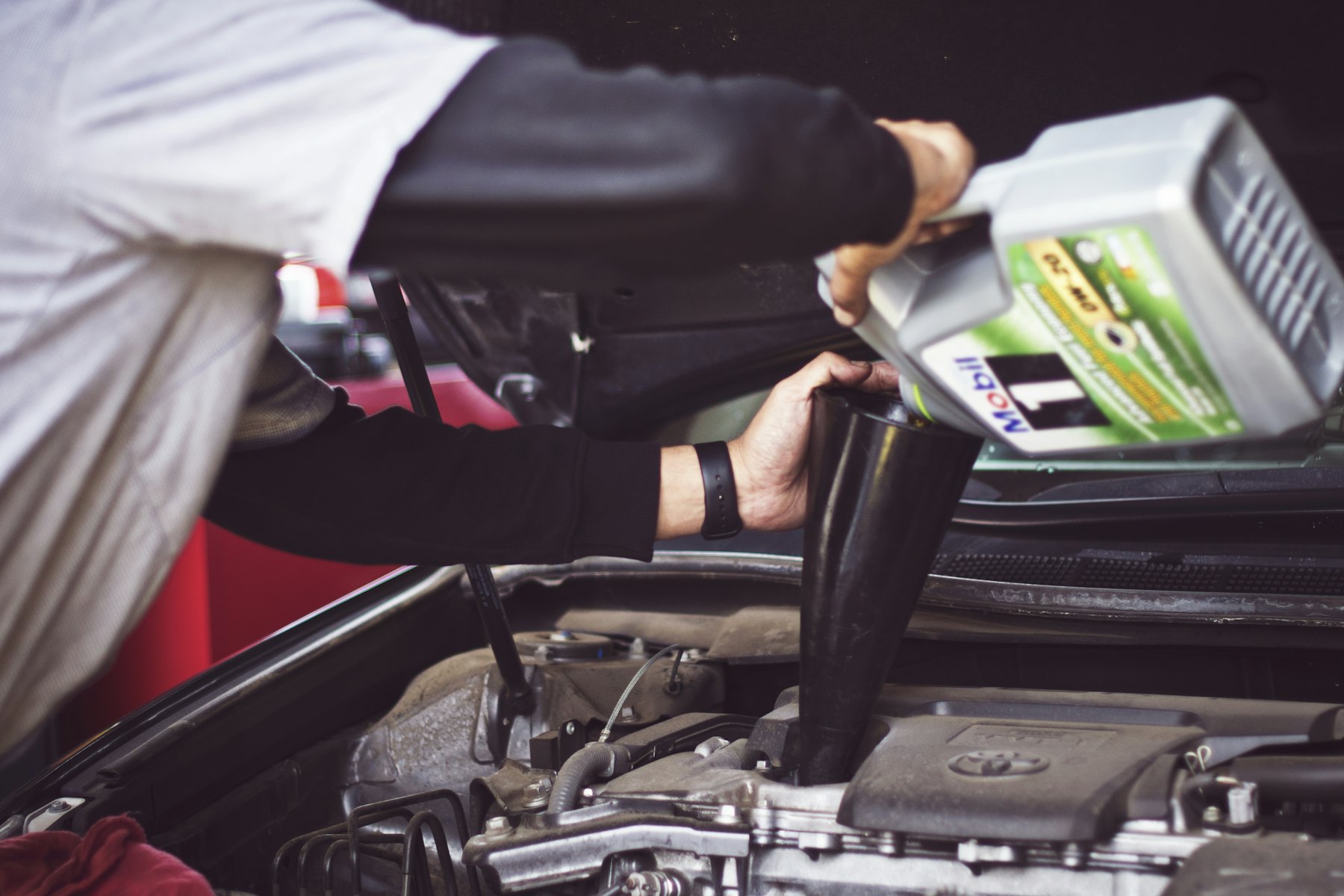
Oil and filter, all fluid levels, tire pressures and tread, lights, wipers, battery condition, belts and hoses, and a look underneath for anything wet.
Around every second visit
Air filter and cabin filter, brake pad and rotor measurement, tire rotation, and a check of the suspension components for play.
Tune-up items
Spark plugs at the manufacturer’s interval, ignition coils if a misfire says so, and throttle body cleaning where carbon has built up.
Fluids on longer cycles
Coolant, brake fluid, transmission and differential fluid. Brake fluid absorbs water over time whether or not the vehicle is driven.
Seasonal checks
Battery and charging before winter, coolant strength and air conditioning performance before a hot Central Valley summer.
Written up each time
What was done, what was measured, and what is approaching. The list is what turns next year’s work into a plan.

Recurring visits for a yard full of vehicles
For anyone running vans, trucks or trailers, the useful version of this is a standing arrangement rather than a series of phone calls. We agree how often we come, which units are due, and what gets checked, then we turn up on that rhythm and work through whatever is parked.
Timing is the part that makes it work. We come before the first run or after the last one, or on the weekend when the lot is full, so the servicing happens in hours the vehicles were not earning anyway. Because there is no hourly minimum, a visit covering six units is priced as six jobs instead of as a block of somebody’s day.
The record is what most owners end up valuing. Every unit accumulates a history of mileage, work done and what is coming due, which makes budgeting possible and answers the questions an auditor asks. If you also want DOT-style inspections or roadside cover for the same vehicles, look at fleet services, and the oil intervals themselves fold into mobile oil changes on the same visit.
Setting one up from scratch
Most people come to this with no service history and a vague sense the vehicle is overdue. That is a normal starting point and it takes one visit to sort out.
- We start with what is in front of usCurrent mileage, what you know was last done, and a full look over the vehicle. Anything already urgent gets separated from anything that can wait.
- You get the list in two halvesWhat needs doing now and what is coming within the year, with the timing for each. Nothing on the second list gets done without you asking.
- You pick the rhythmSome vehicles suit twice a year, delivery vans need more. Mileage and how hard the vehicle works decide it, not a sales target.
- We come back on that scheduleSame checks each time, so changes show up as changes. A hose that was fine in spring and soft in the fall is a hose we catch.
- The record growsEach visit adds to the history. After a couple of years you know exactly what this vehicle costs to run, which is the whole point.
We would rather tell you about a belt in March than tow you in July.
The promise behind every scheduled visit
What people ask about getting on a schedule
If your question is not below, phone it in. Somebody answers at any hour.
My vehicle has no service history. Is that a problem?
Not at all, and it is how most people start. We begin from the current mileage and condition rather than from paperwork that does not exist, look the vehicle over properly, and split what we find into work that is genuinely due now and work that is coming up later in the year. From that first visit onward you have a history, which is the thing you were missing.
How often should I actually book a visit?
It depends on mileage and on how hard the vehicle works. A commuter car is usually fine twice a year. A delivery van covering serious miles, or a truck pulling a trailer, wants something closer to quarterly. We would rather set an interval that matches how you drive than sell you visits you do not need.
Will you push repairs I do not need?
No, and the list you get is built to make that impossible to hide. Findings are separated into what is urgent and what is approaching, with rough timing on the second group, and nothing in that second group happens unless you ask for it. This business exists because its owner watched people get charged for work that was never necessary.
Can you do a tune-up at my house?
Yes. Spark plugs, coils, filters and throttle body cleaning are all straightforward with the vehicle parked and the hood up. Some engines bury the rear bank of plugs under an intake manifold, which turns it into a much longer job, and if yours is one of those we will tell you before booking rather than halfway through.
How do fleet arrangements work?
We agree a frequency and a list of units, then come to your yard on that rhythm and work through whatever is parked, usually outside your operating hours. Each unit gets its own record of mileage, work done and next due. With no hourly minimum you are billed per vehicle serviced rather than for the time we spend on site.
What if you find something serious mid-visit?
You hear about it immediately, along with a price before work starts on anything extra. Nothing gets added to the job without you agreeing to it first. If it is something that needs a lift or specialist equipment we will say so plainly instead of attempting it in your driveway and leaving the vehicle in pieces.
Get ahead of the next repair.
One call sets up a first visit, whether that is a single car or a yard of vans. You will know the cost and the timing before anything is booked. There are photos of past jobs in the gallery.
HoursMonday to Sunday, 24 hours
Based inAmerican Canyon, CA
Also usefulFleet services · Mobile oil changes · Contact