
A combine down at noon has to be cutting by evening.
Nothing else in this trade carries a deadline like harvest. Header trouble, a plugged feeder house, a belt thrown in the middle of a pass, hydraulics gone weak: the phone is answered at any hour and the truck heads for the field with hose stock and a welder aboard.
- Open 24 hours, seven days
- No hourly minimum
- You hear what the job runs first
- Field repairs, not shop appointments
Why the response is measured in hours
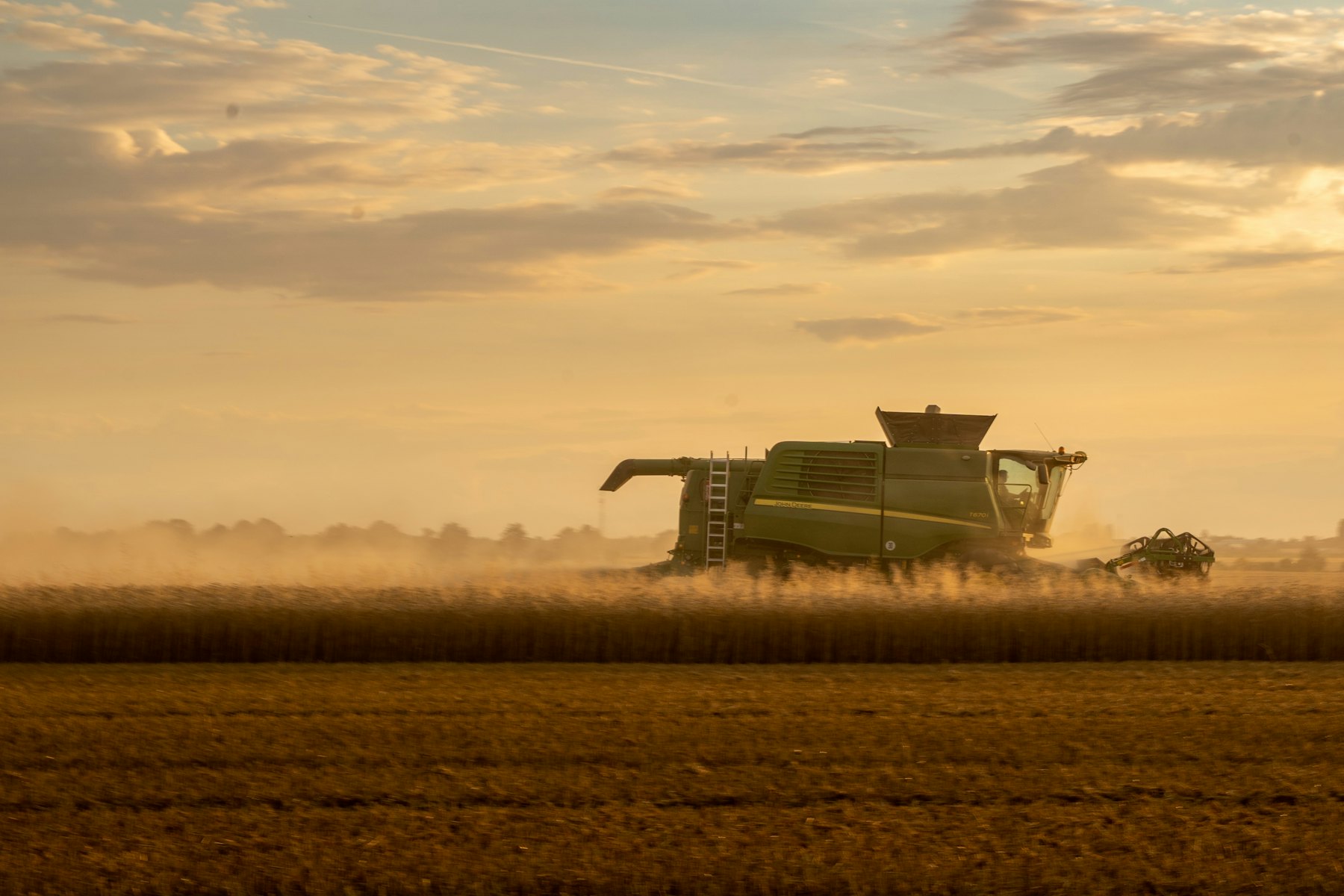
Grain does not wait politely. Moisture comes right for a few days, the crew and the trucks are lined up, and the window closes when the weather decides it does. A combine that stops mid-field during that stretch is not an inconvenience, it is the whole operation standing still, with hired help and rented trucks standing still alongside it.
That is why harvest calls get treated differently from everything else on the list. The question on the phone is not when a slot opens up, it is what the symptom is, what parts might be needed, and how fast someone can be standing at the machine. Where a repair genuinely cannot be finished in the field, you hear that immediately rather than after two hours of hopeful work.
Solano ground around Dixon and out toward Rio Vista is where most of this happens locally. Distances there are deceptive. A field can be twenty minutes off the highway down turnrows that are not on any map, so the access conversation matters as much as the mechanical one.
What stops a combineHeader and feeder house plugs, belts and chains thrown or broken, a slug in the threshing rotor or cylinder, hydraulic and drive failures, bearing failures, and electrical faults that shut the machine down without warning.
What it costsYou hear what the job runs before the truck moves, with no hourly minimum attached and nothing padded on for a harvest call.
Where the work happensIn the field, at the headland, or in the yard. See where the truck runs.
The systems that fail, and what failure looks like from the seat
A combine is several machines bolted together, and each section fails in its own way. Describing the symptom accurately over the phone is what decides whether the right parts arrive with the mechanic.
- Header and feeder houseReel drive trouble, knife sections and guards, auger flighting, and the feeder chain itself. A feeder house that slugs repeatedly is often a chain tension or slip clutch issue rather than an operator problem.
- Threshing and separationConcave clearance, rotor or cylinder drive trouble, and the bearings behind both. A sudden change in grain quality or loss out the back is a separation symptom before it is anything else.
- Belts, chains and drivesThe most common harvest failure by a wide margin. Worn sheaves eat belts, stretched chains jump sprockets, and a tensioner that has quit takes a new belt with it inside an hour.
- HydraulicsHeader lift that will not hold, unloading auger trouble, weak steering, and hose failures in places that are awkward to reach. Hoses get built on site to the right length and rating.
- Electrical and sensorsShutdowns, false alarms, and monitor readings that stopped making sense. Rodent damage and chafed harnesses on a machine stored for eleven months explain a lot of it.
Chaff, heat and the fire nobody plans for
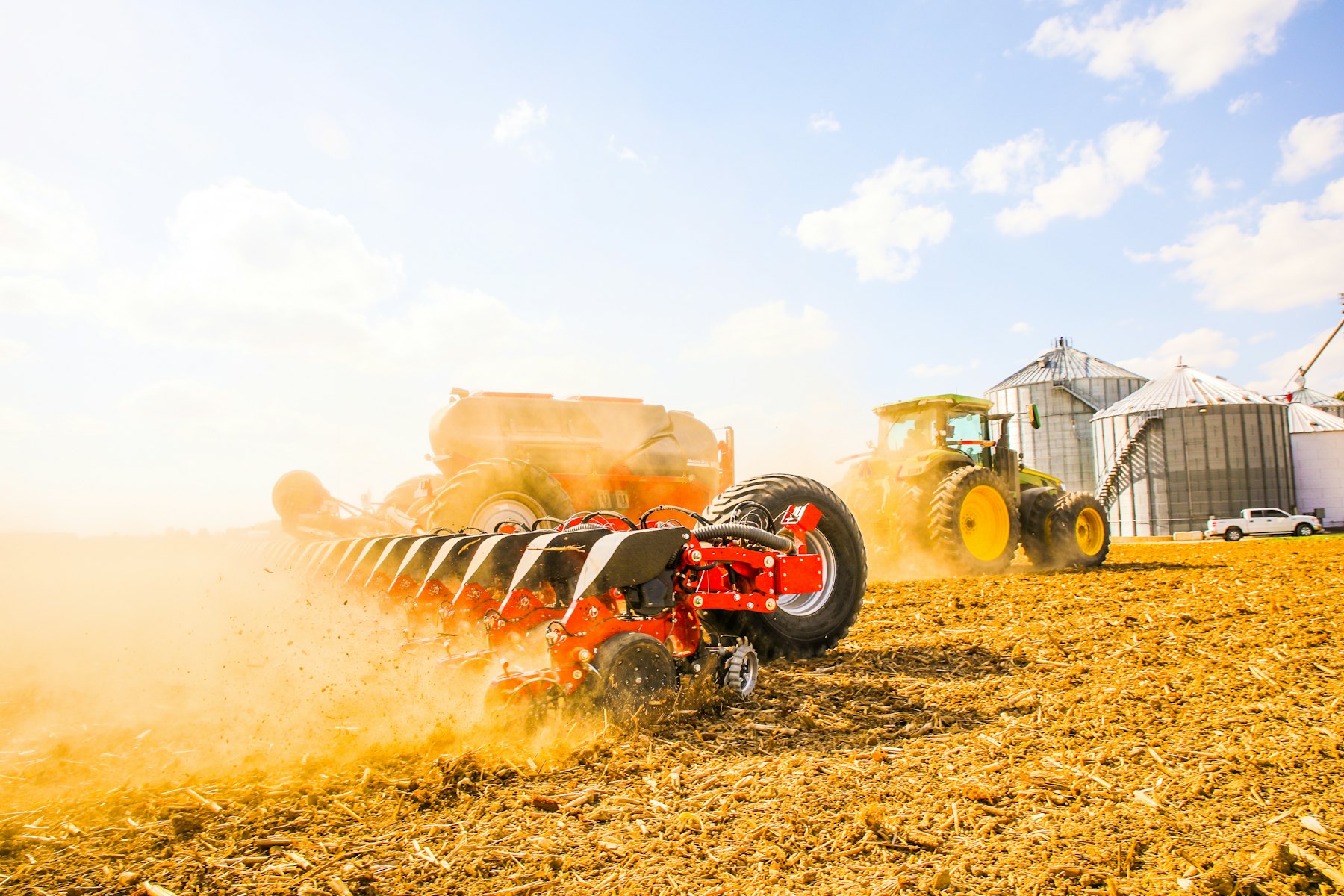
Combine fires are not rare and they are not bad luck. Dry crop residue collects against hot surfaces, and a machine working in August has plenty of both. Almost all of it is preventable with attention that takes minutes a day.
- Chaff on hot surfacesResidue packs around the exhaust, turbo and engine deck. Blowing the machine down daily during harvest is the single most effective thing anyone does about fire risk.
- Bearings running hotA bearing on its way out gets hot enough to ignite what is packed around it. A new noise or a hot smell is a reason to stop, not a reason to finish the pass.
- Leaking oil and fuelA weeping hydraulic line or fuel fitting turns collected chaff into something that will light. Leaks get fixed rather than watched.
- Electrical faultsChafed wiring against a metal edge arcs, and an arc in packed residue is the classic ignition source on older machines.
- An extinguisher that worksMounted where a person can reach it from the ground, with a current charge. Worth checking before the season and not after something happens.
Harvest calls get answered at whatever hour they come in. Nobody with grain ready should be waiting on a shop calendar.
Freeman Roadside Repair
Work that sits alongside a harvest call
Whatever stopped the combine usually belongs to one of these categories too, and the machines feeding it need the same attention.
Mobile farm equipment repair
The wider field service across every machine on the property, including the ones running behind the combine.
Grain equipment repair
Augers, carts and handling gear. The machinery that moves grain after the combine has done its part.
Agricultural hydraulic repair
Header lift that drifts, unloading auger trouble, cylinders losing hold, and hoses built to length on site.
Agricultural diesel repair
Power loss under load, fuel delivery trouble and aftertreatment faults on engines working long hot days.
Farm equipment electrical repair
Shutdown faults, monitor problems and the harness damage a machine collects over a long off-season.
Tractor repair
The machines pulling carts alongside. A tractor down during harvest stops the combine just as effectively.

The pre-harvest check that prevents the emergency call
Most of what breaks during harvest announced itself months earlier to anyone looking. A machine that sat since last season has flat spots on belts, stretched chains, bearings that were noisy when it was parked and rodent damage nobody has seen yet. Finding that in the yard costs a morning. Finding it in a field costs a day of cutting and whatever the weather does next.
A pre-season pass goes through the same list the field calls come from: belts and sheaves, chains and sprockets, every bearing that can be spun by hand, hose condition at the flex points, hydraulic function under load, filters and fluids, the wiring harness in the places rodents favor, and the extinguisher. Wear items get replaced before they fail rather than after, and anything marginal gets written down so the parts are on the shelf.
The result is not a guarantee, because machinery does what it does. What it changes is the odds, and the size of the failure when one comes. A belt swapped in the yard in June is a routine job. The same belt letting go in a standing crop in August is a phone call at dusk. If you want that pass scheduled, get in touch well before the machine is needed.
Harvest questions, answered plainly
If the machine is stopped right now, call instead of reading. The phone gets answered.
How quickly can somebody reach a field during harvest?
The phone is answered around the clock and a stopped combine goes to the front of the list. Actual arrival depends on where the field is and what is already in progress, so you get a real window rather than an optimistic one. If another machine is being worked on, you are told that honestly so you can make your own call.
Can header and feeder house work be done in the field?
A great deal of it, yes. Knife sections, guards, reel drive components, feeder chains and slip clutches are all field work with the header on the ground. What needs a shop is major structural rebuilding or anything requiring the header to be split apart on a bench, and that gets identified early rather than discovered late.
A belt let go mid-pass. Do you carry replacements?
Common belts, chains, bearings and hardware ride on the truck, and a fair share of harvest stoppages are solved with what is already aboard. Machine-specific drive belts sometimes have to be sourced, which is why the model and serial help enormously on the first call. Worn sheaves get checked at the same time, since they are what destroyed the belt.
The machine shut itself down with a warning nobody understands. Now what?
That gets scanned and traced rather than guessed at. Shutdowns often trace to a sensor, a connector or a chafed harness rather than the component the message names. Working out which one saves replacing an expensive part that was doing its job perfectly well.
What can be done about fire risk on an older machine?
Daily blow-downs of the engine deck and exhaust area, fixing oil and fuel leaks instead of tolerating them, listening for bearings running hot, repairing chafed wiring properly, and carrying a charged extinguisher within reach from the ground. Nearly every combine fire starts with crop residue packed against something hot.
Should the machine be gone through before harvest starts?
It is the best money spent on a combine all year. Belts, chains, bearings, hoses, fluids, filters and wiring get checked while nothing depends on the machine, and marginal parts get replaced on a schedule instead of failing in a standing crop. Book it well ahead, because the quiet months fill up faster than people expect.
Stopped in the field right now?
Call rather than type. Say the machine, the symptom and roughly where the field is, and you will get a figure, a plan and an arrival window on that same call. The person answering is the person who will be standing at the combine.
HoursMonday to Sunday, 24 hours
Based inAmerican Canyon, CA
More from hereBaler repair · Sprayer repair · Gallery