
Nobody services the trailer. Then the trailer strands the truck.
It has no engine, no dash and nothing to remind anyone it exists, so it gets hooked up and pulled until something on it fails. We service trailers at your yard across Napa, Solano and the East Bay, before the tractor ends up sitting on a shoulder waiting on one.
- Flatbed, enclosed, dump and utility
- Electric and air brakes
- Open 24 hours, seven days
- No hourly minimum

The unit with no warning lights
Every other vehicle in a yard tells you something. A truck throws a code, a van runs rough, a piece of equipment gets slower. A trailer does none of that. It has no gauges, no computer and no voice, so the first news you get is usually a smell, a noise or a driver on the phone from the side of a road. The failure did not come out of nowhere. It just had no way to announce itself.
A trailer service is short and it is mostly mechanical fundamentals: what is turning, what is stopping it, what is carrying current to the lights, and what the tires are doing. Done on a rhythm at your yard, it is an hour or two that quietly removes most of the ways a trailer takes a working truck out of service with it.
Trailer typesFlatbeds and deckovers, enclosed cargo, dump and equipment trailers, utility and landscape trailers, plus semi trailers running air.
The numberYou get a price before work starts, and because there is no minimum, a lights and bearings check is billed as exactly that.
Best time to do itBefore a season starts, not during it. Tell us what is parked in the back of the yard and we will get it checked while nothing depends on it.
Bearings, seals and the failure that ends a wheel
Wheel bearings are the most consequential thing on a trailer and the least visible. They run in grease behind a seal, and their whole life is a slow argument between that grease and heat, water and road grit. When the seal starts to pass, the grease thins or leaks, the bearing runs hotter, and a hotter bearing kills the grease faster. It is a loop that accelerates toward one ending.
The ending is not a breakdown in the usual sense. A bearing that fails completely can weld itself to the spindle, take the hub with it, and put the wheel somewhere other than under the trailer. That is why bearing condition is worth checking on a schedule instead of waiting for a symptom, since the symptoms show up late and the last one is not a symptom at all.
What the check involves is unglamorous: hub temperature compared across the axles, play checked at the wheel, seals inspected for any trace of weeping, and grease looked at for water or metal. Repacking or replacing gets decided from what is actually found. It is an old fashioned job and there is no electronic substitute for doing it.
What gets checked on a trailer visit
Some of these have their own page because they come up on their own as well. On a trailer service they happen together in one stop.
Wheel bearing replacement
When a check finds heat, play or a passing seal, the fix happens then rather than getting noted for a later visit that may not come.
Wiring repair
Corroded grounds, chafed runs and the connector that works only when the plug is held at an angle. This is where most light faults actually live.
Air brake repair
For semi trailers running air: leaks, chambers, slack adjusters and the glad hands that get dragged and damaged.
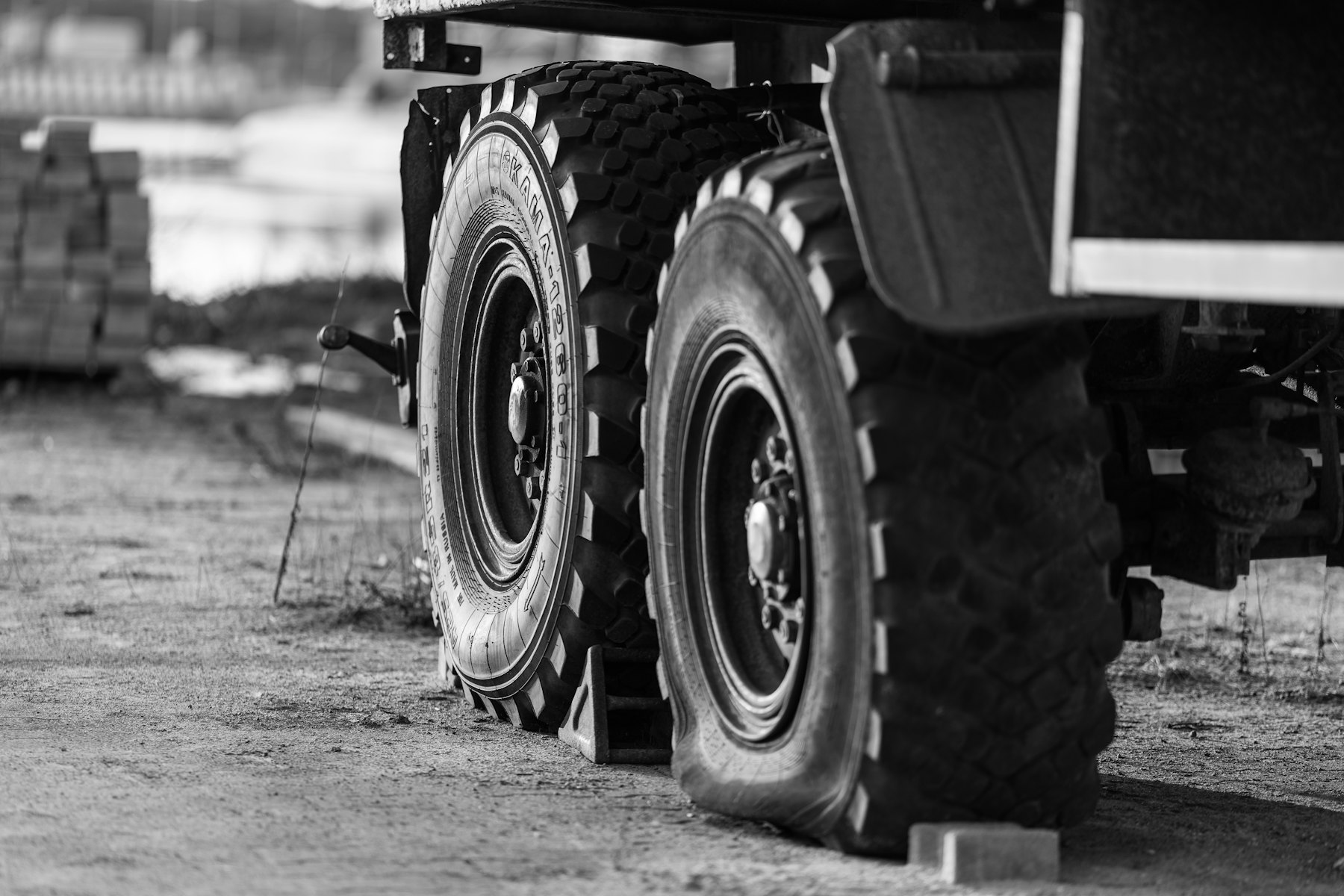
Flat tire service
Trailer tires fail differently from drive tires, and the spare is usually the one nobody has checked pressure on in a year.
Leaf spring repair
Broken leaves, worn shackles and tired equalizers. A suspension that has sagged quietly puts the load and the axles out of line.
Fleet inspections
When you want the condition written down per unit rather than just corrected, so the trailer has a history like everything else.
Why the trailer that sits is the one that fails
Seasonal trailers break the usual rule that use causes wear. Standing still damages them in ways that only reveal themselves on the first trip out.
- Grease settles and seals dryMonths without rotation let grease drain away from where it is needed and let a seal dry against the spindle. The first miles run drier than any mile of last season.
- Brakes seize to the drumsDamp air and a parked trailer put rust between shoe and drum. Electric brakes that have not moved since autumn often come out of storage either dragging or doing nothing.
- Connections corrode quietlyA wiring ground that was marginal in October is green by March. Lights that worked when it was put away frequently do not work when it comes out.
- Tires age in placeRubber deteriorates on a calendar, not on an odometer. A tire with full tread and six years on it is a blowout looking for a hot afternoon on I-80.
- Then it gets loaded and taken somewhereEvery one of those conditions gets discovered at highway speed with weight on the deck, which is the worst possible place to find out.
Brakes you cannot feel from the cab
On an electric brake trailer, the controller in the tow vehicle is the only thing telling you anything, and it tells you very little. A trailer with one axle doing all the braking and one doing none feels almost normal from the driver’s seat, especially when the truck itself is heavy. Drivers get used to it, adjust their following distance without realizing, and the problem stays hidden until a panic stop or a wet downgrade.
Magnets wear, shoes wear unevenly, adjusters seize, and the wiring that carries current to each brake is exposed to everything the road throws at it. Any of those makes a brake weak or dead, and because it is one of four or six, nothing about it is obvious. The only way to know is to check each one individually.
There are photos of this kind of work in the gallery, or tell us how many trailers you have and we will get them on a rotation.
What people ask about trailer service
Anything else gets a straight answer on the phone, at whatever hour you are reading this.
How often should a trailer actually be serviced?
For a trailer in regular use, once a year as a baseline, with bearings looked at more often if it works off pavement, carries heavy loads or gets launched into water. For a seasonal trailer, the useful schedule is not annual, it is before the season starts. That timing matters more than the frequency, because a check in March on something that sat since October catches the storage damage before the first loaded trip rather than after it.
Can you service trailers that do not have their own registration or paperwork handy?
Yes. We are there to look at mechanical condition, and a bearing does not care what is in the glovebox. If you want the work recorded against a specific unit for your own files, give us whatever number you use internally and it goes on the record under that. Anything formal for a statutory inspection is a separate conversation and we will tell you what is needed.
Our trailer lights work sometimes. Is that worth a visit on its own?
It is one of the better reasons to call, because intermittent lights are almost never bulbs and almost always a ground or a connector that is corroding. Left alone it goes from intermittent to dead, usually at night, and a trailer with no lights after dark is both dangerous and a citation waiting to happen. It is also a quick fix caught early and an irritating one caught late, once moisture has worked its way along a harness.
Do you work on trailers at a jobsite or only at our yard?
Either. Trailers tend to be wherever the work is rather than at a home base, so meeting them at a site is normal. What we need is somewhere reasonably level to work with room to get a wheel off safely. If the trailer is loaded, tell us that when you call, because it changes what can be done and sometimes changes the order we do things in.
Is a flatbed different from an enclosed trailer to service?
The running gear is much the same, so bearings, brakes, suspension and lights get the same attention. What differs is everything above the axles. A flatbed gets its deck, stake pockets, rub rails and tie down points checked, because those are load security items and they take a beating. An enclosed trailer gets doors, hinges, latches and roof and seal condition instead, since water getting in is its characteristic failure.
Can trailer service happen at the same time as truck service?
Yes, and it is the efficient way to do it when the tractor and trailer live in the same yard. One visit, both units, one price agreed before anything starts. If the truck side is what you mainly need, commercial truck maintenance covers that, and the trailer can simply be added to the same pass through your lot.
Check the trailer before it picks the moment.
Tell us what you pull, how hard it works and how long it has been sitting. We will say what it needs looking at and what that runs, before anybody starts. Calls reach the mechanic, not a message service.
HoursMonday to Sunday, 24 hours
Based inAmerican Canyon, CA
Often booked withFleet repair · BIT and FMCSA inspections · Breakdown assistance