Somebody else kneels on the white line.
A tire change looks like a ten minute job until you are doing it beside moving traffic with a jack on soft ground. We come out with proper jacking gear, a torque wrench and the tools for truck and trailer wheels, day or night.
- Open 24 hours, seven days
- No hourly minimum
- Cars, trucks, trailers and equipment
- A price before work starts
The part of a roadside tire change nobody warns you about
Changing a wheel in a driveway is easy. Changing one on the shoulder of I-80 is a different activity wearing the same name. The jack has to sit on a surface that will not sink, which roadside gravel often will. The vehicle has to be lifted at the manufacturer’s jacking point, not whatever looked solid, because a modern unibody will fold a rocker panel without much protest. And whoever is doing it has their body in the lane side of the vehicle for part of the job, which is the actual risk.
That is why we park the service truck as a shield first, angled behind the vehicle with lights running, before anything comes out of the back. It is also why we would rather you waited well behind a barrier than stood nearby to help. Most roadside injuries in this trade happen to people who were standing in a reasonable looking place.
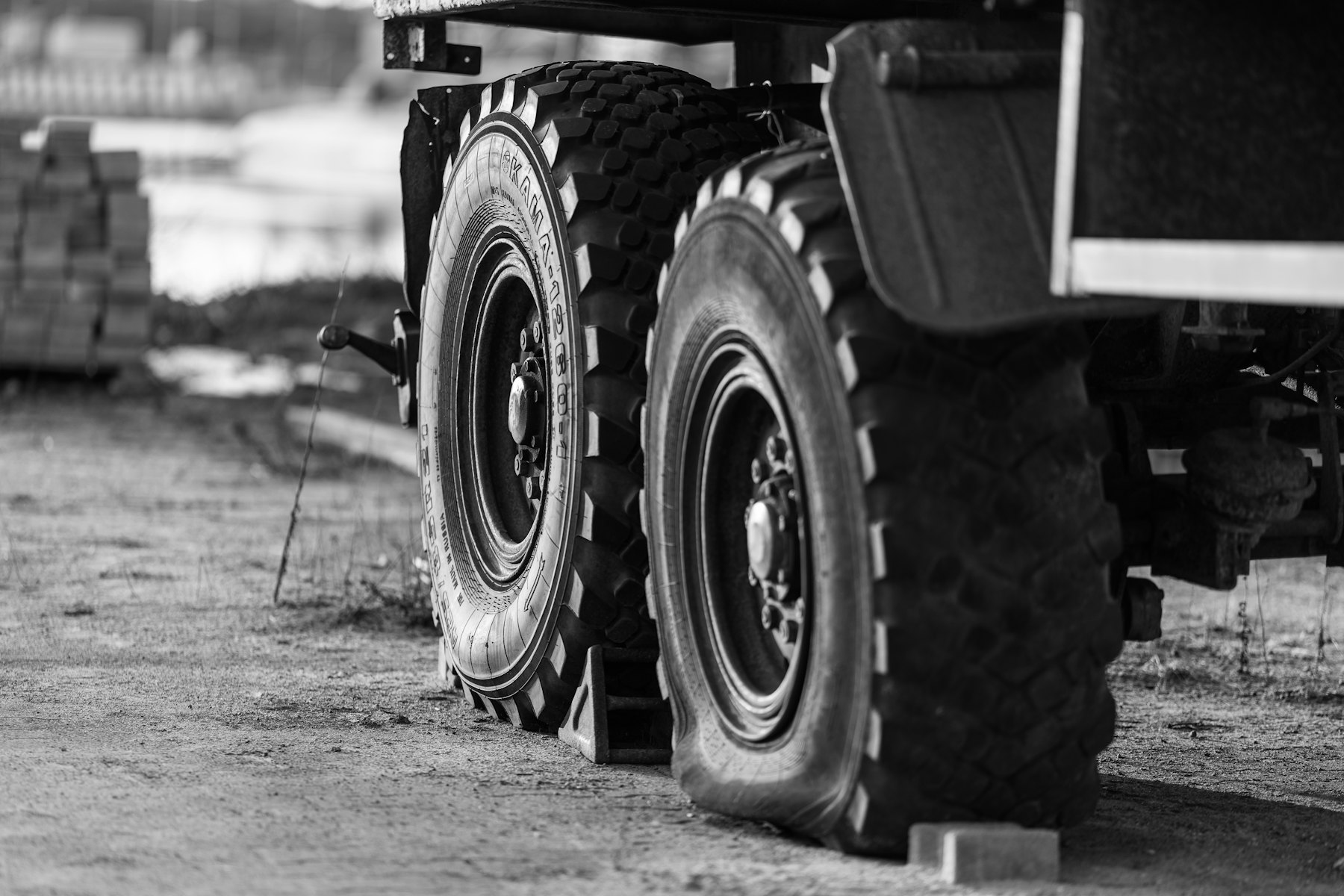
What comes off the truck is the rest of the difference. Bottle jacks rated for loaded vehicles, cribbing so the base does not sink into soft shoulder, an impact and a torque wrench so the lugs go back to the right figure, and the sockets for truck and trailer wheels that no passenger car kit includes.
Tell us when you callWhat you are driving, whether you have a usable spare, which wheel is down, and whether you are on a lane side shoulder or somewhere clear of traffic.
About the moneyYou get a real number before we roll, with no hourly minimum hiding behind it. Short jobs stay short jobs on the invoice.
ReachNapa and Solano are the home ground for these calls, with regular runs into Contra Costa, Alameda, Marin and Sonoma. Look at the full area list.
What a spare actually buys you, and what it does not
A full size matching spare buys you a normal vehicle again. Fit it, torque it, drive it, deal with the damaged tire when convenient. That is the good case and it is becoming rare.
A compact temporary spare, the narrow one, buys you a trip to somewhere that sells tires and nothing more. It is typically limited to about fifty miles and fifty miles an hour, it changes how the vehicle brakes and corners, and on an all wheel drive vehicle running a different rolling diameter for long can damage the drivetrain. Useful, but it is a countdown, not a repair.
An inflator kit and a can of sealant buys you a slow leak fixed, sometimes. Sealant works on a small tread puncture and does nothing at all for a sidewall cut, a blowout or a tire that has come off the bead. It also makes a mess that some tire shops will charge to clean out before repairing.
And then there is the growing number of vehicles sold with no spare at all, not even a well to put one in. If that is you, the honest options are a repair on the spot if the damage allows one, sourcing and fitting a replacement tire, or moving the vehicle. We will tell you which of those three you are actually looking at instead of pretending there is a fourth.
Damage that can be repaired, and damage that ends the tire
People often expect a plug and are surprised when the answer is no. The rule is about where the injury sits, and it is not negotiable, because a failed repair at freeway speed is a blowout.
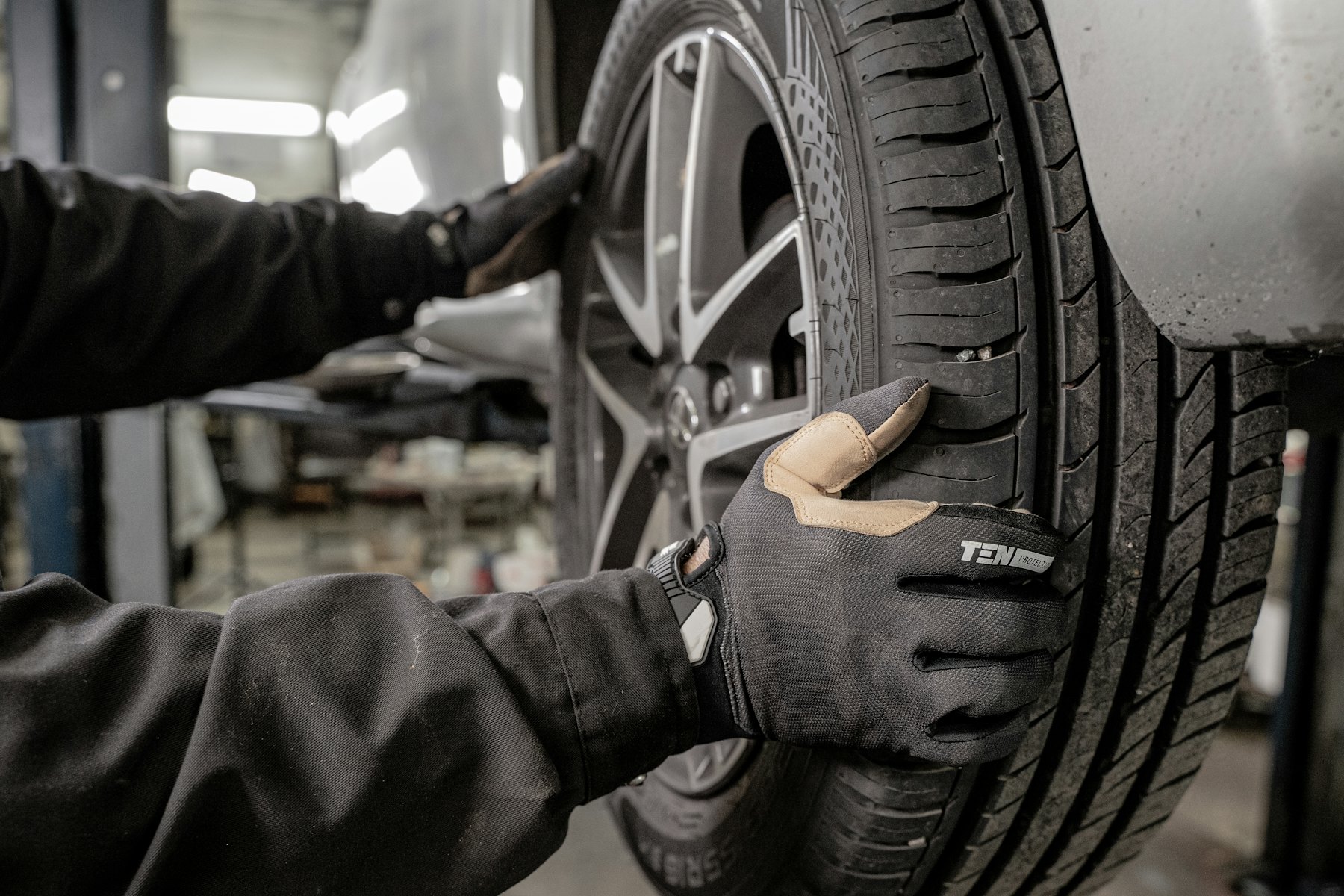
A puncture in the tread area, roughly the middle three quarters of the tire, smaller than about a quarter inch, is normally repairable. Done properly that means the tire comes off the wheel, gets patched from the inside and plugged through the hole, not a string jammed in from outside while it sits on the vehicle.
A cut, gouge or bulge in the sidewall ends the tire. There is no structural repair for a sidewall, because that is the part that flexes constantly and carries the load. A bulge means the internal cords have already failed and it is holding air on rubber alone. Same verdict for a puncture near the shoulder of the tread, for a tire that was run flat any distance, and for a second puncture too close to a previous repair.
Trailer blowouts, and why they cost more than a tire
Trailer tires fail differently from anything on a powered vehicle, and the bill is rarely just the tire.
- Nobody notices the flatA trailer tire can be down or gone for miles without the driver feeling anything through the steering. By the time it shreds, the casing has been beating the underside of the fender at highway speed.
- The carcass takes the fender and the wiringA disintegrating tire throws strips hard enough to tear a fender, rip out the lighting harness taped along the frame rail, and put a dent in whatever is behind it.
- The other tire is now overloadedOn a tandem axle the surviving tire on that side carries the whole corner. Blowouts commonly come in pairs for exactly that reason, which is why we look hard at its mate before anyone leaves.
- Age matters more than treadTrailer tires sit still in the sun for months at a time, and the rubber degrades from the inside whether or not the trailer is being used. Past five or six years the tread depth stops telling you anything useful.
- Then the bearingsA wheel that has run hot or taken a hard impact deserves a look at the bearing and the hub, because a seized trailer bearing is a fire and a far worse night than a flat.
Related work that keeps this from happening again
Most repeat flats are not bad luck. They come from an alignment problem, a slow leak nobody chased, or a set of tires that aged out while parked.
Wheel bearing replacement
For a wheel that ran hot after a flat, or a hub making noise that changes when the vehicle leans into a turn.
Trailer maintenance
Tires dated, bearings packed, lights and harness checked, so the trailer stops being the weak link in the outfit.
Fleet inspections
Tread depth, pressures and tire age recorded across the yard, which is how a fleet stops discovering this on the freeway.
Tie rod replacement
Worn steering components scrub the edges off a tire in a few thousand miles and make the vehicle wander.
Roadside assistance
The wider breakdown service, for the calls where the flat turns out not to be the only problem.
After hours repair
Because tires rarely fail during business hours, and a loaded trailer cannot wait until Monday.
What drivers ask with a flat on the ground
If you are stopped somewhere exposed right now, call rather than read. It is faster and safer.
I have a spare in the trunk. Can you just fit it?
Yes, and that is the quickest version of this call. We lift at the proper jacking point with gear that will not sink into a soft shoulder, fit the spare, torque the lugs to the manufacturer’s figure and check the pressure in it, because a spare that has sat for six years is often half flat. Then you get told honestly how far that spare is good for.
Can my tire be repaired, or do I need a new one?
It depends entirely on where the damage is. A puncture in the tread area under about a quarter inch across is normally repairable with an inside patch. Anything in the sidewall, any bulge, and any tire that was driven on while flat is finished. We will show you the damage and tell you which it is rather than deciding for you.
What if I do not have a spare at all?
That is increasingly common and it is a real problem, not a small one. If the damage is repairable we can often do that on the spot and put you back on the road. If it is not, the options are sourcing a replacement tire or moving the vehicle. You will hear which applies before anyone drives out, so the visit is not wasted.
Do you handle truck and trailer tires?
Yes. Commercial trucks, trailers, work vans and equipment are a large part of this work, and they need gear a passenger car kit does not have: jacks rated for the load, the right sockets, and enough cribbing to lift safely on gravel. We come to yards, shippers, jobsites and the shoulder.
Should I drive slowly to the next exit on a flat?
Try not to. Even a mile on a flat destroys the inner liner and usually the wheel rim as well, so a tire that could have been patched becomes a tire plus possibly a wheel. On a trailer the shredding carcass also takes out fenders and wiring. Stopping somewhere safe and calling is almost always the cheaper decision.
Why do my trailer tires keep failing?
Almost always age rather than mileage. Trailer tires spend most of their life parked in sunlight, and the rubber breaks down from within regardless of how much tread is left. Past about five or six years they should come off on date alone. Underinflation and an overloaded axle do the rest, and both get checked while we are there.
Stay behind the barrier. We will handle the wheel.
Tell us the vehicle, which corner is down and whether a spare is on board. The truck arrives with jacking gear rated for what you are driving and a torque wrench for putting it back properly.
HoursMonday to Sunday, 24 hours
Based inAmerican Canyon, CA
More from usJump starts · Gallery · Contact