
Brakes that are a legal problem as well as a safety one.
Air brakes on trucks and trailers put units out of service faster than any other system on the vehicle. We work on them at your yard, the shipper or the weigh station, because a rig with a dragging brake should not be driving anywhere to get looked at.
- Open 24 hours, seven days
- No hourly minimum
- A price before work starts
- Trucks, tractors and trailers

Air holds these brakes off, not on
This is commercial vehicle work, and it starts with a piece of design logic that catches people out. On a car, pressing the pedal applies force to the brakes. On an air system, the spring brake is held released by air pressure, and losing that pressure lets a powerful spring clamp the drum. It is a deliberate choice: a truck that loses its air stops rather than coasts.
The practical consequence is that an air system fails toward stopped. A trailer that will not release, a tractor that dumps its air overnight, a unit that will not build enough pressure to move at all: those are the calls we take, and none of them can be driven to a shop. That is the entire reason this work is done mobile, at the yard, the shipper’s lot or the side of the road where the rig gave up.
The other half of the subject is regulatory. Brake faults generate more out of service findings at roadside than anything else on a commercial vehicle, and the criteria are specific about things like pushrod travel and the number of defective brakes on a unit. A truck placed out of service does not move until it is fixed, which turns a mechanical job into a loss on a delivery schedule. If what you actually need is a documented inspection rather than a repair, that sits on the BIT and FMCSA inspections page.
Tell us on the callTractor, trailer or both, whether it builds and holds pressure, and whether anything is dragging or refusing to release. That decides what comes on the truck.
The numberYou hear what the job runs before we set off, covering the trip and the work, with no minimum hour padding a short repair.
If it is out of serviceSay that first. We will tell you honestly what can be put right where it stands and what cannot. Send the unit details.
Pushrod travel is the number that decides it
When a brake chamber is applied, its pushrod moves out and the slack adjuster converts that into rotation at the camshaft. How far the rod travels before the lining meets the drum is the single most informative measurement on an air brake, and it is the one enforcement looks at closely.
As linings wear, that travel grows. Past a certain point the brake is not delivering the force it should, because the chamber runs out of useful stroke before it has done its job. A truck can have a full set of brakes that all still work while the stopping distance has quietly stretched, which is exactly what makes it dangerous: nothing feels obviously wrong from the seat until the day it matters.
Most trucks run automatic slack adjusters, and the important thing about them is that an automatic slack that is out of adjustment is a broken component, not a component needing adjustment. Manually winding it back is a temporary act that masks the fault and the travel goes out again. So when we measure long stroke, the question is why. A seized camshaft, dry or worn bushings, a failed slack adjuster, a chamber that is not returning, or linings simply at the end of their life. Each of those gets a different repair, and only one of them is a wear item.
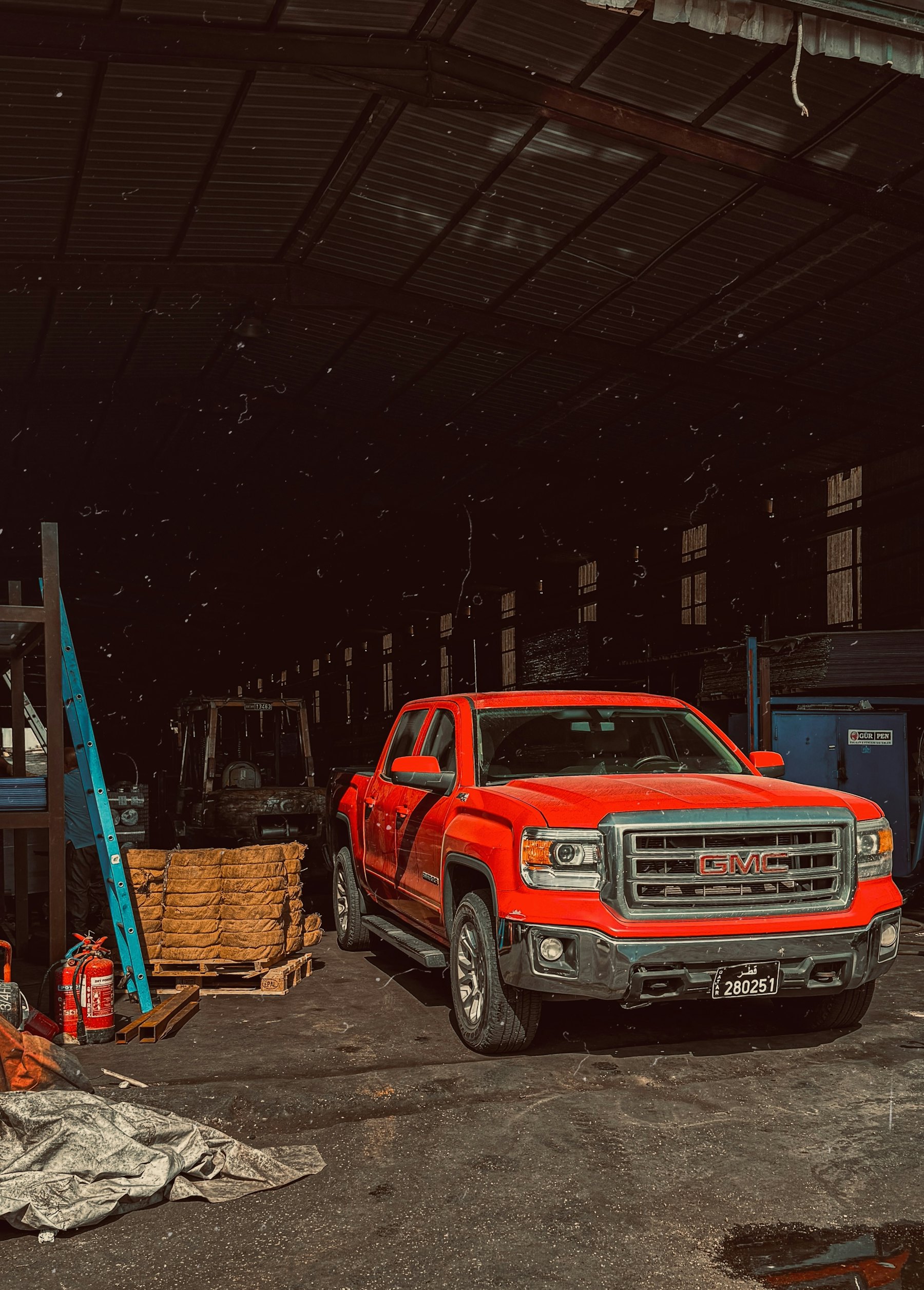
If a truck should not be leaving your yard, I will say so. Nobody is getting talked into driving a unit I would not put my own name against.
Patrick Freeman, owner

Water in the tanks, and the winter it ruins
A compressor takes in whatever air surrounds the truck, including the humidity in it, and compressing that air condenses the moisture out. Every system therefore makes water as a byproduct of working properly. The air dryer exists to catch it, and a dryer cartridge is a consumable that a lot of owners have never replaced.
Once the dryer stops keeping up, water collects in the tanks and travels onward into valves and chambers. In warm weather it corrodes things slowly and you may never connect the eventual valve failure to its cause. In cold weather it does something much more immediate: it freezes. A frozen valve or a plug of ice in a line means brakes that will not release, will not apply properly, or behave differently on one side of the vehicle than the other.
Around here that is a genuine seasonal problem rather than a theoretical one. Trucks parked overnight in the low ground near the Delta, or crossing the Carquinez early on a clear winter morning, see enough cold to freeze a system carrying water. The fixes are unglamorous and cheap compared to the consequences: drain the tanks on a schedule, replace the dryer cartridge at its interval, and deal with a dryer that purges constantly instead of ignoring the noise. Fleets that fold this into commercial truck maintenance stop having winter mornings that start with a truck that will not move.
Air system work we take on
Tractors, trailers, straight trucks and towed equipment, at your location. Most of it is finished on the visit.
Chambers and spring brakes
Service and parking chambers, ruptured diaphragms, failed springs and the clamp work that has to be done with the unit properly secured.
Slack adjusters and travel
Measured, then repaired at the cause. An automatic slack out of adjustment gets replaced rather than wound back to buy a week.
Air dryers and moisture
Cartridge replacement, purge valve faults, and tracing why water is reaching tanks it should never have got to.
Foundation brake work
Shoes, drums, camshafts, bushings and return springs, plus the wheel end inspection that tells you whether a seal is feeding the lining.
Trailer side of the rig
Glad hands, supply and emergency lines, and the trailer brakes that get inspected just as hard as the tractor’s.
Warning lamps and ABS
A lit trailer ABS lamp is itself a finding. Reading the fault beats chasing wiring or replacing sensors on suspicion.
What carriers and owner operators ask
Unit down or refusing to release right now? Phone it through. Somebody answers at any hour, including weekends.
My trailer brakes will not release. Can I drive it in?
Do not plan on it. Locked or dragging brakes damage drums and linings within a few miles and create a real fire risk at the wheel end, quite apart from what happens if you are stopped at roadside in that condition. Caging a chamber can free a unit for recovery, but that is a way to move a vehicle safely, not a repair. Call and we will come to where it sits, which is almost always cheaper than the tow plus the damage.
How do I know if my pushrod travel is out?
It has to be measured, with the system at pressure and a full application made, and compared against the limit for that chamber type and size. There is no reliable way to judge it by feel from the driver’s seat, which is exactly why it turns up so often at roadside inspections on trucks whose drivers thought the brakes were fine. We measure every wheel position and tell you the numbers rather than a verdict.
The air dryer hisses every couple of minutes. Is that normal?
A short purge after the compressor cuts out is normal. Constant cycling is not, and it usually means a saturated cartridge, a failed purge valve, or a leak making the compressor work far harder than it should. It is worth dealing with promptly because the consequence is water getting past the dryer into the tanks and valves, and that turns into corrosion in summer and frozen brakes in winter.
Can you do this work at a weigh station or the roadside?
Yes, and a fair amount of what we do is exactly that. The truck carries air fittings, lines, chambers, slack adjusters and its own lighting and power, so working a shoulder or a scale lot at night is routine. What we will not do is patch something to the point where a unit can limp off when the honest answer is that it needs to be repaired properly or recovered.
Is a brake out of adjustment really an out of service item?
Brakes generate more out of service findings than any other system on a commercial vehicle, and the criteria cover both the condition of individual brakes and how many defective ones a unit has. The specifics depend on the vehicle and the current criteria, so we are not going to tell you a truck will pass anything. What we will do is measure what you have, put right what is wrong, and tell you plainly where a unit stands.
Do you work on trailers we pull but do not own?
Yes, that comes up constantly with drop and hook freight and rented equipment. We repair what is in front of us and the paperwork reflects the unit number, which is what a carrier needs when the cost goes back to the owner. If a trailer turns out to have problems beyond what you want to authorize, you hear the price and the findings first and decide from there.
Say where the rig is parked.
Tractor or trailer, what it does with air, and whether anything is dragging or stuck. That is enough for us to load chambers, slacks and fittings, and you will have the price and an arrival window on the call.
HoursMonday to Sunday, 24 hours
Based inAmerican Canyon, CA
For fleetsInspections, fleet repair and brake work on lighter units. Photos in the gallery.