
Every hour it sits costs more than the part.
The repair bill is rarely the expensive part. The expensive part is a paid crew with nothing to do, a customer being called to reschedule, and a day of work that does not come back. We fix pickups, utility bodies and box trucks where they sit.
- Open 24 hours, seven days
- No hourly minimum
- Licensed and insured
- Jobsite, yard or shoulder

Downtime is what you are actually paying for
A contractor works out the cost of a breakdown differently than a commuter does. A commuter loses a morning. A landscaper with a crew of three loses the crew’s wages, the two properties that were scheduled for that afternoon, and some amount of goodwill with the customer who gets the phone call. Then there is the tow, and then there is however many days the truck sits in a queue at a shop waiting for a bay.
That arithmetic is why we exist in the shape we do. Getting a working mechanic to the truck on the same day, rather than getting the truck to a mechanic eventually, is usually the difference between losing part of a day and losing most of a week. The repair is the same repair. Where it happens and how fast it starts is the whole value.
Most of what stops a work truck is unglamorous and travels well. Batteries and charging faults, starters, alternators, belts, hoses, cooling leaks, brakes, fuel delivery problems, sensors and warning lights. Almost all of it can be diagnosed and finished at the curb or in a yard with the right part already on board, which is why a truck that dies on a Tuesday morning is often back in service that same Tuesday.
The one thing we ask for is an honest description on the first call. What it was doing, what it sounds like now, whether it is loaded, and where it is sitting. That determines what gets loaded into the truck before we leave, and loading correctly the first time is what keeps a one-visit repair from becoming two.
Who callsContractors, landscapers, plumbers, electricians, arborists, caterers and anyone else whose income is parked outside a customer’s house right now.
Money talkYou get a real number before we roll, and a fast repair is billed as a fast repair because there is no minimum charge underneath it.
ReachNapa and Solano every day, with regular runs into Contra Costa and toward Sonoma. Coverage by county.
What comes to the jobsite, what waits for the yard
Two things decide whether a repair happens where the truck stopped. The first is whether the failed part can be reached without putting the vehicle in the air for a long stretch. The second is what is sitting in the bed. A loaded truck is a different job than an empty one, and pretending otherwise is how people get hurt.
Roadside and jobsite work covers no-starts, charging and battery faults, starters, alternators, belts, hoses, cooling leaks, overheating, brake problems, fuel delivery, warning lights and most electrical faults. That is the large majority of calls. If the truck can be made safe to drive, it gets made safe to drive and it finishes the day.
What wants the yard, or at least a flat empty corner, is anything needing the vehicle stationary and unloaded for hours. Suspension work under a fully loaded bed, leaf springs, a job where the truck has to be supported while parts are cleaned, or anything under a service body packed with material. In those cases the useful move is often a two-step: get it running and safe at the site today, then come back at the yard after hours to do the repair properly.
Access is worth mentioning on the phone. Ladder racks and pipe racks limit what can be lifted over the side. A utility body with locked compartments down both flanks changes where a jack can go. Toolboxes in the bed shift the weight rearward. None of that stops a repair happening, but it changes how long to allow and sometimes where the truck should be parked before we arrive.
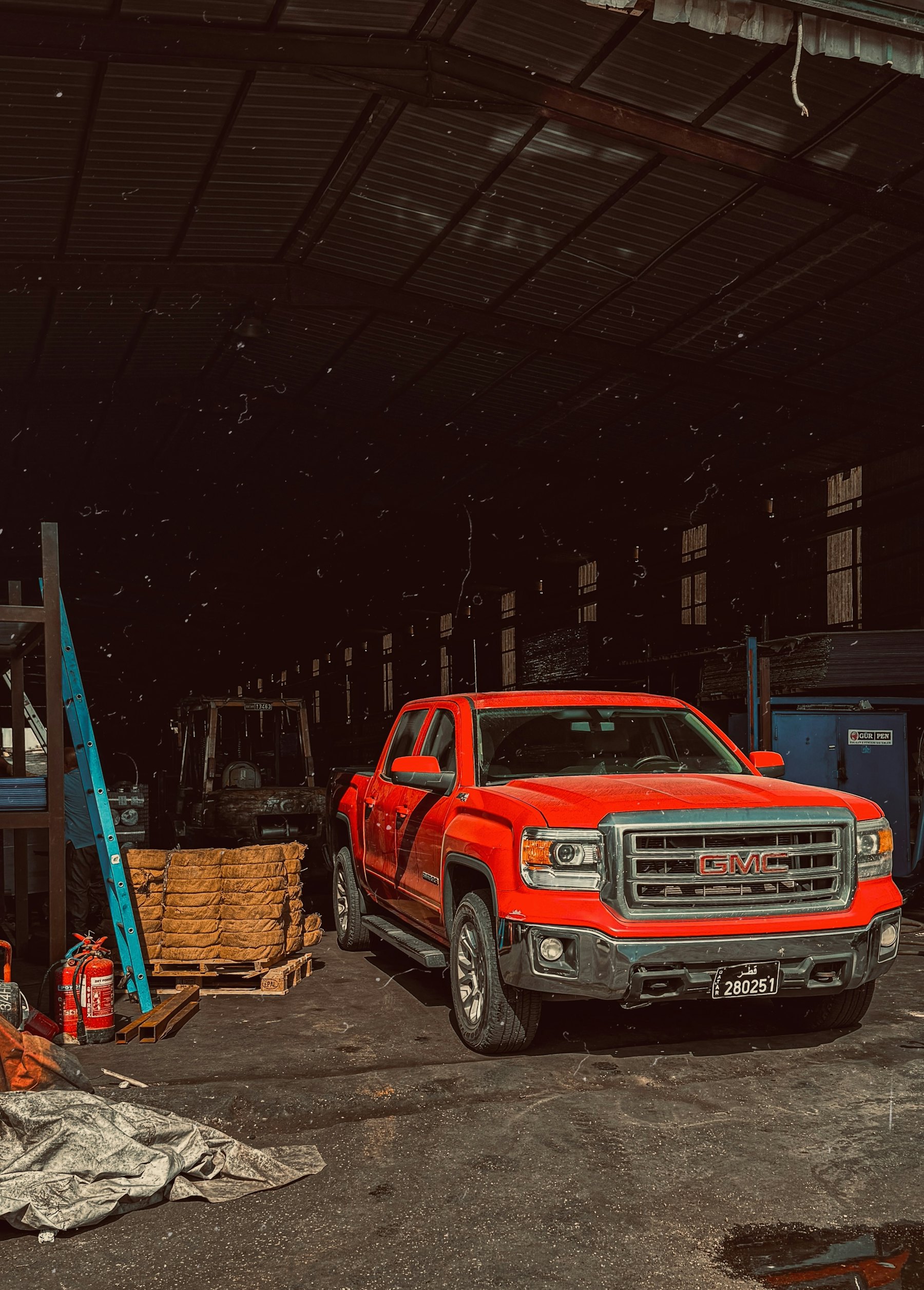
Nobody running a crew wants a lecture about maintenance while their truck is dead. They want it moving today. The conversation about why it died belongs afterward, and it is a short one.
Patrick Freeman, owner
Fix it at the yard for a fraction of the trouble
Nearly every roadside call we take on a work truck had a warning that got driven through. Batteries that cranked slow for a week. A belt that squealed every cold morning. A temperature gauge creeping a little higher each afternoon. Those are cheap to deal with in a yard and expensive to deal with on the shoulder of Highway 12 with a crew waiting.
Battery replacement
The single most common reason a work truck does not start on a cold morning, and the easiest one to catch early.
Alternator replacement
Dimming lights and a battery that keeps going flat. Left alone it strands the truck somewhere inconvenient.
Serpentine belt replacement
A belt that squeals cold is telling you something. When it finally goes it takes the charging and the water pump with it.
Overheating diagnostics
A gauge climbing under load with a full bed. Worth answering before it becomes a head gasket.
Brake repair
Loaded trucks eat pads faster than anyone expects, and the noise usually starts well before the damage does.
Roadside assistance
For the moment it has already happened and the truck is sitting somewhere it should not be.
Fleet maintenance
Running several trucks changes the math entirely. Scheduled service, reporting and uptime planning live on the fleet side.
Service van maintenance
If the vehicle is a van on a schedule rather than a truck that just broke, start there instead.
Questions from people running trucks
Anything specific to your truck is quicker answered out loud. The line is open at whatever hour you are reading this.
Can you come to an active jobsite?
Yes, and it is a large share of what we do. We need somewhere flat and safe to work that is not in the path of machinery, and we need the site to allow us in, which on commercial jobs sometimes means a call to the superintendent first. Residential sites and landscaping stops are usually no trouble at all. Tell us what the access looks like when you call.
Does the truck need to be unloaded before you start?
For most repairs, no. Charging faults, batteries, belts, cooling and most electrical work happen up front and the load is irrelevant. It matters when the job involves lifting the vehicle or working under the rear, because a loaded bed changes the weight and where a jack can safely sit. If unloading is needed we say so on the phone, not once we are standing there.
We start at six. Can you work around that?
That is the usual arrangement. Early starts before the crew heads out, evenings once the last stop is done, and weekends when every vehicle is back in one place all work. The whole point is that the truck gets fixed in a window when it would be parked anyway, so nobody loses billable hours sitting and watching a repair happen.
What if it cannot be finished where it sits?
Then you hear that early rather than after two hours of taking things apart. Some jobs genuinely need a lift, mainly transmission work, clutches and deep suspension repairs. When that happens we get the truck safe, tell you plainly what it needs and roughly what that involves, and you make the call with real information instead of a guess.
We run five trucks. Is this the right page?
Partly. This page is about a truck that is already down and needs fixing now, which applies whether you own one or twenty. Once several vehicles are involved, scheduled servicing, inspections and keeping records across the group is a different job, and fleet maintenance is where that lives. Plenty of customers use both.
How do you price a jobsite call?
One figure, agreed before anything starts, covering the work we discussed. There is no hourly minimum, so a twenty minute fix does not get rounded up into an hour, and there is no separate charge for the fact that we drove to you. If we open something up and find the job is bigger than the symptom suggested, the conversation happens then, before the extra work does.
Where is it, and is it loaded?
Those two answers plus the make and the symptom are usually enough to load the right parts and give you a window. You are talking to the mechanic who will be doing the work, not a dispatcher taking a message.
HoursMonday to Sunday, 24 hours
Based inAmerican Canyon, CA
RelatedFleet maintenance · Job photos · About Patrick