
Fairfield brakes done in the driveway, not in a queue.
Wheel-off brake work goes fine on level ground with a jack and stands, which means a house, a yard or a workplace lot does the job. The noise gets diagnosed before anything is ordered, so nobody buys rotors a vehicle did not need.
- Open 24 hours, seven days
- No hourly minimum
- A price before work starts
- Cars, trucks and fleet vehicles
Why this town eats brake pads
Brakes wear by how often they are used, not by how far the vehicle travels, and that single fact explains the volume of brake calls coming out of Fairfield. A commute that crawls through town on I-80 at rush hour is thousands of small applications per week. The odometer barely moves while the pads do all the work, which is why a car with modest mileage can still be metal on metal.
Then there are the other patterns on top of it. Households tied to Travis run short local trips constantly, all of them full of stops. The people pointing toward Sacramento or over to the Bay rack up long-distance miles and get slammed by whichever stretch of freeway has decided to stop that morning. Vehicles working the agricultural and industrial edges of town carry weight, and weight is pure brake load.
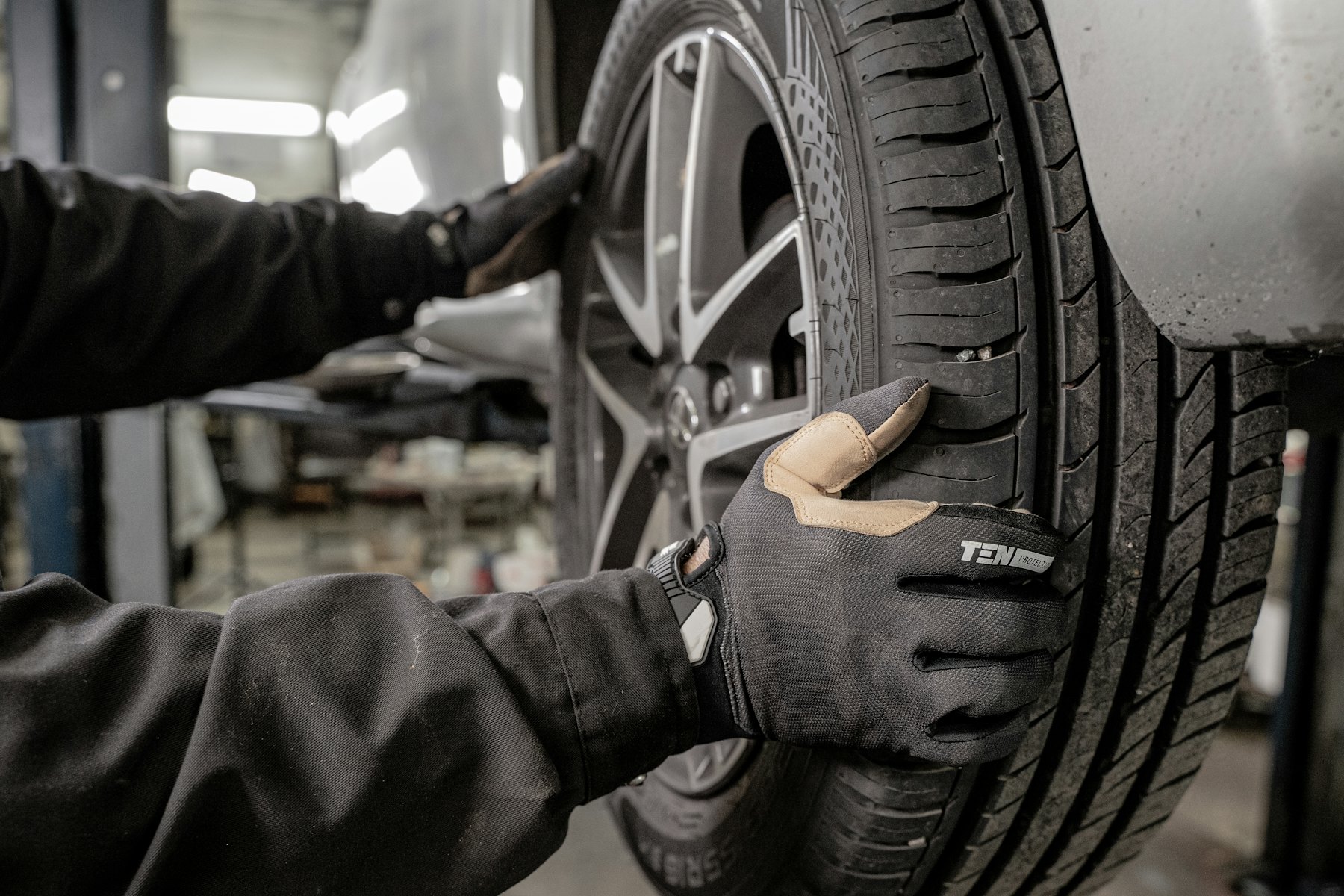
None of that needs a lift to deal with. Pads and rotors come off with the wheel, and a vehicle sitting level on stands in a driveway is as good a place to do that as a shop bay. What matters is that the diagnosis happens first, because the noise you are hearing decides whether this is a pad job, a rotor job or something else entirely.
What gets replacedPads and rotors front or rear, hardware and clips, calipers that have stopped sliding, and the fluid when it needs doing.
What it costsWhat the job runs, told to you before the drive, and no minimum charge on a short one.
Everything else hereThe Fairfield page covers every kind of call that comes in from this city.
Reading the sound before buying the part
- A high squeal that stops when you brakeUsually the wear indicator doing exactly its job. The tab is touching the rotor to tell you the pad is nearly gone. This is the good version: pads only, caught in time.
- Grinding that gets worse under the pedalThe friction material is finished and the backing plate is cutting the rotor. Rotors are now part of the conversation, which is why the early call is the cheap one.
- A rhythmic shudder through the pedalUneven rotor thickness, often from heat and then cooling while clamped. Pads alone will not fix it, and anyone selling pads alone for this is guessing.
- Pulling to one side when stoppingA caliper not releasing, or a hose restricting flow to one corner. That is a fault, not wear, and replacing pads does nothing for it.
- A soft or sinking pedalFluid, air or a leak. This one is not a convenience problem, and it gets looked at before the vehicle goes back on the freeway.
Pads only, or pads and rotors
This is the judgement people most want a straight answer on, because it roughly doubles the job. It comes down to measurement and surface condition, not to a sales script.
Rotor thickness
Every rotor has a minimum stamped on it. Below that it cannot shed heat safely and no amount of new pad fixes it. Above it with a clean face, the rotor stays.
Surface condition
Deep scoring from a pad run to the backing plate, hard spots, or a lip you can catch a fingernail on all mean a replacement. Light polish does not.
Runout and warping
If the pedal pulses, the rotor is not flat. New pads on an uneven surface wear unevenly and the shudder comes straight back within weeks.
How the caliper is moving
Slide pins and guides get cleaned and lubricated. A caliper that drags cooks one pad and one rotor and will do it again to new parts.
Fluid condition
Brake fluid absorbs moisture over years, which lowers its boiling point. Worth checking while the wheels are already off rather than as a separate visit.
Bedding the new parts
New pads and rotors need a deliberate heat cycle to seat properly. You get told how to drive the first few miles, which matters more than people expect.
A long descent does not wear brakes evenly. It cooks them, and cooked brakes behave differently from worn ones.
The Cordelia grade, both directions
What the grade at Cordelia does to a brake system
The ground west of town climbs, and the stretch of freeway through the Cordelia junction and the hills beyond it puts a sustained load on brakes that flat driving never does. Dragging a loaded vehicle down a long grade turns kinetic energy into heat with nowhere for it to go. The pedal starts feeling long, which is fade, and fade is a temperature problem rather than a wear problem.
Heat leaves marks. Rotors develop hard spots that show up later as a pulse under the pedal. Fluid that has absorbed moisture over several years boils at a lower temperature, so a system that behaved fine around town goes soft exactly when it is needed most. Pads glaze over and lose bite while still looking like they have plenty of material left.
So on any vehicle that regularly works that grade, or pulls a trailer up and over it, the inspection looks at more than pad thickness. Rotor surface, fluid condition and how freely the calipers release all get checked, because the brake complaint from a grade-heavy vehicle is usually not the one a mileage reading would predict.
How a brake visit actually runs
No surprises is the point. Here is the shape of it from the phone call to driving away.
- The callDescribe the noise, when it happens and what the vehicle is. That narrows the likely parts enough to give you a figure before anybody drives anywhere.
- Wheels off, measurement takenPad thickness, rotor surface and thickness, caliper movement, hose and line condition. This is where pads-only versus pads-and-rotors gets settled.
- You hear the finding before the workIf the measurement changes the job, you get told and you decide. Nothing gets fitted on an assumption.
- Replacement, by the axleBoth corners done together, hardware cleaned and lubricated, everything torqued properly rather than by feel.
- A test and the bedding instructionsThe pedal gets checked, then you get told how to drive the first stretch so the new friction seats evenly instead of glazing.
We do not charge hourly minimums or leave anyone stranded. Show up quickly, do the job right, treat every customer like family.
The promise the business was built on
Where this service reaches
Across the city and out to the edges, plus the freeway stretches on either side of town. The wider catalog sits on the mobile brake repair page.
What callers ask about brakes
Short answers. Calling is faster if yours is not here.
Can brakes really be replaced in a driveway?
Yes, and it is routine work. Pads and rotors come off with the wheel, so what the job needs is level ground, room for a jack and stands under one corner, and space to work beside the vehicle. A shop bay offers nothing a flat driveway does not for this particular repair.
How do I know if I need rotors as well as pads?
By measurement, which happens with the wheel off. Every rotor carries a minimum thickness, and below it the part cannot shed heat safely no matter how new the pad is. Deep scoring, hard spots or a pulsing pedal also mean replacement. You hear the finding before anything is fitted.
My brakes squeal but still stop fine. Am I overreacting?
Probably not, and calling early is the cheap version. A high squeal that goes quiet under the pedal is usually the wear indicator doing its job, which means pads only. Leave it until it grinds and the backing plate starts cutting the rotor, and the job roughly doubles.
Why does the pedal shudder when I slow down?
That is uneven rotor thickness rather than worn pads, often from heat on a long descent followed by cooling while the caliper is clamped. New pads on an uneven surface wear unevenly and the shudder returns within weeks, so the rotor has to be dealt with.
Can you do brake work on a fleet vehicle at our yard?
Yes, and it is a sensible way to run it. Working at the yard means the vehicle never leaves the site, and the hours it would have spent traveling to and from a shop stay productive. Several vehicles in one visit works fine as long as there is level ground.
Is there anything you cannot do to brakes on site?
Some things want a shop. Hard line replacement along the frame, and heavy corrosion cases where nothing is coming apart without a lift and a torch, are the usual ones. You hear that during the call rather than after somebody has driven out.
Describe the noise and where it is parked.
The phone goes to Patrick, not to a call center, whatever time you try it. Tell us what the brakes are doing, when they do it and what the vehicle is, and you will have a figure and an arrival window before the call ends. If it can wait, send the details through the contact page and we will book a time that fits your week.