When the wheel moves and the truck does not.
A little slack at the top of the wheel. A vehicle that hunts between the lane markers on the freeway. Feathered edges on a tire that was fine last year. Those three tells point at the same handful of parts, and we replace them where you are parked.
- Open 24 hours, seven days
- No hourly minimum
- You hear what the job runs first
- Cars, pickups, vans, work trucks
Slack in the wheel is the part you feel first
A tie rod is the link between the steering rack and the wheel. Turn the wheel, the rack pushes or pulls, the tie rod passes that motion to the knuckle, and the tire points somewhere new. It is a simple job done through ball joints that wear, and when they wear the motion stops being one to one. You turn a little and nothing happens, then everything happens at once.
Drivers describe it three ways and they are all the same fault. There is dead play at the top of the wheel, an inch or two of rotation that does nothing. There is wandering at freeway speed, where the vehicle drifts and you make small corrections you never used to make, which is tiring in a way people blame on the road or the wind. And there is a knock or rattle over rough pavement, a loose sound from the front end that comes and goes with the surface.
The earliest tell shows up on the tires, before you notice anything through the wheel. Worn tie rods let the toe angle drift, and a tire at the wrong toe scrubs sideways as it rolls, feathering the tread. People buy new tires to solve it and wear those out the same way.
What to watch forPlay at the top of the steering wheel, drifting on the freeway, a knock from the front over bumps, feathered tread edges, or a steering wheel that sits crooked while you drive straight.
The figureYou hear what the job runs before a wheel comes off, with no hourly minimum under it.
Where we goNapa and Solano counties, the I-80 and Highway 12 corridors, and into Sonoma, Marin, Contra Costa and Alameda when it makes sense. See the full map.
Inner end, outer end, and how we tell them apart
Most vehicles have two joints per side. The outer tie rod end connects to the steering knuckle behind the wheel, and it is the one you can see once the wheel is off. The inner end sits at the other side of the assembly, attached to the rack itself and usually hidden under a rubber bellows boot. They wear at different rates and they fail for different reasons, so replacing the wrong one leaves the customer with the same complaint and a lighter wallet.
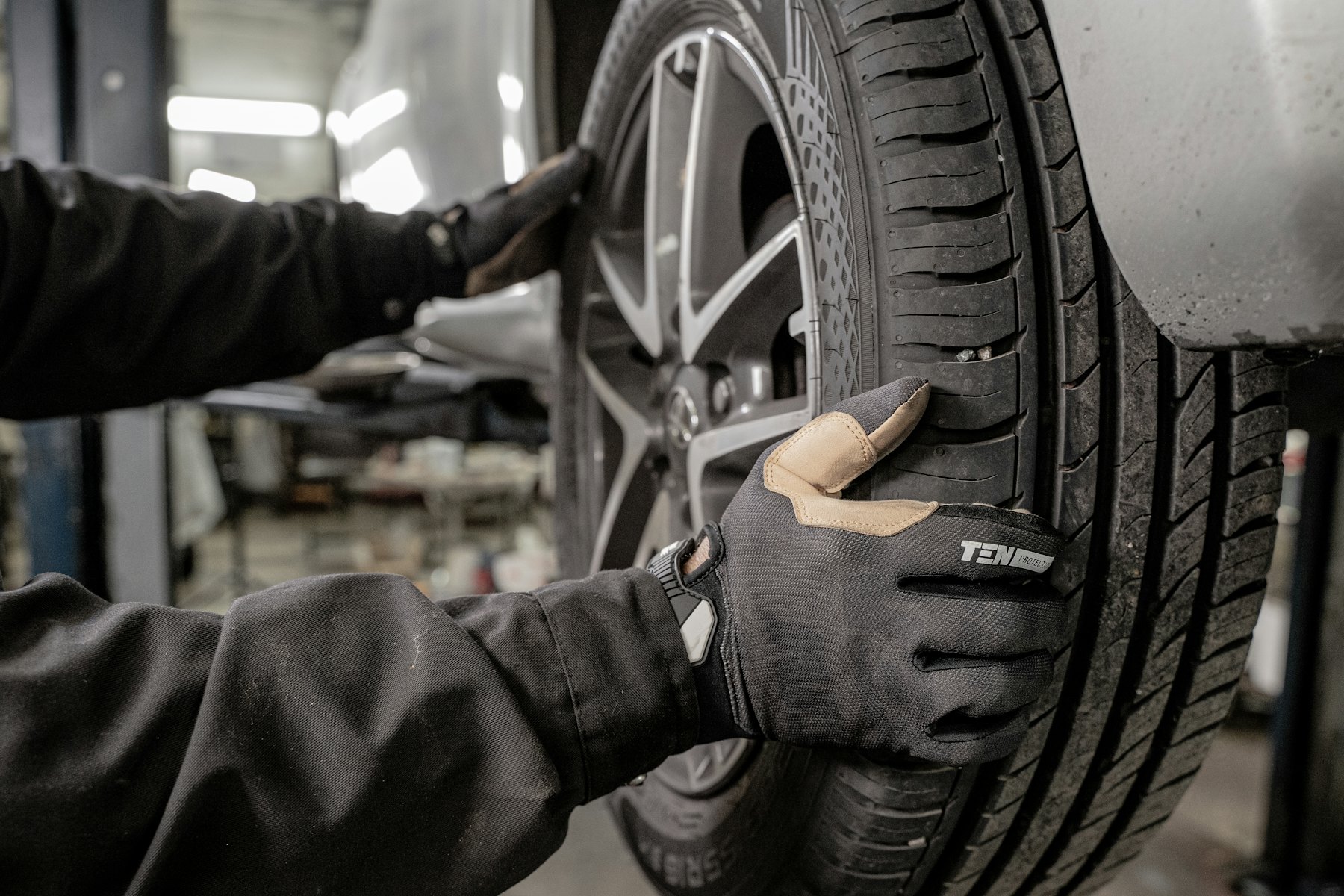
Telling them apart is hands-on work. With the wheel off the ground, hands at nine and three on the tire, we rock it side to side. Movement there is steering slack rather than hub slack, which is what separates this repair from a bearing. Then somebody watches the joints while the wheel is rocked. If the outer joint shows movement between the stud and the housing, that is the outer. If the inner end is moving inside the boot with the outer staying tight, that is the inner one. It takes two minutes and it removes the guesswork.
Either way you hear which end it is, and what that means for the time, before we start.
The alignment part, said plainly
We tell every customer this before they agree to the job. Finding out afterward feels like a bait and switch even when nobody meant it that way.
- An alignment is required afterwardNot recommended, not a good idea. Required. The tie rod is the adjuster for the toe angle, so replacing one changes where your front wheels are pointed by definition. There is no version of this repair that leaves the alignment untouched.
- We do not do alignmentIt needs a rack, optical heads and a level floor, and none of that fits in a service truck. Anyone who tells you they can properly align your vehicle in your driveway is selling you something. So book an alignment shop, and tell them which ends were replaced.
- We get you close enough to drive thereCounting threads on the old end and matching them on the new one puts the toe near where it started. That makes the trip to the alignment rack safe and short, not a licence to skip it.
- Skipping it costs more than the alignmentA front tire running at the wrong toe can scrub itself out in a few thousand miles. The alignment is cheaper than the pair of tires you will buy instead.
That honesty is most of why this business exists. The owner spent years watching customers get quoted one thing and billed another, and telling you about a cost we do not collect is the same principle.
Why work trucks go through these faster
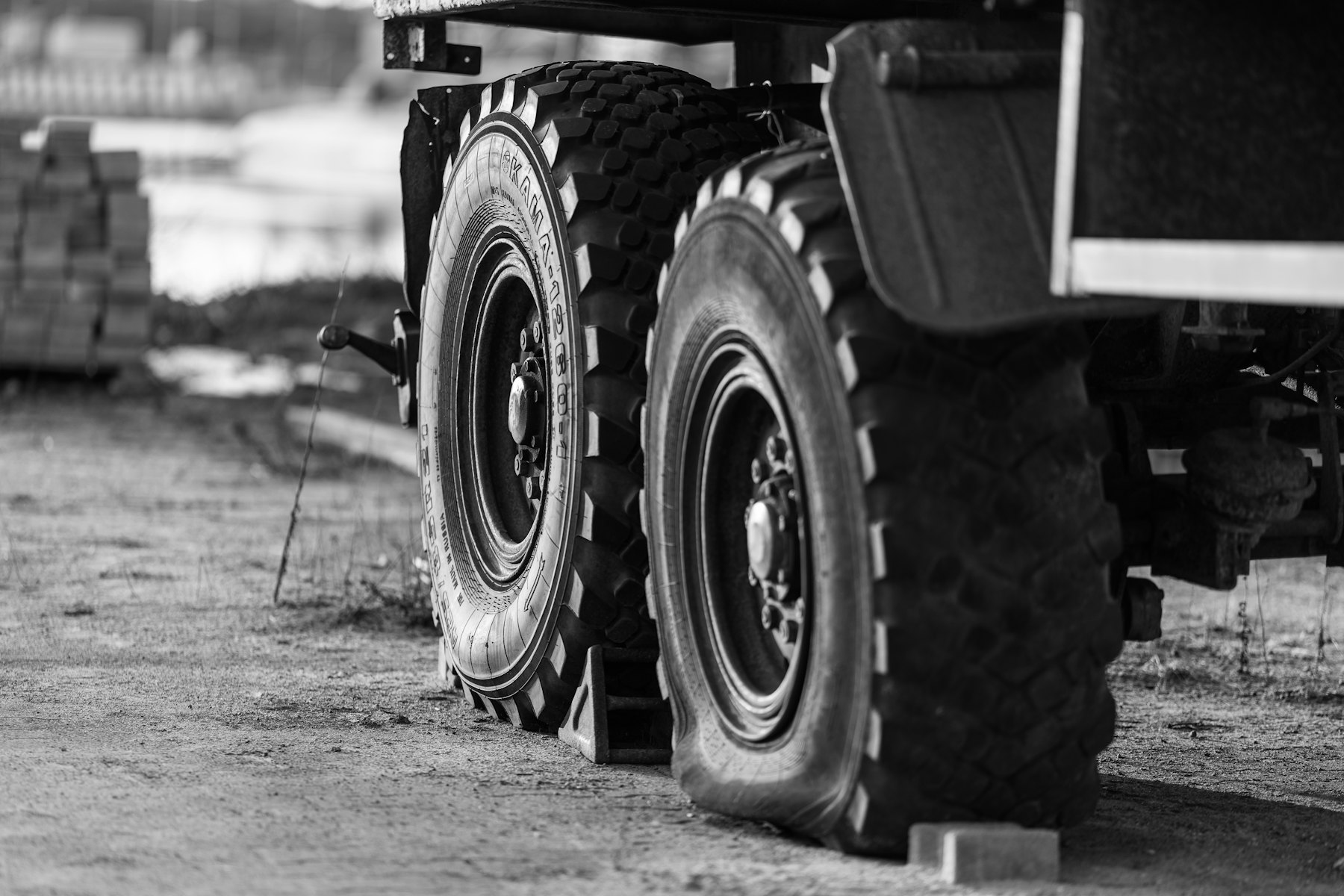
A tie rod end is a ball and socket packed with grease and sealed by a small rubber boot. Almost every failure starts with that boot splitting. Once it is open, grease escapes and grit gets in, and the polished surfaces inside turn into an abrasive paste. From there the wear is quick, which is why a vehicle working gravel yards and dusty ranch tracks goes through steering joints faster than a commuter car with the same mileage.
Weight compounds it. A loaded pickup or a van that never runs empty puts more force through the same small joints on every corner and every pothole. Add a service body or a trailer that changes how the front end loads, and it gets worse again. We do this work at yards and on jobsites, on whatever schedule keeps the vehicle earning.
So check boots rather than waiting for symptoms. A split boot caught early is a joint replaced on your schedule.
We will tell you about a cost we do not collect, because you finding out later is how trust gets broken.
Freeman Roadside Repair
The parts that share these symptoms
Loose steering has several possible causes, and the one people name is often not the one at fault. We check the neighbors before recommending anything.
Steering system diagnostics
When the wander could be joints, the rack or the box, this is where we settle it before buying parts.
Control arm replacement
Ball joints and bushings produce their own play and clunks, often on the same corner.
Wheel bearing replacement
Play at twelve and six rather than nine and three, usually with a growl that tracks road speed.
Power steering pump replacement
Heavy or groaning steering is a pressure problem, not a worn joint.
Power steering fluid service
Dark, aerated fluid makes steering feel vague in a way that mimics slack.
Shock replacement
Tired dampers make a vehicle wander over crests and cup its tires, which reads like a steering fault.
Questions about loose steering
Yours missing? Call.
Do I really need an alignment after tie rod replacement?
Yes, every time. The tie rod is what sets the toe angle on the front wheels, so replacing one moves that setting whether anybody intends it or not. We do not do alignment, because it needs a rack and a level floor. We count threads on the old end and match them on the new one so the vehicle drives straight enough to reach the shop, then you book the rack.
How do I know it is a tie rod and not a wheel bearing?
The positions differ. With the tire off the ground, put your hands at nine and three and rock it side to side: movement there is steering slack, which points at tie rods. Hands at twelve and six, rocking top to bottom, tests the hub instead. Bearings also growl and hum with road speed, where tie rods knock over bumps and let the vehicle wander. We check both before recommending either.
What is the difference between inner and outer tie rod ends?
The outer end joins the steering knuckle behind the wheel and is visible once the wheel is off. The inner end attaches to the steering rack and hides under a rubber bellows boot. They wear separately, so we identify which joint has the play before ordering anything. Outer ends are usually quicker work on site, while inner ends need the boot off and a rack tool.
Is it safe to drive with a worn tie rod?
With slight play and no other symptoms, short local trips are usually fine for a few days. Freeway speed is where it stops being fine, because the wandering gets worse as speed rises. If you have a knock over every bump, visible movement at the joint, or steering that feels like it disconnects for a moment, stop driving it and call. A tie rod that separates takes steering control of that wheel with it.
Can you replace tie rod ends at my house or jobsite?
Yes, on stands at your home, yard or jobsite. Outer ends are straightforward on most vehicles. Inner ends are doable on site too, though a badly corroded one can run long, and we say so on the call rather than after we are parked. What we cannot do anywhere is align it afterward, so plan for that visit.
Why did my tires wear out so fast?
Feathered tread, smooth one way and sharp the other when you run a palm across it, is the signature of a toe angle that is off. Worn tie rods let the toe drift, so the tire scrubs sideways slightly with every rotation. Replacing tires without fixing the joints and getting an alignment just wears the new set the same way, which is a repair people make twice.
Loose steering is worth a call today.
Tell us how much play is at the wheel, what the vehicle does at freeway speed, and whether the tires have started wearing oddly. One number reaches the mechanic directly at any hour, and you get a figure and an arrival window on that call.
HoursMonday to Sunday, 24 hours
Based inAmerican Canyon, CA
Steering and front endDiagnostics · Wheel bearings · See the work · Get in touch